







Croatia has revised its regulations for pleasure craft, jet skis, tenders, and water sports equipment. Not all rules are new – but many have been clarified and adapted to the reality of an increasingly crowded cruising area. For skippers, crews, and water sports enthusiasts, one thing is clear: anyone wishing to enjoy the Adriatic should know the rules.
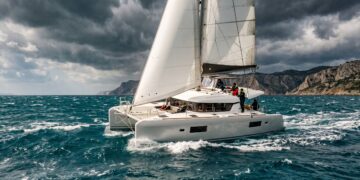
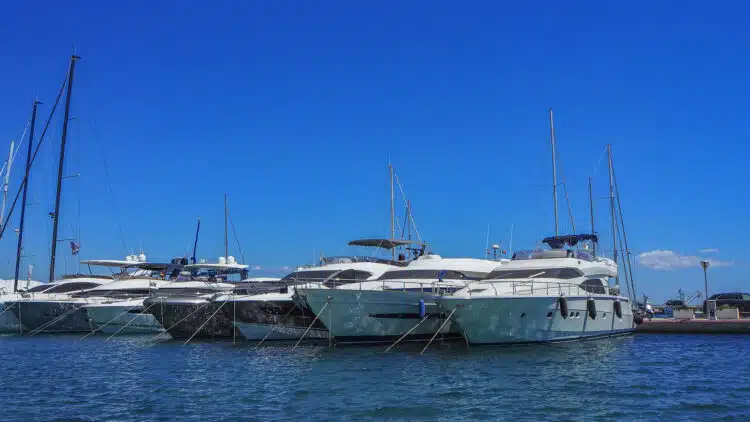
It is a sight that can be observed almost everywhere along the Croatian coast in summer: sailing and motor yachts lie at anchor in front of bays, charter crews set out between the islands, RIBs transport guests to restaurants or beaches, jet skis carve their turns, SUP paddlers stand on the water in the morning sun, and kayaks glide along rocky coastlines. The Croatian Adriatic is one of Europe’s most popular water sports destinations – and at the same time, one of the most heavily used.
With the growing number of boats, yachts, and recreational watercraft, the demands on safety are also increasing. Croatia has therefore revised, clarified, and partly redrafted its regulations for maritime traffic. The goal is clear: greater safety for everyone moving on the water – from the skipper of a charter yacht to a child on a SUP board.
Good to know: Croatia has not completely redefined the safety rules. Many regulations, such as those regarding life jackets, quick-stop systems, or jet skis, were already in place before. However, key points have been redrafted or defined more clearly, such as the rules for personal watercraft, tenders without separate registration, and minimum distances from the coast. At the same time, it is to be expected that the authorities will enforce compliance more strictly in the future.
Particularly important for foreign skippers: The regulations apply to all vessels in Croatian territorial waters – regardless of the flag under which they are registered. German, Austrian, Swiss, or Italian boats must therefore also strictly adhere to the Croatian safety regulations.
Mandatory Life Jackets on Fast Open Boats
A central point concerns open pleasure craft and rigid inflatable boats (RIBs) capable of reaching speeds of more than 20 knots due to their design. On such boats, all persons must wear life jackets unless they are inside a cabin.
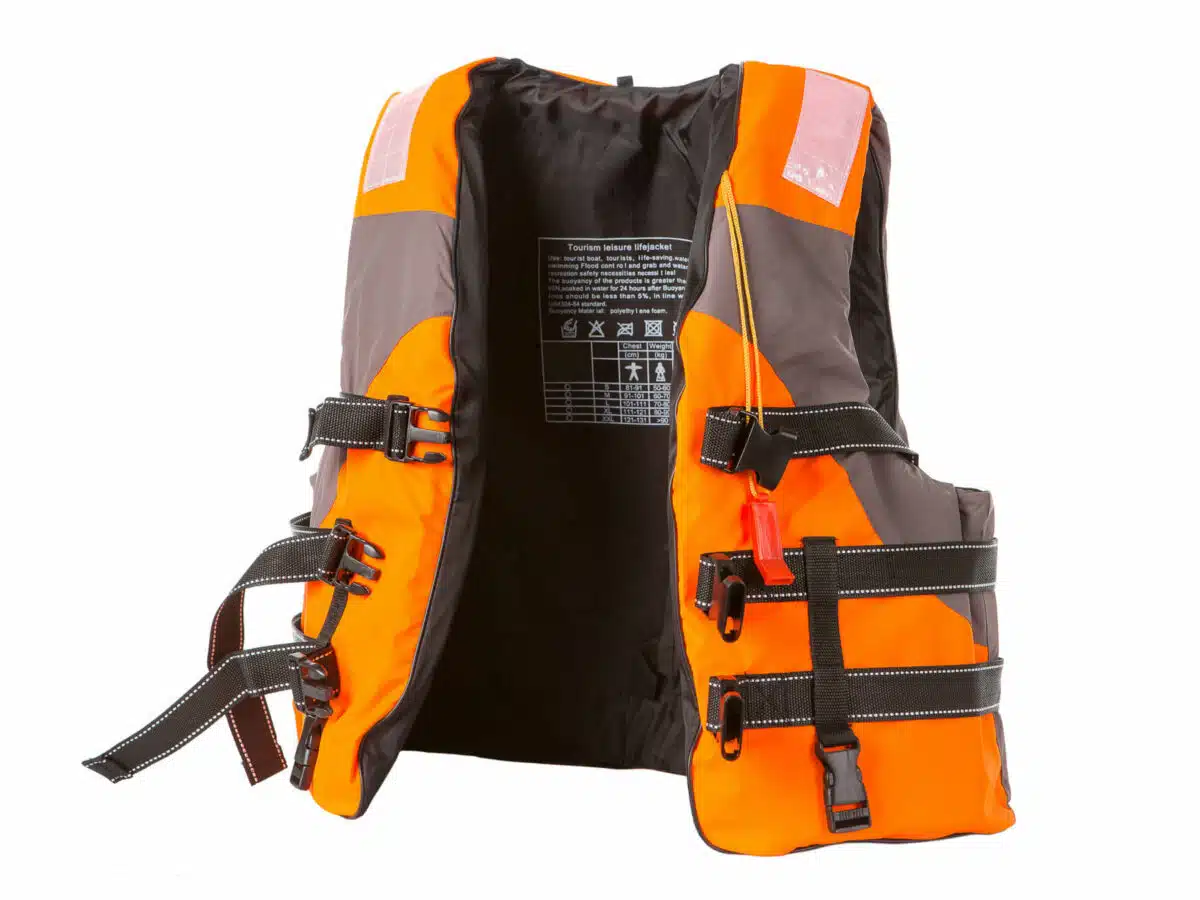
In practice, this means: Anyone stepping onto a fast open pleasure craft or a RIB should put on a life jacket immediately. “The obligation is not just a formality. At speeds above 20 knots, falling overboard can become life-threatening within seconds,” says Marko Orlic from the SeaHelp operations center in Punat. A jacket left unused in the locker is of no help then.
The prescribed life jackets must be available for every person on board. This applies to adults as well as children.
Quick-Stop: Small Lanyard, Major Impact
A quick-stop system is also mandatory on fast open boats and RIBs. This is a safety lanyard connected to the helmsperson that shuts down the engine as soon as the driver goes overboard or moves away from the steering position in an uncontrolled manner.
“Particularly with small, fast motorboats, the lack of a quick-stop can have dramatic consequences,” says SeaHelp Managing Director Wolfgang Dauser. Without an automatic engine shut-off, an unmanned boat could continue running, circle, or endanger other water sports enthusiasts. Dauser: “In practice, the quick-stop is one of the simplest yet most effective safety devices on board.”
Jet Skis: Jacket, Helmet, and Quick-Stop
The regulations for jet skis are particularly strict. Drivers and passengers must wear life jackets. Additionally, helmets are mandatory. Furthermore, the quick-stop must be connected to the driver during operation.
This regulation reflects the specific dynamics of jet skis. “They accelerate rapidly; although they may only be driven at idle speed within the immediate coastal vicinity of 50-300 meters from the shore, full throttle is often applied beyond 300 meters, which is of course fun,” says Croatia expert Dauser, adding that they are also easily accessible even to less experienced drivers. Precisely for this reason, dangerous situations continue to arise.
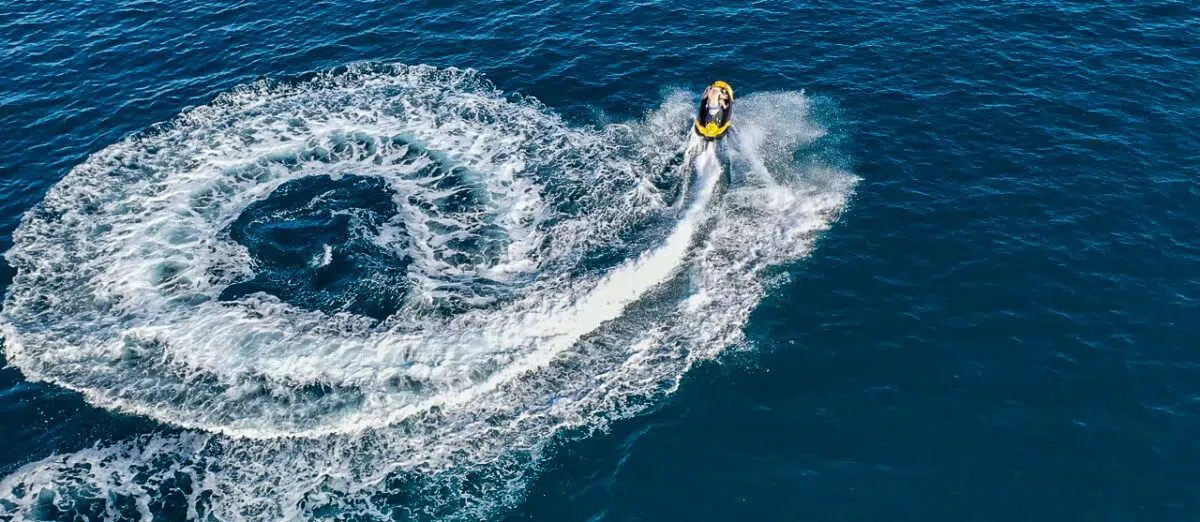
Jet skis are simply “not harmless water toys, they reach high speeds,” and for this reason, they should not be operated where swimmers and paddlers are also present.
Minimum Distances from the Coast
The distances from the coast are also clearly regulated. Outside of ports and marinas, private boats may only approach the coast up to specific limits.
For boats up to 15 meters in length, a minimum distance of 50 meters applies. Boats between 15 and 30 meters in length must maintain a distance of at least 150 meters. Yachts over 30 meters in length may only approach the coast up to 300 meters.
Within these areas, operating under motorized power is generally prohibited. Anyone wishing to get closer to the shore must move the boat without mechanical propulsion – for example, by rowing – or use a designated access corridor.
This regulation is primarily intended to protect swimmers. Especially in bays and in front of beaches, very different users encounter one another: swimmers, children, paddlers, tenders, motorboats, and yachts. The closer motorized vessels get to the coast, the greater the risk of serious accidents.
New Reality: SUP, Foilboard, E-Surfboard
Another important point concerns personal watercraft and modern water sports equipment. Croatia now explicitly covers a wide range of such devices in its regulations: canoes, kayaks, gondolas, pedal boats, SUP boards, windsurf boards, surfboards, kiteboards, electric surfboards, electric foilboards, electrically operated air mattresses, underwater scooters, and similar devices.
As a general rule, they may only be used between sunrise and sunset and must not venture more than 300 meters from the coast. Designated swimming zones and local special regulations must still be observed.
With this, Croatia is responding to a development observed in many cruising areas: “The line between a classic boat, water sports equipment, and a motorized recreational vehicle is becoming increasingly blurred. Electric surfboards, foilboards, and underwater scooters in particular can travel significantly faster and further than conventional swimming devices,” says SeaHelp Operations Manager Marko Orlic.
Tenders: 500 Meters from the Mother Ship
The rules for tenders are particularly relevant in practice. Tenders that are carried merely as equipment of the mother ship and do not have their own registration, liability insurance, and Croatian vignette are generally restricted to moving within a radius of 500 meters from the mother ship.
Exceptions apply to trips from the anchorage to the nearest port, restaurant, or for shopping.
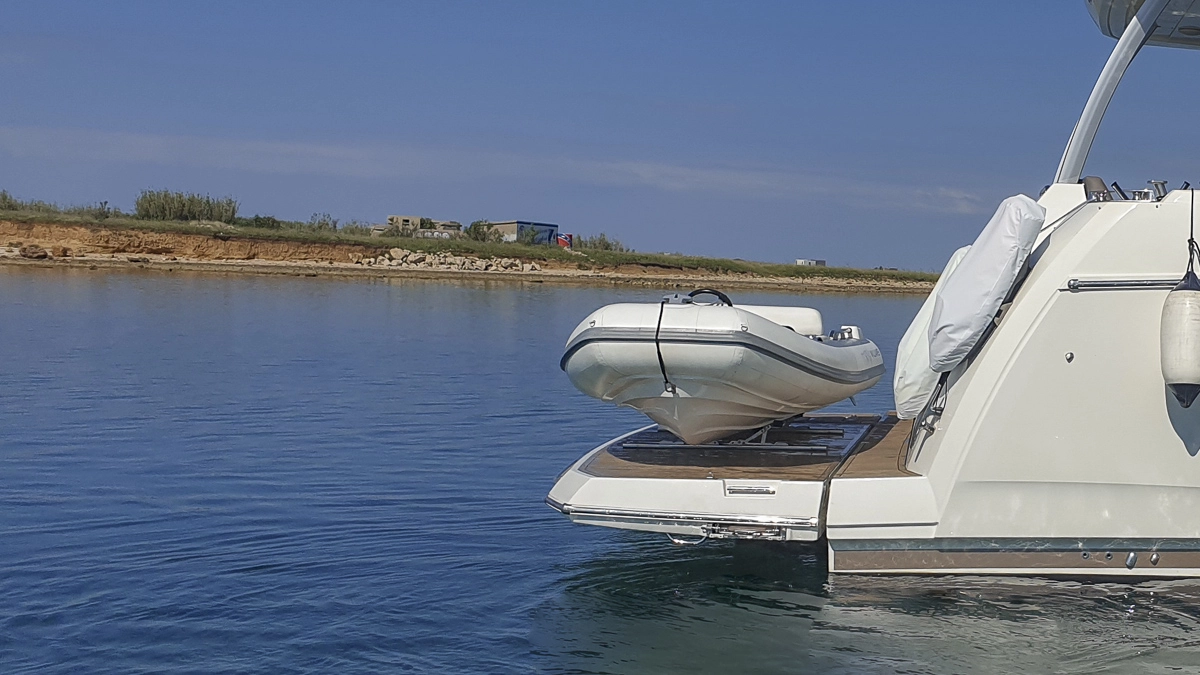
This has consequences for a widespread practice: If the yacht is in the marina, a tender that is not independently registered may no longer be used. Anyone wishing to use their tender independently of the mother ship requires a separate registration, liability insurance, and the corresponding Croatian vignette.
Wolfgang Dauser welcomes the clarification: “Tenders in particular caused a lot of uncertainty in the past. Many crews used their dinghy like an independent recreational boat, even though legally it was just equipment of the mother ship. The 500-meter rule brings more clarity here.”
Port Entrances: Small Yields to Large
Clear rules also apply in port entrances. Vessels up to 20 meters in length must give way to larger vessels, particularly when entering and leaving ports and in the area outside port entrances.
This sounds self-evident, but in practice, it is by no means always free of conflict. Especially during the high season, heavy traffic occurs in front of harbor moles, fuel stations, and marina entrances. Commercial shipping, excursion boats, ferries, charter yachts, and dinghies often share a tight space. The rule is intended to help avoid dangerous encounters and accidents, which have recently been observed with increasing frequency in Croatia (see our news report on this).
Diving and Fishing
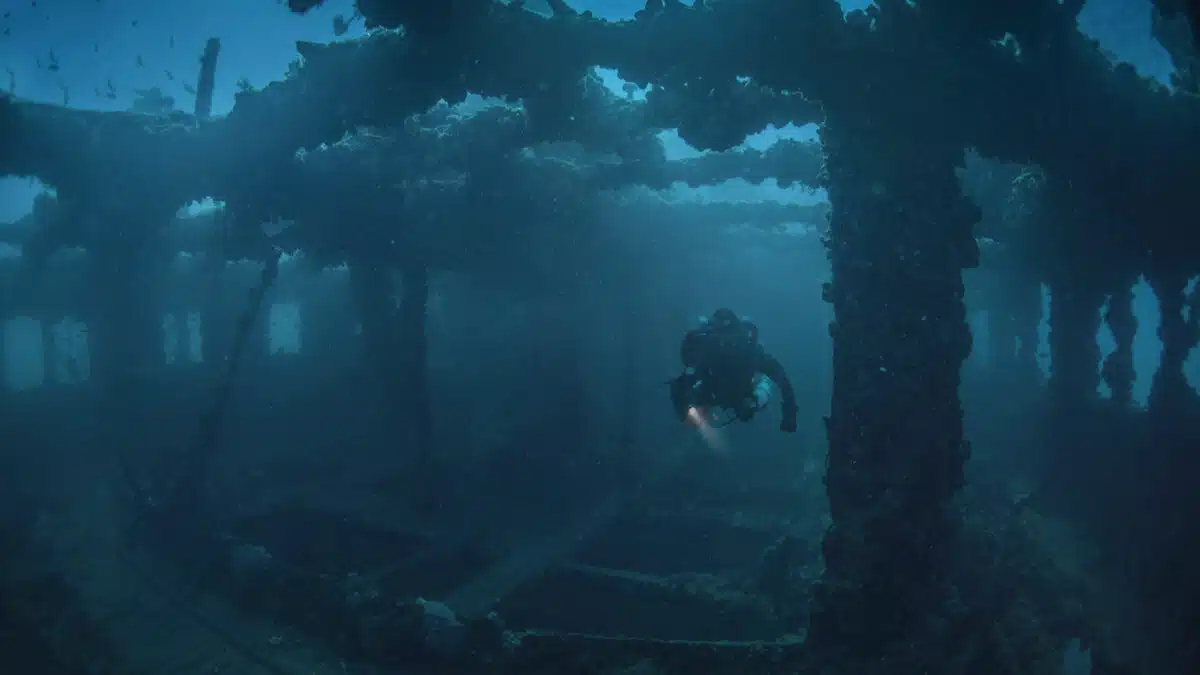
Divers and anglers should also be well acquainted with the Croatian regulations. Individual diving requires a permit from the competent port authority. Organized dives must take place through a registered diving center, a diving club, or an appropriately authorized body.
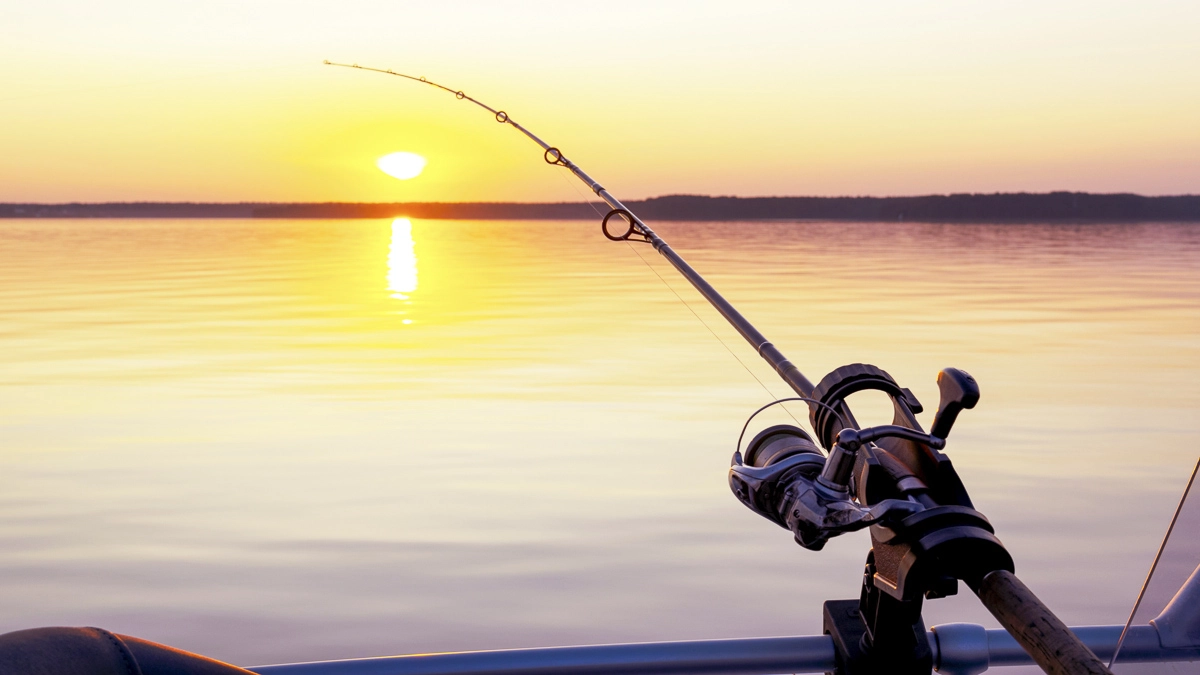
A valid permit is also required for fishing, with a distinction made between recreational fishers and sport fishers – regardless of whether fishing is done from the shore or from a boat. The only exception applies to children under 14 years of age, who may fish with a simple handline without a permit. For classic recreational fishing, a fishing license can be purchased at over 500 kiosks along the coast.
Sport fishing is subject to additional requirements, including membership in a fishing association. Spearfishing is permitted only without breathing apparatus and exclusively within the framework of sport fishing with a corresponding permit, which can be purchased at the offices of angling associations and from specific partners.
Fines and Controls
The Croatian authorities regularly monitor compliance with the regulations, especially during the high season. Responsibility lies, among others, with the port authorities (Lučka kapetanija) and the police. Inspections are carried out not only on Croatian boats but also on foreign vessels.
Specific fine amounts depend on the respective violation, its severity, and the decision of the competent authority. Anyone traveling without the mandatory life jackets, failing to use the quick-stop, ignoring coastal distances, operating in swimming areas, or using an unregistered tender unlawfully must expect substantial penalties.
These can range from several hundred euros to well into the four-digit range. In severe cases, onward travel may even be prohibited or a vessel temporarily impounded.
“For many skippers, the decisive change will lie less in the wording of the regulations than in their practical enforcement,” says Wolfgang Dauser. “Anyone who is well prepared has nothing to fear. However, anyone out on the water without a jacket, without a quick-stop, or with a tender outside the permitted area must expect that this will be noticed more frequently in the future.”
Safety Instead of Bureaucracy
For some skippers, the rules may initially sound like additional bureaucracy. In reality, however, they reflect a development that is particularly visible in Croatia. The Adriatic has become more crowded. Boats have become faster. The variety of water sports equipment has increased significantly. At the same time, many users are moving within the same coastal areas.
“The Adriatic has changed significantly over the past twenty years,” says Croatia expert Wolfgang Dauser. “There are more boats, more charter traffic, more fast RIBs, more jet skis, and new equipment like electric foilboards. It is logical that the legislator is responding to this and adapting existing regulations. It is important that the rules are comprehensible and enforced with a sense of proportion.”
For water sports enthusiasts, this generally means: anyone out on the water in Croatia should familiarize themselves with the rules before casting off or heading out. This applies to skippers as well as tender operators, jet ski users, paddlers, divers, and anglers.
Because in the end, it is not about restricting water sports, but about their prerequisite: safety. Only when swimmers, skippers, water sports enthusiasts, and commercial shipping reliably get along in tight spaces will the Croatian Adriatic remain what it has been for many for years – one of Europe’s most beautiful and popular cruising areas.
Quick Info: The 10 Most Important Rules for Skippers in Croatia
1. Life Jackets on Fast Boats
Open motorboats and RIBs capable of traveling faster than 20 knots require life jackets for all persons on deck.
2. Use the Quick-Stop
Fast motorboats must be equipped with a quick-stop. If the driver falls overboard, the engine stops automatically.
3. Stricter Rules Apply to Jet Skis
Life jacket, helmet, and quick-stop are mandatory.
4. Keep Distance from the Shore
Up to 15 m boat length: at least 50 m
15–30 m: at least 150 m
Over 30 m: at least 300 m
5. SUP & Co. Only Near the Coast
SUPs, kayaks, canoes, foilboards, and e-surfboards may generally only be used during the day and must remain a maximum of 300 meters away from the coast.
6. Tenders Are Not Independent Recreational Boats
Tenders without their own registration may normally move a maximum of 500 meters away from the mother ship.
7. Large Ships Have Priority
Outside port entrances, smaller boats must clear the way for larger vessels.
8. Diving and Fishing Usually Require a Permit
Scuba diving and fishing are generally subject to a permit. Exceptions apply to children when fishing.
9. Violations Can Be Expensive
Checks are carried out on speed, coastal distances, swimming zones, and tenders, among other things. Depending on the violation, fines range from several hundred to several thousand euros.
10. Better to Avoid Alcohol Completely
Although a blood alcohol limit of 0.5 applies, the only way to stay safe on the water is to drive completely sober.