SeaHelp News

Guide

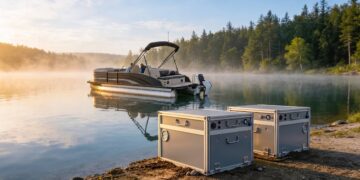
RACLAN Square Marine Box - safety box for boat and yacht

Lithium-ion batteries have become an integral part of modern recreational boating. They power electric outboard motors, e-foils, underwater scooters, drones, tools, onboard electrics and, increasingly, complete propulsion systems for yachts. However, as their use grows, so does concern about fires on board. Many skippers are therefore asking: will lithium batteries soon have to be stored in special safety boxes? The...

Read more

Boat market / boat exchange - prices 2026

Update – Feedback from a reader: "One of the best reports from SeaHelp of broad interest. I have had to share the same experiences for 5 months now as the seller of a sailing yacht (built in 2015, approx. 27 feet). Berth on the Ijsselmeer, ideally suited for this sailing area. During this time, the listing received 840 clicks. So...

Read more
Fire Extinguishers on Boats and Yachts: Regulations, Maintenance, Obligations, Insurance

Are fire extinguishers mandatory on (leisure) yachts in Germany and Austria? What happens if the yacht catches fire and it turns out that the fire extinguishers on board have been "expired" (not maintained) for several years? Can the insurance company refuse payment in this case? Many leisure skippers wonder whether a fire extinguisher must be on board their yacht/boat. Generally,...

Read more
\r\n\r\nThe voucher code can be used for an annual or monthly subscription and is valid until 31 December 2026<\/strong>.\r\n\r\nIf you activate the discount within this period, you will continue to receive a 10% discount<\/strong> on your selected subscription.\r\n\r\n<\/div>\r\n \r\n\r\nhttps:\/\/www.youtube.com\/shorts\/7jqVw7HSfMo[\/embed]\r\n\r\n \r\n

What does the Platinum Boat App cost?<\/h2>\r\nAccording to the provider, use of the app costs 89 euros per year; alternatively, a monthly subscription is offered. As the prices shown in the app stores can vary depending on the country, platform and offer variant, users should check the currently displayed price before taking out a subscription. In the French Apple App Store, for example, several in-app purchases or subscription variants are currently listed.\r\n\r\nAccording to the provider, the application is offered in 175 countries and is already available in ten languages. It should not be concealed that this is still a young product: according to Google Play, the Android version was last updated on 21 August 2026; the Apple App Store currently lists version 1.0.2 from 27 August. For a reliable assessment by a larger number of independent users, the app is therefore simply still too new.\r\n

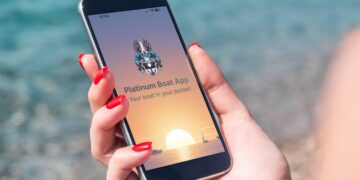
SeaHelp verdict: a good idea \u2013 if you use it consistently<\/h2>\r\nThe real strength of the Platinum Boat App lies less in any single spectacular feature than in bringing together all the information relating to the boat. Having invoices, equipment, insurance documents, manuals, maintenance records and damage documentation available in one place can save time in everyday use and be extremely helpful in an emergency.\r\n\r\n \r\n\r\n\"Platinum<\/a> \u00a9 Boot Experte Costa Brava<\/span>[\/caption]\r\n\r\n \r\n\r\nThe investment history in particular seems especially useful. Anyone who has owned their boat for ten or fifteen years typically no longer knows exactly when which piece of equipment was replaced and how much money has actually gone into refitting and maintenance.\r\n\r\nHowever, the same applies to a digital onboard file as to the good old paper folder: it is only as good as the data the owner feeds into it. Anyone who consistently enters invoices, maintenance work and new equipment can build up valuable documentation of their boat over the years. Anyone who simply enters the boat's name after installation and then forgets about the app has gained little.\r\n\r\nAnyone wishing to take a look at the application can find further information on the Platinum Boat App website. The app is also available via the Apple App Store and Google Play.\r\n
Trade show tip:<\/strong> From 23 to 27 September 2026, Axel Albrot will be presenting the Platinum Boat App at the Interboot on Lake Constance<\/strong><\/a>. According to him, interested parties or subscribers can obtain free day tickets through him. The app will also be presented at boot D\u00fcsseldorf.<\/div>","post_title":"The boat in your pocket: <\/span><\/span>The Platinum Boat App digitises the onboard file","post_excerpt":"","post_status":"publish","comment_status":"open","ping_status":"closed","post_password":"","post_name":"platinum-boat-app-digital-boat","to_ping":"","pinged":"","post_modified":"2026-09-30 09:38:17","post_modified_gmt":"2026-09-30 07:38:17","post_content_filtered":"","post_parent":0,"guid":"https:\/\/www.sea-help.eu\/news-general\/platinum-boat-app-digital-boat\/","menu_order":0,"post_type":"post","post_mime_type":"","comment_count":"0","filter":"raw"},{"ID":70618,"post_author":"11","post_date":"2026-09-08 07:43:05","post_date_gmt":"2026-09-08 05:43:05","post_content":"An anchor should hold. Absolutely. But at some point it should also come back up again. It is precisely this second part of the task that many anchoring manoeuvres fail at \u2013 especially over rocky ground. The new BreakAway Anchor aims to solve the problem with a principle that is as simple as it is clever: if the anchor gets caught, it can be released under high tension load and then, so to speak, retrieved in reverse. SeaHelp: however, this is by no means a licence for careless anchoring.<\/strong>\r\n\r\nIt is one of those situations no skipper wants to experience: the anchor is due to be hauled up, the chain comes up vertically, the electric windlass audibly starts working \u2013 yet nothing moves down below. If a fluke has become wedged under a rock, in a crevice or on another obstruction, what should have been a straightforward departure can quickly turn into a minor or major recovery operation. In the worst case, all that remains is to abandon the anchor or the chain.\r\n\r\nThis is exactly where the new, so-called BreakAway Anchor<\/a> from the US manufacturer of the same name comes in. On the outside, it is a classic plough anchor made of highly polished, seawater-resistant 316-grade stainless steel. Its special feature lies in the shank: a patented release mechanism is designed to ensure that an anchor that has become stuck can change its pulling geometry under a defined load. The manufacturer refers to this as \"reverse retrieval\".\r\n

How does it work?<\/h2>\r\nIn normal operation, the BreakAway initially behaves like a conventional plough anchor<\/a>. The pull of the chain acts on the anchor via the shank; the anchor digs into the seabed and develops its holding power. With conventional anchors, problems arise when the fluke becomes lodged under a rock slab, for example. The harder the subsequent pull in the direction of the shank, the more stubbornly the anchor can wedge itself in.\r\n\r\nFor this reason, the BreakAway has a mechanical release mechanism built into the shank. Once a structurally predetermined load is reached, the connection gives way and allows the direction of pull to change. This enables the anchor to be pulled out of the obstruction against its normal working direction. The mechanism is then reset and the anchor can be used again. Consumable parts such as cable ties, which are often used as a predetermined breaking point in improvised breakaway solutions, are not required. Or, put simply: the anchor is not designed to release more easily from the seabed \u2013 but to do so in reverse in an emergency.\r\n\r\n \r\n\r\n\"Aufbau<\/a> Design of the BreakAway Anchor\u00a9 Breakaway Anchor LLC<\/span>[\/caption]\r\n\r\n \r\n

The advantages<\/h2>\r\nFor cruising sailors and motorboat owners, the main appeal is the prospect of not having to leave an expensive anchor<\/a> on the seabed because of a single unfortunate manoeuvre. Especially in rocky cruising areas, this can be a tangible advantage.\r\n\r\nThere is also the reusability of the mechanism. According to the manufacturer, after a release no securing pin, cable tie or other consumable material needs to be replaced. The mechanism can be reset. The BreakAway is also made of 316-grade stainless steel and manufactured in Grand Rapids, Michigan, USA. The manufacturer states mud, sand and rocky ground as areas of use.\r\n\r\nThere is also an indirect benefit:<\/strong> anyone who does not have to free a stuck anchor by brute force also reduces the strain on the chain, shackle, bow fitting and windlass. And ideally, no anchor with a section of chain is left behind as scrap metal on the seabed.\r\n

What are the drawbacks?<\/h2>\r\nWherever mechanics come into play, an additional potential source of error also arises. A classic plough anchor has no release mechanism that needs to be checked or whose function needs to be understood. With the BreakAway, on the other hand, the skipper should know when and why the system releases and how it is correctly reset afterwards<\/a>.\r\n\r\n\"Furthermore, the design should not be mistaken for a guarantee,\"<\/em> says SeaHelp managing director Wolfgang Dauser. If, for example, the entire chain is wrapped around a rock, the anchor is wedged deep in a narrow crevice, or the ground tackle has become caught on a cable, mooring line or other underwater obstruction, even a reversible anchor can quickly reach its limits.\r\n\r\nFinally, stainless steel is not a cheap material. The BreakAway clearly does not position itself as an affordable standard anchor, but as a more technically sophisticated premium solution. The manufacturer has not yet published a reliable current sale price for the European market in the product information currently publicly available. By comparison, high-quality stainless steel plough anchors from established premium manufacturers can already cost well over 1,000 euros, depending on weight.\r\n

Who is the BreakAway suitable for?<\/h2>\r\nThe concept may be of particular interest to skippers who regularly cruise in rocky or mixed areas \u2013 the Mediterranean, for example. Among the Croatian islands, in particular, there are certainly stunning bays, but by no means everywhere is there good sandy ground into which an anchor can be dug in without any trouble.\r\n\r\nThe principle is also of interest for smaller motorboats, anglers and crews who anchor more frequently over structurally complex ground. In purely sandy or muddy areas, on the other hand, the added benefit is smaller: there, the classic problem lies less in becoming caught on rocks and more in achieving sufficient holding power in the first place.\r\n\r\n \r\n\r\n\"BreakAway<\/a> \u00a9 Philipp | Adobe Stock<\/a><\/span>[\/caption]\r\n\r\n \r\n\r\nFor those on long-distance voyages, the design can represent a kind of additional insurance. After all, anyone travelling far from the nearest chandlery is particularly reluctant to leave their main anchor on the seabed.\r\n

So can you just drop the anchor from now on?<\/h2>\r\n\"No,\"<\/em> says Wolfgang Dauser, who spends several weeks in Croatia himself every year and has carried out many hundreds of anchoring manoeuvres<\/a>. \"Even a BreakAway does not exempt the skipper from the duty to consider the seabed before the anchoring manoeuvre,\"<\/em> says the boating professional. Charts and plotters provide indications of sand, mud, seagrass and rock; in clear water, of course, it is always worth taking an additional look over the side. Cables, pipelines, protected areas and anchoring bans naturally remain off-limits.\r\n\r\nThe basic rules also remain unchanged:<\/strong> a suitably sized anchor, sufficient chain or rope, a sensible scope of chain, an adequate swinging circle and, above all, enough chain paid out. After setting the anchor, it must be checked whether it is actually holding (by reversing to \"dig in\"). For longer stays, weather developments and possible wind shifts must also be factored into the planning.\r\n\r\n\"Because while the BreakAway does solve one particular problem \u2013 recovering a stuck anchor,\"<\/em> it prevents neither the consequences of choosing the wrong anchoring spot nor of poor seamanship \u2013 and it does not turn unsuitable ground into good holding ground. Dauser: \"The skipper still has to pay attention to where he drops his anchor. He can just be a little more relaxed when it comes to hauling it up again later.\"<\/em>","post_title":"Anchor technology for rocky waters: <\/span><\/span>BreakAway Anchor: One that lets go again","post_excerpt":"","post_status":"publish","comment_status":"open","ping_status":"closed","post_password":"","post_name":"breakaway-anchor-yacht-anchor","to_ping":"","pinged":"","post_modified":"2026-09-08 07:43:05","post_modified_gmt":"2026-09-08 05:43:05","post_content_filtered":"","post_parent":0,"guid":"https:\/\/www.sea-help.eu\/news-general\/breakaway-anchor-yacht-anchor\/","menu_order":0,"post_type":"post","post_mime_type":"","comment_count":"0","filter":"raw"},{"ID":70357,"post_author":"11","post_date":"2026-08-16 11:10:59","post_date_gmt":"2026-08-16 09:10:59","post_content":"Lithium-ion batteries have become an integral part of modern recreational boating. They power electric outboard motors, e-foils, underwater scooters, drones, tools, onboard electrics and, increasingly, complete propulsion systems for yachts<\/a>. However, as their use grows, so does concern about fires on board. Many skippers are therefore asking: will lithium batteries soon have to be stored in special safety boxes?<\/strong>\r\n\r\nThe short answer:<\/strong> for most private recreational boats in Europe, there is currently no general legal requirement to store lithium batteries in special safety boxes. However, standards, classification requirements and safety guidelines are increasingly tightening the requirements for installation, monitoring and fire protection. SeaHelp provides an overview.\r\n

New standards instead of a general box requirement<\/h2>\r\nAn important step in this regard was the publication of the ISO 23625:2025 standard<\/a>, which last year defined concrete requirements for lithium-ion batteries on recreational boats for the first time. It regulates the selection, installation and safety of battery systems with a capacity of more than 500 Wh on board recreational boats.\r\n\r\nAt the same time, the International Maritime Organization (IMO)<\/a> is working on a comprehensive safety framework for battery-electric ships and battery storage systems. The development of corresponding regulations is currently in full swing.\r\n\r\nThe European Maritime Safety Agency (EMSA<\/a>) has also already published guidelines for onboard battery storage. Although these are not (yet) mandatory, they already serve as a point of reference for many authorities and classification societies.\r\n

Why lithium batteries are problematic on board<\/h2>\r\nThe greatest danger is so-called \"thermal runaway.\" In this process, a damaged or faulty cell heats up increasingly on its own. Temperatures of several hundred degrees Celsius and toxic gases are produced, often resulting in a fire that is difficult to control. What is particularly critical here is the fact that a single battery can \"ignite\" neighboring batteries and trigger a chain reaction.\r\n\r\nOn a yacht, the situation is made worse by the following:<\/strong> there are usually only limited escape routes, small reserves of extinguishing water, very cramped technical spaces, and often flammable interior fittings made of wood or plastic on board.\r\n\r\nFor this reason, classification societies such as Det Norske Veritas (DNV) require extensive safety measures for larger battery systems, such as temperature monitoring, ventilation and special extinguishing systems.\r\n

Safety boxes: not mandatory, but increasingly standard<\/h2>\r\nNo European regulation currently explicitly requires private recreational boats to store spare batteries in safety boxes. However, many insurers, shipyards and safety consultants now explicitly recommend doing so. Two product groups are particularly relevant here:\r\n

RACLAN systems<\/h3>\r\nThe RACLAN systems<\/a> were developed specifically for storing and charging<\/a> lithium-ion batteries. The boxes are made of fire-resistant composite material and, depending on the model, feature an integrated extinguishing system that is triggered automatically in the event of a critical rise in temperature. They are designed to contain fires and prevent them from spreading to the surrounding area.\r\n\r\nSome models are explicitly designed for storing, transporting and charging lithium batteries. The manufacturers advertise the systems as explosion-proof and fire-resistant.\r\n\r\n \r\n\r\nhttps:\/\/www.youtube.com\/watch?v=aCbcOYYvVcw[\/embed]\r\n\r\n \r\n

ZARGES<\/h3>\r\nThe BatterySafe solutions from ZARGES<\/a> were also developed specifically for lithium batteries. The aluminum cases feature a non-combustible interior lining and are designed to significantly reduce the impact on the surrounding area in the event of a cell fire. They are used for both storage and transport.\r\n\r\n \r\n\r\n \r\n\r\n \r\n

What does this mean for yacht owners?<\/h2>\r\nFor the typical cruising sailor or motorboater, the following currently applies: permanently installed lithium onboard batteries should be installed in accordance with current standards, equipped with a battery management system (BMS), properly fused and regularly monitored.\r\n\r\nMobile batteries should, wherever possible, not be stored loose in lockers or storage compartments; they should be protected from moisture and mechanical damage, stored in fire-retardant containers wherever possible, and never charged unattended.\r\n\r\nEspecially for e-bike batteries, drone batteries, power tool batteries or batteries for electric outboard motors, there is a growing number of recommendations to use special safety boxes.\r\n

Insurers are closely monitoring the development<\/h2>\r\nMost yacht insurers<\/a> do not yet require certified battery safety boxes. However, experts expect this to change in the coming years. Similar developments have already occurred with fire extinguishers, gas systems and electrical installations.\r\n\r\nAs the electrification of recreational boating continues to increase, lithium safety concepts are likely to become just as much a matter of course in the future as life jackets or smoke detectors.\r\n

Conclusion<\/h2>\r\nThere is currently no general legal requirement to store lithium batteries in safety boxes on private yachts, either in Germany or at EU level. However, regulatory developments clearly point toward higher safety standards. New standards such as ISO 23625:2025, the work of the IMO, and recommendations from EMSA and DNV make it clear that lithium batteries are now considered a distinct safety risk.\r\n\r\nAnyone using high-quality lithium batteries<\/a> on board today would therefore be well advised to voluntarily invest in professional safety solutions such as RACLAN or ZARGES battery boxes. While not yet a legal requirement, many fire safety experts consider them to be a sensible investment in the safety of crew and vessel.","post_title":"Lithium batteries on board: <\/span><\/span>Will safety boxes for lithium batteries become mandatory?","post_excerpt":"","post_status":"publish","comment_status":"open","ping_status":"closed","post_password":"","post_name":"lithium-battery-safety-box","to_ping":"","pinged":"","post_modified":"2026-08-16 11:10:59","post_modified_gmt":"2026-08-16 09:10:59","post_content_filtered":"","post_parent":0,"guid":"https:\/\/www.sea-help.eu\/news-general\/lithium-battery-safety-box\/","menu_order":0,"post_type":"post","post_mime_type":"","comment_count":"0","filter":"raw"},{"ID":70279,"post_author":"11","post_date":"2026-08-13 09:29:35","post_date_gmt":"2026-08-13 07:29:35","post_content":"It looks almost too beautiful to be dangerous. A small, blue-violet shimmering body drifts on the surface of the water, above it rises a translucent crest like the sail of a tiny ship. But anyone who swims closer out of curiosity during a swim stop should quickly gain distance: the Portuguese man-of-war is one of the most unpleasant encounters you can have in European coastal waters.<\/strong>\r\n\r\nIn July 2026, numerous specimens of Physalia physalis were reported along Spain's northern coast. Beaches in Bizkaia and Gipuzkoa in the Basque Country were particularly affected; within just a few days, 19 injuries were recorded there, and three of those affected had to be taken to a medical facility. Portuguese man-of-war also appeared off Asturias, including at the beaches of San Lorenzo, Poniente and Arbeyal near Gij\u00f3n. Reports from the French Atlantic coast followed in late July and early August. There, sightings occasionally led to swimming bans and beach closures.\r\n\r\nThis is certainly relevant for skippers. That's because Physalia physalis lives exactly where we most like to be when jumping off the stern: on the surface of the water.\r\n

Not a jellyfish \u2013 but a floating colony<\/h2>\r\nEven though it is almost always referred to as a jellyfish: strictly speaking, a Portuguese man-of-war<\/a> is not a jellyfish. It belongs to the siphonophores, colonial organisms made up of highly specialized individual organisms that function together as a single creature.\r\n\r\nThe most striking part is the gas-filled float, usually ten to 30 centimetres long, known as the pneumatophore. Its raised crest functions like a sail. As a result, the man-of-war cannot swim deliberately against wind and current, but is instead carried across the sea's surface.\r\n\r\nBut hidden beneath this comparatively small \"sailboat\" lies the real danger: long tentacles covered in countless stinging cells. They usually extend several metres deep, or trail behind the animal; under favourable conditions they can grow considerably longer. That's why a simple rule applies at sea: don't just avoid the visible blue float, but keep a very generous distance.\r\n

Actually a resident of the open ocean<\/h2>\r\nPhysalia physalis is found worldwide in warm tropical and subtropical marine regions. For Europe, the Atlantic population is particularly relevant; in the Azores and in Portuguese waters, the species is by no means exotic. Wind and surface currents can carry the animals all the way to Europe's Atlantic coasts.\r\n\r\nThe Mediterranean is not entirely new territory either. Scientific studies show that Portuguese man-of-war repeatedly enter the Mediterranean through the Strait of Gibraltar. Sightings have been documented since the 19th century. In most cases, this apparently does not involve a permanently established Mediterranean population, but rather animals that are carried far to the east by particular combinations of wind, current and Atlantic water.\r\n\r\nPortuguese man-of-war were also observed in the central Mediterranean in 2026: between early February and early March, scientists documented specimens whose appearance was likely linked to an inflow of Atlantic water and particular current conditions.\r\n\r\nSo the animals don't \"migrate\" to Europe in the classic sense. They sail here \u2013 or rather, are sailed here. Wind and current determine their course.\r\n

For skippers: look first, then jump<\/h2>\r\nThe danger is easy to underestimate, especially during a swim stop at anchor. While lifeguards at supervised beaches can raise warning flags, there is no one in a secluded bay to look out for man-of-war beforehand.\r\n\r\nThat's why a quick look around the boat should be second nature before jumping in. A Portuguese man-of-war is usually fairly easy to spot thanks to its blue to violet shimmering float. It gets trickier with individual or torn-off tentacles \u2013 these can be almost invisible in the water.\r\n\r\nIf a man-of-war is spotted, the crew should not go swimming. Even a supposedly sufficient distance of a few metres is no guarantee, since the tentacles can extend well beyond the visible body.\r\n\r\nAnyone who sees several animals should skip the swim stop altogether and, if necessary, choose a different anchorage<\/a>. A cluster on the surface can mean that more specimens are drifting in with the wind and current.\r\n

Caution on the beach too<\/h2>\r\nPortuguese man-of-war are regularly washed up on beaches. There, they quickly lose their elegant shape, but their stinging cells don't automatically lose their effect. Even dead or drying animals, and torn-off tentacles, can still sting.\r\n\r\nThat's why the rule is:<\/strong> never touch \u2013 not even with bare feet, a towel, or out of curiosity with your hand. This is especially important for children and dogs.\r\n\r\nA stranded animal should not be carried back into the water yourself. At supervised beaches, inform lifeguards or beach patrol staff. If several specimens are found, this is also a clear indication that more animals may be present in the nearshore water.\r\n\r\n \r\n\r\n \r\n\r\n \r\n

Why contact is so painful<\/h2>\r\nThe tentacles are densely covered with stinging cells known as nematocysts. On contact, microscopically small stinging threads shoot into the skin and release venom.\r\n\r\nTypical symptoms are immediate, sometimes extreme pain, along with long, whip-like red marks on the skin. Swelling and local inflammatory reactions may also occur.\r\n\r\nIn cases of more severe poisoning, however, nausea, vomiting, headaches, circulatory problems, shortness of breath or other systemic reactions are also possible. Allergic reactions can make the situation even worse.\r\n\r\nThis makes an incident at sea particularly problematic: anyone who suddenly experiences severe pain or circulatory problems in the water is already at risk from the resulting panic and danger of drowning.\r\n

What to do after contact?<\/h2>\r\nThe most important thing first:<\/strong> get out of the water. After that, the affected skin should be moved as little as possible and never rubbed. Any visible tentacle remnants must be carefully removed \u2013 ideally with tweezers or a suitable tool<\/a>, not with bare hands. Anyone helping someone else should protect their own hands.\r\n\r\nSeawater, or salt water, is suitable for rinsing. Fresh water should be avoided, as the change in salinity can trigger stinging cells that have not yet fired. Sand, vigorous rubbing or alcohol also have no place on the wound.\r\n\r\nAfter that, heat can significantly relieve the pain. Medical recommendations for many marine sting injuries suggest warm to hot, but never scalding, water \u2013 around up to 45 degrees Celsius \u2013 applied over an extended period.\r\n\r\nIncidentally, international recommendations regarding vinegar are not consistent for Physalia. Some guidelines explicitly recommend it for certain jellyfish species, while others advise against it for the Portuguese man-of-war. For a skipper without reliable species knowledge, the conservative approach therefore makes sense: carefully remove the tentacles, rinse with seawater, avoid rubbing, and then apply heat to relieve the pain.\r\n\r\n \r\n\r\n\"Portuguese<\/a> \u00a9 Kalim | Adobe Stock<\/a><\/span>[\/caption]","post_title":"Beautiful, blue \u2013 and best not touched: <\/span><\/span>The Portuguese man-of-war reaches Europe's beaches","post_excerpt":"","post_status":"publish","comment_status":"open","ping_status":"closed","post_password":"","post_name":"portuguese-man-of-war-what-to-know","to_ping":"","pinged":"","post_modified":"2026-08-13 09:29:35","post_modified_gmt":"2026-08-13 07:29:35","post_content_filtered":"","post_parent":0,"guid":"https:\/\/www.sea-help.eu\/news-general\/portuguese-man-of-war-what-to-know\/","menu_order":0,"post_type":"post","post_mime_type":"","comment_count":"0","filter":"raw"},{"ID":69688,"post_author":"11","post_date":"2026-07-23 07:13:10","post_date_gmt":"2026-07-23 05:13:10","post_content":"
\r\n

Update \u2013 Feedback from a reader:<\/strong><\/h3>\r\n\"One of the best reports from SeaHelp of broad interest.<\/em>\r\nI have had to share the same experiences for 5 months now as the seller of a sailing yacht (built in 2015, approx. 27 feet). Berth on the Ijsselmeer, ideally suited for this sailing area.<\/em>\r\nDuring this time, the listing received 840 clicks. So far, 1 caller has asked whether a trailer is included.<\/em>\r\nSince I don't want to give the boat away, I will wait another year before selling it.<\/em>\r\nBest regards, a SeaHelp member\"<\/em>\r\n\r\n<\/div>\r\nThe boat market in the DACH region is currently in a difficult state. SeaHelp explains what might be behind this, and when the situation can be expected to ease at the earliest.<\/strong>\r\n\r\nMany boat owners who want to sell their boat<\/a> \u2013 for instance to buy a new or larger boat, or simply because they want to give up their water sports hobby \u2013 report that boat prices are currently \"rock bottom\" and that certain boats and yachts are simply unsellable at the moment. SeaHelp attempts to analyze the reasons for this and offer tips to those affected.\r\n\r\nExample:<\/strong> A SeaHelp member recently told us about his attempts to sell the family boat, a very well-kept Ferretti 46, since November 2025, and that there had been \"virtually no inquiries or reactions\"<\/em> to the sales listing. \"Three dealers I know very well offered me between 230,000 and 250,000 euros for my Ferretti 46, built in 2001, in the years 2022 and 2023, but back then I didn't want to sell yet,\"<\/em> the owner told us. A mistake? Should he have sold back then?\r\n\r\nWell, hindsight is usually \"20\/20\" \u2013 after all, who could have foreseen back then that demand would \"already start to slacken\" in 2024, and that there would suddenly be only isolated offers for this boat (in the range of merely 190,000 to 220,000 euros)?\r\n

An affected SeaHelp member reports on the current boat market: \"Nothing is moving at the moment\"<\/h2>\r\nThe SeaHelp member says he has been observing the market \"very intensively (daily)\" since November 2025, and noticed that currently \"hardly any additional boats\/yachts are being offered,\" and that those that can be found on the internet are \"always the same ones.\" At the moment, \"nothing is moving\" \u2013 no sales are perceptible, only price reductions.\r\n\r\nHe has currently listed his Ferretti for 195,000 euros, and from November 2025 to April 2026 he received \"not a single inquiry,\" neither by email nor by phone. In April, he then further reduced the asking price to 175,000 euros \u2013 result: \"approx. 220 people\" had indeed marked his Ferretti as a \"favorite,\" but there was not a single purchase reaction; it had come \"to virtually nothing.\"\r\n\r\nThe boat owner, a SeaHelp member of the \"very first hour,\" engaged several dealers, and one of the brokers, who operates across Europe and, according to his own statements, \"has sold approx. 1,000 boats \/ yachts in over 30 years and has 20,000 customer addresses in his files,\" told him that \"since August 2025 the market has been totally dead,\" and that since then he had only been able to sell one boat on the German Baltic coast and one in Holland; in the Mediterranean and the Adriatic, \"nothing is happening at the moment.\"\r\n\r\nFurther research by our SeaHelp member revealed that other owners with similar boat models are experiencing the same thing: \"A yacht owner who is in financial difficulties offered his Azimut 62 Fly with a berth in Italy (Adriatic) for 550,000 euros in September 2025,\"<\/em> he tells us. In December 2025 he then reduced the price to 490,000 euros, in February to 430,000 and in April to 375,000 euros \u2013 result: zero.\r\n\r\nOur SeaHelp member went on to tell us that he had recently been in Bodrum on the Turkish Riviera and viewed a Princess 52 Fly, built in 2015. \"The usual selling price in Italy, Spain, Slovenia, Croatia is between 750,000 and 950,000 euros,\"<\/em> a Greek dealer had listed the yacht for 650,000 euros and the owner himself for 610,000 euros on the internet.\r\n

Yachts in very good condition can currently be acquired at \"sensational prices\"<\/h2>\r\n\"The owner bought himself a Fairline 68 Squadron, built in 2022, in March 2025, and the Princess 52 Fly has been in dry storage since September 2024 and is being offered for sale on the internet,\"<\/em> says the SeaHelp member; the owner was personally on site and showed him the yacht \u2013 and also told him that he \"had been the only interested party to view the yacht since September 2024. The yacht is in very good condition and can probably be acquired at a sensational price.\"<\/em>\r\n\r\nThe problem:<\/strong> \"Anyone who wants to 'downsize' or upsize their boat currently simply has a bad hand, because after all, you don't want (and can't) buy a yacht if your own one hasn't been sold yet,\"<\/em> says the SeaHelp member, adding: Owning two yachts for an indefinite period of time is probably \"every boat owner's nightmare.\"<\/em>\r\n\r\nA \"major\" boat dealer recently confirmed this to him, saying the crisis in the boat market \"has been going on since 2024\" and would \"certainly last another 2-3 years.\" Every dealer who is able to cut his costs to the absolute minimum will be strong after the crisis; however, many dealers who have to service financing and ongoing rental costs will \"not survive the end and will have to file for insolvency.\"\r\n\r\nSeaHelp took this reader's letter as an opportunity to analyze the current boat market \u2013 at least in broad terms. Our research initially revealed that a well-maintained Ferretti 46 from the 2001 model year is currently likely to fetch roughly between 170,000 and 260,000 euros on the European second-hand market, with the actually achievable price depending very heavily on condition, engine configuration, refit history, berth, VAT status (\"VAT paid\") and maintenance records.\r\n\r\nThe decisive factor is likely to be less the year of build itself than other factors, such as: Have the engines been overhauled? Have the generator, air conditioning and electronics been modernized? Is the vessel completely osmosis-free? Are there records of regular servicing? New upholstery \/ teak? Berth in the Mediterranean or in freshwater? Did the boat possibly have a charter history? Because the fact is: Especially with Italian flybridge yachts<\/a> of this generation, buyers now pay extremely close attention to documentation and maintenance. A \"cheap\" Ferretti can very quickly cause six-figure follow-up costs.\r\n

According to SeaHelp research, the European boat market is currently significantly weaker than two to three years ago<\/h2>\r\nBut none of this seems to play a role in the case of our SeaHelp member \u2013 the vessel is \"perfectly maintained and extremely well cared for,\" he assured us in conversation; in this \"very good condition,\" the boat is actually a \"bargain.\" Our assessment: The seller could well be right, because the reason for the current unsellability lies elsewhere: According to SeaHelp research, the European boat market is indeed significantly weaker at the moment than it was two to three years ago.\r\n\r\nYacht broker Oliver Sieckmann<\/a>, whom we met at the Salone Nautico Venezia, confirmed the situation with the words: \"At the moment there is an absolute buyer's market.\"<\/em> Anyone planning to buy a boat or yacht should do so now, because prices are \"rock bottom.\"<\/em> Anyone wanting to sell a yacht, on the other hand, would be \"well advised to wait a while longer\"<\/em> \u2013 or would have to settle for significantly less proceeds from the sale.\r\n\r\nThe new boat market is also affected by the current situation: In the past, scheduled boat viewings at yacht shows regularly resulted in purchases; unfortunately, that is currently not the case. When there are reserved test drives and viewings, preliminary contracts and declarations of intent to buy are currently often cancelled afterwards for flimsy reasons \u2013 or without any reasons given at all, Wladimir Zinchenko, founder and CEO of Greenline Yachts from Slovenia, tells us at the show.\r\n

The boat market is currently suffering from several factors at the same time<\/h2>\r\nWhy is the boat market currently so difficult? According to SeaHelp research, the market is currently suffering from several factors at the same time: First, there is what we might call the \"post-Covid effect.\" During the pandemic, demand exploded: Travel was difficult, many people rediscovered water sports for themselves, luxury goods sold extremely well, with the result that even used boats were sometimes sold at astronomical prices. This \"exceptional boom\" is now over, and the market is probably also still saturated to a certain extent as a result of this exceptional situation.\r\n\r\nIn addition, a high interest burden is also likely to play a role at present, because: Yachts are often financed or leased. However, the sharp rise in interest rates in Europe has made financing more expensive, made leasing models less attractive, and as a result made buyers \"more cautious.\" This is currently being felt massively, especially with boats between 150,000 and 500,000 euros.\r\n\r\nThe currently virtually \"exploding\" running costs must also not be neglected in this context: Berths, winter storage, diesel, insurance<\/a>, boatyard hours and spare parts have in some cases become drastically more expensive in southern Europe in recent months. Many owners now underestimate the running costs of an older flybridge yacht (or are indeed well aware of them), because a 46-foot Ferretti \u2013 to stay with the example above \u2013 can easily consume 15,000 \u2013 30,000 euros in annual costs today \u2014 not counting major repairs.\r\n\r\nFinally, the facts mentioned above result in a clear \"supply overhang\": Many boats came back onto the market after the Covid boom, older owners exited,\r\nthe charter companies<\/a> are renewing their fleets, and on top of that, economic uncertainty (caused by the political situation in Europe and worldwide) is currently rising. As a result, there are currently significantly more offers than serious buyers.\r\n\r\nA further effect of this development:<\/strong> Buyers have become very selective; there is definitely still a market \u2014 but only for very well-kept, cleanly documented and modernized boats. \"Average boats,\" on the other hand, are often left sitting. Another issue here is the purchase price; proceeds like those before or during Covid can currently not be achieved by far.\r\n

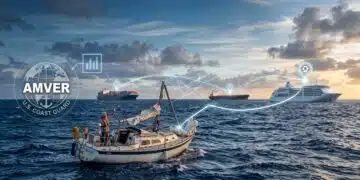
The answer to the question of when the market will finally recover is not easy to give<\/h2>\r\nMany yacht owners who are seriously considering a sale are therefore asking themselves: When could the market recover? Many brokers currently expect a fundamental turnaround at the earliest for the end of 2026, or more likely only for the period 2027 \/ 2028. So the watchword is: wait it out. A market recovery is likely to depend above all on falling interest rates and a generally more stable economic situation, which could revive the \"consumer mood\" in the luxury segment; and the (once again positive) development of energy costs must not be forgotten in this context either.\r\n\r\nOnly high-quality premium brands and young second-hand boats are currently proving relatively stable; efficient explorer \/ long-range yachts and smaller day cruisers are also less affected by the currently weak boat market. Under pressure, on the other hand, are predominantly older large flybridge yachts with high fuel consumption, boats with a maintenance backlog, and models without modern electronics or IPS systems.\r\n\r\nClassic Italian flybridge yachts of the early 2000s in particular \u2014 including older Ferretti models, to come back to the initial example of our SeaHelp member \u2014 are currently often under particular price pressure, because buyers are increasingly interested in more economical drives, lower operating costs and more modern interior concepts.\r\n\r\nNevertheless, according to our research:<\/strong> A well-kept Ferretti 46 remains an attractive Mediterranean boat with a strong brand image. Good examples should continue to find their buyer \u2014 although unfortunately no longer at the \"overheated\" Covid prices of 2021 \/ 2022. \"SeaHelp can only advise waiting a little longer, because yacht prices will become a bit cheaper still!\"<\/em> says SeaHelp Managing Director and profound expert on the yacht market Wolfgang Dauser.","post_title":"Sell, wait, or buy now? <\/span><\/span>Quo vadis boat market 2026","post_excerpt":"","post_status":"publish","comment_status":"open","ping_status":"closed","post_password":"","post_name":"offer-price-boat-market-2026","to_ping":"","pinged":"","post_modified":"2026-07-30 08:28:13","post_modified_gmt":"2026-07-30 06:28:13","post_content_filtered":"","post_parent":0,"guid":"https:\/\/www.sea-help.eu\/?p=69688","menu_order":0,"post_type":"post","post_mime_type":"","comment_count":"0","filter":"raw"},{"ID":69645,"post_author":"11","post_date":"2026-07-19 13:01:37","post_date_gmt":"2026-07-19 11:01:37","post_content":"How a little-known system saved a solo sailor's life \u2013 and why cruising sailors should know how it works.<\/strong>\r\n\r\n489 nautical miles off the coast of Oregon marks the end of rescue helicopter range. When a 74-year-old solo sailor was drifting there in late May, disabled in the Pacific with a broken mast, engine failure, and a shoulder injury aboard his yacht of just nine meters, the outlook seemed grim indeed. Shortly afterwards, however, he was picked up safe and sound by a passing luxury cruise ship. This was made possible by a system that is barely known outside commercial shipping: AMVER<\/a>\r\n\r\nContrary to a widespread assumption, however, the sailor by no means had the system \"on board\". In fact, AMVER is neither an emergency transmitter nor an electronic device that needs to be installed. Rather, it is a global network of international merchant shipping \u2013 and that is precisely what makes it so interesting for cruising sailors.\r\n

The principle: finding rescuers instead of searching for the rescued<\/h2>\r\nAMVER stands for Automated Mutual-Assistance Vessel Rescue System and has been operated by the U.S. Coast Guard<\/a> since 1958. The voluntary system pursues a simple goal: in an emergency, the vessel that can come to a casualty's aid the fastest should be identified as quickly as possible.\r\n\r\nTo this end, thousands of merchant vessels, tankers, freighters, cruise ships, and other ocean-going commercial vessels regularly report their planned route, their position, and any changes to their voyage to the AMVER center. This data creates a near-real-time picture of worldwide shipping. If a distress call comes in anywhere on the high seas, rescue coordination centers can determine within minutes which vessels are within range and eligible for a rescue operation.\r\n\r\nIn the case of the Canadian solo sailor, the choice fell on the cruise ship SILVER WHISPER, which altered course and finally took the man safely on board. Without AMVER, the search for a suitable rescue vessel could have taken considerably longer \u2013 time that often decides between life and death on the high seas.\r\n

The actual lifesaver<\/h2>\r\nThe first step towards the rescue, however, was not taken by AMVER itself, but by a satellite communication device that enabled the sailor to contact the U.S. Coast Guard. Only after his position and his distress situation were known did AMVER come into play and help identify the most suitable rescuer.\r\n\r\nThis is precisely where the system's strength lies: it does not replace a distress call, but complements international maritime search and rescue with an intelligent network of potential rescuers.\r\n

No device, no app, no installation<\/h2>\r\nImportant for recreational boaters to know: AMVER can neither be bought nor installed. There is no manufacturer, no antenna, and no transmitter. The system is operated exclusively by the U.S. Coast Guard and is available to international rescue coordination centers.\r\n\r\nThe participating commercial vessels transmit their position and route data via their existing communication systems. For them, participation is voluntary and free of charge.\r\n

What does AMVER mean for recreational skippers?<\/h2>\r\nAlthough recreational boats do not usually participate in the AMVER system themselves, they benefit directly from it in an emergency. If a yacht gets into distress in the middle of the Atlantic, the Pacific, or the Indian Ocean, rescue coordination centers can use AMVER to determine within a short time which merchant vessel or cruise ship can provide assistance.\r\n\r\nEspecially on offshore passages, ships are often the only available means of rescue. While helicopters can usually only operate a few hundred nautical miles from the coast, merchant vessels are often already in the immediate vicinity of the casualty.\r\n\r\nFor bluewater sailors, AMVER is therefore one of the invisible safety nets of the world's oceans \u2013 even though they do not participate in it themselves.\r\n

What cruising sailors can learn from this<\/h2>\r\nThe recent rescue case impressively demonstrates that modern offshore safety consists of several building blocks. First and foremost, it is crucial to be able to send a distress call at all. For offshore passages, 406 MHz EPIRBs<\/a>, satellite communicators, or satellite phones are therefore among the most important safety equipment on board today. Only once a rescue coordination center learns of the distress situation can it coordinate suitable rescue vessels with the help of systems such as AMVER.\r\n\r\nFor coastal waters such as the Baltic Sea, the North Sea, the Adriatic, or the western Mediterranean, however, AMVER plays a much smaller role. There, national maritime rescue services, coast guards, and rescue helicopters usually handle the operations. Or \u2013 in the case of non-life-threatening breakdowns or problems at sea \u2013 you can simply notify Europe's largest nautical breakdown service SeaHelp via the alarm function<\/a> of the free and practical SeaHelp app.\r\n

24h EMERGENCY CALL EUROPE: 0043 50 43 112<\/h3>\r\nIn an emergency, the SeaHelp rescue boats can be called via the practical SeaHelp app<\/a>, or via the free emergency number for Europe 0043 50 43 112<\/strong> (or via the alternative emergency number for Europe 00385 919 112 112.\r\n\r\nDownload SeaHelp app:<\/strong>\r\n\r\n\"SeaHelp<\/a>\"SeaHelp<\/a>\r\n

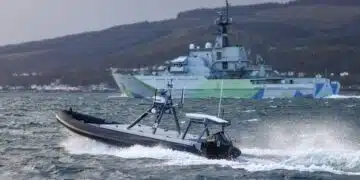
A global safety net working in the background<\/h2>\r\nThe spectacular rescue of the solo sailor off the American West Coast makes clear how closely modern communication and international cooperation are intertwined today. It was not AMVER alone that saved the sailor's life \u2013 but without the global network of participating merchant vessels, the nearest suitable rescuer would probably have been found considerably later.\r\n\r\nFor recreational skippers, AMVER is therefore above all one thing:<\/strong> reassuring knowledge. Those who sail the oceans do not sail alone. Working in the background is a worldwide rescue network that, in an emergency, can turn a passing freighter or cruise ship into a lifesaver within a very short time.","post_title":"No device, no app \u2013 and yet a lifesaver on the high seas: <\/span><\/span>AMVER: The invisible safety net of the oceans","post_excerpt":"","post_status":"publish","comment_status":"open","ping_status":"closed","post_password":"","post_name":"amver-safety-net-sailors","to_ping":"","pinged":"","post_modified":"2026-07-19 13:01:37","post_modified_gmt":"2026-07-19 11:01:37","post_content_filtered":"","post_parent":0,"guid":"https:\/\/www.sea-help.eu\/news-general\/amver-safety-net-sailors\/","menu_order":0,"post_type":"post","post_mime_type":"","comment_count":"0","filter":"raw"},{"ID":69549,"post_author":"11","post_date":"2026-07-16 19:22:13","post_date_gmt":"2026-07-16 17:22:13","post_content":"In Portsmouth Harbour, an unmanned surface drone belonging to the British Royal Navy collided with an X-55 racing yacht. No one was injured, but both vessels were damaged. The incident raises questions that could affect every skipper in the future: How safe are autonomous boats? Who bears responsibility in the event of a collision? And how should you react when suddenly there is no longer a human at the helm of the vessel facing you at sea?<\/strong>\r\n\r\nThe collision occurred in mid-June during a Royal Navy exercise in the busy Portsmouth Harbour<\/a>. Involved were the racing yacht LUTINE<\/a> and an unmanned surface vessel (USV) of the \"Rattler\" type<\/a>. According to the British Navy, these vessels are monitored from a shore station and are additionally accompanied by a safety boat during their operations. They are actually supposed to give way to other traffic with sufficient safety distance and comply with the International Regulations for Preventing Collisions at Sea (COLREGs).\r\n\r\nWhy the collision nevertheless occurred remains unclear. The investigation is ongoing. Whether a technical defect, a software error, a misjudgement by the remote operator or a combination of several factors was the cause is currently open. Nor has it been officially confirmed which of the two vessels was the give-way vessel under the COLREGs. Only one thing is certain: the incident marks a turning point. For the first time, the question of how manned recreational craft and autonomous watercraft can safely navigate alongside each other in the future is taking centre stage.\r\n\r\n \r\n\r\n\"Unmanned<\/a> Read our article from 30\/04\/2026 on this topic: Attention, unmanned Saildrone ahead: How should recreational skippers respond correctly?\u00a9 Saildrone<\/span>[\/caption]\r\n\r\n \r\n\r\nFor recreational skippers, this means one thing above all: classic seamanship is becoming even more important. Because even though autonomous boats are equipped with cameras, radar, AIS and intelligent sensor technology, leisure skippers should never rely on the technology detecting them in time or automatically giving way. Small sailing boats or dinghies in particular can be detected less reliably by sensors than large ships in heavy seas, backlight or dense traffic.\r\n\r\nAnyone who spots an unmanned watercraft should therefore establish a generous safety distance as early as possible \u2013 even if they would actually have right of way under the COLREGs. It is equally advisable to check current navigational warnings and notices of military exercises or test areas before setting off on a passage. AIS can help to detect larger autonomous vessels at an early stage, but is by no means a substitute for a vigilant lookout. The obligation to maintain a proper lookout under Rule 5 of the COLREGs remains fully in force, even in the age of autonomous ships.\r\n\r\nIf a collision does occur despite all precautions, the same rules generally apply as after any other shipping accident. The safety of people takes priority first. Injured persons must be attended to, and your own yacht must be checked for water ingress or structural damage. The relevant harbour authority or maritime rescue coordination centre should then be informed, if possible. Careful preservation of evidence is also important: photos of the damage, the position, time, weather and visibility conditions as well as \u2013 if available \u2013 AIS data or electronic track recordings can be decisive for the later clarification of the course of the accident. Witnesses should also be named where possible. The damage must then be reported to your own liability or hull insurance without delay.\r\n\r\nThe Portsmouth accident is therefore likely to attract attention far beyond the British naval base. With the increasing spread of autonomous surface vessels, encounters between man and machine at sea will become more frequent in the future. For recreational skippers, this means one thing above all: good seamanship, a vigilant lookout and defensive behaviour remain the most effective means of avoiding collisions \u2013 regardless of whether there is a human or a computer at the other helm.\r\n
\r\n

Info: Encountering a surface drone - How recreational skippers should respond correctly<\/h2>\r\n

1. Keep a safety distance<\/h3>\r\nEven if you may have right of way under the International Regulations for Preventing Collisions at Sea (COLREGs): keep as much distance as possible from unmanned watercraft. Autonomous systems can have sensor errors or assess traffic situations differently than a human.\r\n

2. Do not rely on the technology<\/h3>\r\nAIS, radar and cameras increase safety, but do not guarantee that an autonomous boat will detect your yacht in time. Therefore, always assume that you will have to give way yourself.\r\n

3. Maintain a consistent lookout<\/h3>\r\nThe obligation to maintain a proper lookout under Rule 5 of the COLREGs applies without restriction \u2013 including towards autonomous vessels. Heightened attention is required, especially in harbours, fairways and test areas.\r\n

4. Get informed before your passage<\/h3>\r\nNavigational warnings (Notices to Mariners), harbour information and announcements about military exercises or trial runs can help you avoid encounters with autonomous vessels from the outset.\r\n

5. Act calmly after a collision<\/h3>\r\nSaving lives and limiting damage are the top priorities. The harbour authority or maritime rescue coordination centre should then be informed, damage should be comprehensively documented and your own insurance company should be notified without delay. Photos, AIS data, GPS tracks and witness statements can later be decisive for clarifying the course of the accident.\r\n\r\n<\/div>","post_title":"How safe are autonomous boats? <\/span><\/span>What to do when an unmanned drone approaches?","post_excerpt":"","post_status":"publish","comment_status":"open","ping_status":"closed","post_password":"","post_name":"autonomous-boats-drone-collision","to_ping":"","pinged":"","post_modified":"2026-07-16 19:22:13","post_modified_gmt":"2026-07-16 17:22:13","post_content_filtered":"","post_parent":0,"guid":"https:\/\/www.sea-help.eu\/news-general\/autonomous-boats-drone-collision\/","menu_order":0,"post_type":"post","post_mime_type":"","comment_count":"0","filter":"raw"},{"ID":68453,"post_author":"11","post_date":"2026-05-15 10:21:32","post_date_gmt":"2026-05-15 08:21:32","post_content":"Occasionally, one still hears the term \"Leuchtfeuer-Abgabe\" (lighthouse fee) among Croatian sports skippers. What does it mean? What is this fee intended for? Who has to pay it, and where is the best place to do so?<\/strong>\r\n\r\nThe so-called \"lighthouse fee\" in Croatia is actually part of a larger state fee today. Officially, it is called: \"Fee for the safety of navigation and the protection of the sea from pollution\" (Croatian equivalent: \"Naknada za sigurnost plovidbe i za\u0161titu mora od one\u010di\u0161\u0107enja\"). However, among skippers, it is still often simply referred to as the \"lighthouse fee\". More common terms today are \"vignette\" or \"navigation fee\" or, currently, \"permit,\" all of which mean the same thing.\r\n

What is this fee intended for?<\/h2>\r\nThis fee, which incidentally has not been increased for boat owners in Croatia for 13 years \u2014 only the calculation method was changed in 2017 \u2014 is used by Croatia to fund, among other things, lighthouses and navigation marks, buoys and beaconing, nautical safety systems, coastal surveillance, harbour master\u2019s offices, and parts of marine environmental protection. The revenue also helps cover the administrative costs associated with foreign boats and yachts.\r\n\r\nThe somewhat dated historical term \u201clighthouse fee\u201d comes from the fact that, in the past, the charge was indeed used primarily to finance maritime beaconing.\r\n

Who has to pay?<\/h2>\r\nIn principle, this fee applies to almost all pleasure craft and yachts using Croatian coastal waters, especially motorboats, sailing yachts, catamarans, inflatable boats with more powerful engines, trailer boats, foreign charter yachts, and privately imported boats. Even smaller dinghies can be affected if they are longer than 2.5 meters or have an engine power of more than 5 kW.\r\n

Does the fee only apply to tourists?<\/h2>\r\nNo. The fee basically applies to both Croatian and foreign boats. The only difference is that owners of boats under the Croatian flag often receive the invoice by mail.\r\n\r\nForeign skippers must actively pay the fee; it is a form of debt to be discharged by the debtor. In practice, the \"lighthouse fee\" or \"permit\" therefore primarily affects vacationers and foreign boaters.\r\n

Does this also apply to boats on trailers?<\/h2>\r\nYes. The decisive factor is not the method of entry, but the use of Croatian territorial waters. This means: a boat arriving in Croatia by sea is subject to the fee, and a boat imported on a trailer, for example via Austria\/Slovenia, is also subject to the fee as soon as it enters the water.\r\n

Where do you pay the fee?<\/h2>\r\nPreviously, the \"lighthouse fee\" was paid exclusively at the port office \/ port master (Lu\u010dka kapetanija).\r\n\r\n \r\n\r\n\"Sign<\/a> SeaHelp handles the renewal\/new application of the permit (vignette) with the responsible port captain.[\/caption]\r\n\r\n \r\n\r\nToday, there is also the option of making the payment online via the state system \"e-Nautics,\" but only if the boat is already registered in the system. However, the permit for boats in Croatia can also be conveniently requested and paid for online via SeaHelp in cooperation with their partner Mandinus d.o.o.<\/a> \u2013 and here\u2019s how it works:\r\n

Step 1<\/h3>\r\nAnyone who decides to join Europe's largest maritime breakdown service can easily calculate the corresponding membership fee, including the application fee for the permit itself, online<\/strong><\/a> by entering the boat length. Non-members can also process the application via SeaHelp, in which case the processing fee is simply slightly higher.\r\n

Step 2<\/h3>\r\nThe SeaHelp partner Mandinus d.o.o. then immediately applies for the permit and sends the applicant the invoice (permit fee + application fee) for payment, including all necessary data (bank details, purpose of payment).\r\n

Step 3<\/h3>\r\nThe applicant transfers the invoice amount with the specified purpose (exactly as received from Mandinus d.o.o.) to Mandinus d.o.o., which then makes the payment to the Ministry (Ministarstvo mora, prometa i infrastrukture) in Zagreb.\r\n

Step 4<\/h3>\r\nUpon receipt of payment, Mandinus d.o.o. organizes the navigation permit and forwards it as a PDF via email to the applicant.\r\n\r\nAdvantages:<\/strong> Through online processing, sports skippers avoid long waiting times at the local port captain's office.\r\n\r\n \r\n\r\n\"Croatia:<\/a> Many owners wait, as seen here, in front of the port captains' offices in Croatia to apply for or renew the permit and pay the tourist tax.[\/caption]\r\n\r\n \r\n\r\nAttention:<\/strong> SeaHelp requires 3-5 working days for processing, so the application should definitely be made well in advance of the planned start of the vacation. While there are small fees for the service provided by SeaHelp\/Mandinus, these are reduced for SeaHelp members.\r\n\r\nBy the way:<\/strong> The tourist tax (stay fee, \"Sojourn Tax\") is to be paid separately and can also be paid online via the portal nautika.evisitor.hr<\/a>. It is due if you stay overnight on the boat. Boats under 7 meters in length are exempt from paying the tourist tax.\r\n

What happens in case of non-payment?<\/h2>\r\nControls are carried out regularly by the port authorities (Kapetanija), police, and customs. The data is now recorded digitally. During inspections, it can therefore be checked quickly and without further effort whether the permit (the good old \"lighthouse fee\") has been paid and whether the tourist tax has been settled. A lack of payment can lead to significant fines.","post_title":"Croatia Permit & Fees: <\/span><\/span>\"Lighthouse Fee\" \u2013 What does it actually mean?","post_excerpt":"","post_status":"publish","comment_status":"open","ping_status":"closed","post_password":"","post_name":"croatia-permit-tourist-tax-lighthouse-fee","to_ping":"","pinged":"","post_modified":"2026-05-20 07:41:40","post_modified_gmt":"2026-05-20 05:41:40","post_content_filtered":"","post_parent":0,"guid":"https:\/\/www.sea-help.eu\/news-general\/croatia-permit-tourist-tax-lighthouse-fee\/","menu_order":0,"post_type":"post","post_mime_type":"","comment_count":"0","filter":"raw"},{"ID":68415,"post_author":"11","post_date":"2026-05-13 10:41:47","post_date_gmt":"2026-05-13 08:41:47","post_content":"Are fire extinguishers mandatory on (leisure) yachts in Germany and Austria? What happens if the yacht catches fire and it turns out that the fire extinguishers on board have been \"expired\" (not maintained) for several years? Can the insurance company refuse payment in this case?<\/strong>\r\n\r\nMany leisure skippers wonder whether a fire extinguisher must be on board their yacht\/boat. Generally, in Germany, there is no uniform national safety equipment list<\/a> for privately used pleasure craft on inland waterways \u2013 instead, this is often subject to state law, relevant waterway regulations apply, and decisions are sometimes even made differently depending on the body of water and authority. There is therefore no blanket, Germany-wide rule stating \"from X meters boat length, a fire extinguisher must be on board.\"\r\n\r\nWhether and where fire extinguishers may be mandatory on boats in inland areas depends rather on other factors. A typical pattern in state ordinances is to link the obligation not to the length of the boat, but to certain installations (engine, heating, cooker).\r\n\r\nThe state shipping ordinance of Brandenburg, for example, requires that \"vessels with permanently installed internal combustion engines as well as vessels with permanently installed heating or cooking facilities ... must be equipped with suitable fire extinguishing equipment\/facilities.\" The rules of other states often follow similar logic, although the corresponding details (e.g., \"how many fire extinguishers \/ what size\") can certainly vary.\r\n

There are strict equipment requirements for boat rentals<\/h2>\r\nHowever, if the boat is rented out (charter certificate, etc.), there are specific equipment obligations. In the BinSch-SportbootVermV-Annex<\/a> (under the point \"Requirements\"), one can read, for example, that as equipment: \"1 portable fire extinguisher\" (unless more are required in the boat certificate) is mandatory.\r\n\r\nThe equipment obligation in the maritime sector can additionally be shaped by a corresponding type of use (commercial \/ charter) and by certain regulations or the boat certificate; for purely private use, there are often recommendations rather than hard obligations.\r\n\r\nTip from the SeaHelp editorial team:<\/strong> nevertheless, a suitable, ready-to-use extinguisher is practically always sensible!\r\n\r\nIn Austria<\/strong>, equipment in inland areas is regulated much more specifically in practice and is made tangible via the registration\/inspection or through information sheets from the states and authorities. Typical thresholds regarding the equipment obligation for boats and yachts<\/strong> are \"up to 10 m length\"<\/strong> and \"over 10 m length.\"<\/strong>\r\n\r\nExample Upper Austria \u2013 Inland registration information sheet:<\/strong> an ABC hand fire extinguisher is prescribed for a motorboat; this must have at least 2 kg (up to 10 m boat length) and at least 6 kg (over 10 m boat length). For inboard engines, there is an obligation to carry an additional fire extinguisher; here, it must be possible to apply the extinguishing agent without opening the engine compartment.\r\n\r\nExample Styria \u2013 Boat inspection (equipment):<\/strong> there is a very similar scheme here (up to 10 m boat length: at least 2 kg, over 10 m boat length: at least 6 kg weight). For inboard engines, however, two fire extinguishers must be carried; here too, engine compartment extinguishing without opening must be possible. Additionally, in Austria (depending on the source and set of rules), there are sometimes thresholds based on engine power, cooking or heating facilities, or even tank capacity.\r\n\r\nImportant for seagoing mariners (buten) in this context is the Austrian equipment list according to the Yacht Ordinance \u2013 BGBl. II No. 205\/2020<\/a>, which applies to yachts, i.e., seaworthy pleasure craft up to a maximum length of 24 m licensed for maritime navigation. According to this, for navigation area 2 (coastal navigation, point 4), navigation area 3 (near-coal navigation, point 4), and navigation area 4 (worldwide navigation, point 5), at least 2 fire extinguishers according to EN3:1996<\/a> with 2 kg each must be on board.\r\n

What happens in the event of a fire if the fire extinguisher was \"expired\" or not maintained?<\/h2>\r\nWhat happens after a fire if the fire extinguisher(s) were demonstrably \"expired\" or had not been properly maintained for several years? Here, one must distinguish between two levels.\r\n\r\nAt the level of regulatory or administrative law:<\/strong> if fire extinguishers were prescribed (e.g., according to state law, boat certificate, or according to corresponding charter rules) and these were not ready for use, this can be evaluated as a violation depending on the area or authority (fine \/ complaint during inspection; after the fire, there is additional accident\/damage investigation).\r\n\r\nWhether the insurance company reduces the payout or completely refuses a settlement (Level 2)<\/strong> depends primarily on which insurance is in place (Hull? Liability?) and which obligation was specifically violated: in Germany, for example, a reduction\/exemption from performance is possible under the VVG \u2013 but this does not happen automatically.\r\n\r\nIf it involves gross negligence in causing the insured event, the insurer may reduce the benefit proportionately (according to severity) under Section 81 (2) VVG<\/a>; in the case of intent, they are even completely exempt from performance. If, on the other hand, contractual obligations are violated (e.g., \"comply with safety regulations \/ maintain fire extinguishers \/ keep them ready for use\"), the legal consequences are governed by Section 28 VVG<\/a>, which can range from a reduction to complete exemption from performance \u2013 depending on the degree of fault and specific regulation.\r\n\r\n \r\n\r\n\"Fire<\/a> \u00a9 kunakorn | Adobe Stock<\/a><\/span>[\/caption]\r\n\r\n \r\n

Insurance companies look closely at causality in the event of a claim<\/h2>\r\nImportant in practice:<\/strong> the insurance company looks very closely at so-called \"causality\": would a maintained, functional extinguisher likely have reduced the damage (e.g., an incipient fire in the engine room \/ galley)? If this question can be answered with \"yes,\" the risk of a reduction in benefits increases significantly. However, if the fire was such that the extinguisher could not realistically have changed anything, the reduction is much harder to enforce.\r\n\r\nIn Austria, the VersVG applies:<\/strong> although a stricter principle is postulated here, in practice it is sometimes \"softened\" by contract. Fundamentally, the insurer is exempt from performance under Section 61 VersVG<\/a> if the policyholder has caused the insured event intentionally or through gross negligence.\r\n\r\nGenerally:<\/strong> an extinguisher that has been \"expired for years\" can \u2013 depending on the circumstances \u2013 be considered grossly negligent, especially if fire extinguishers were mandatory or mentioned in the contract as a safety obligation \u2013 and the fire was also a typical \"early extinguishing case.\"\r\n

What applies regarding fire extinguishers when you are traveling with your yacht in Croatia?<\/h2>\r\nWhat applies regarding fire extinguishers if I am traveling in Croatia with a 12 m charter yacht flying the Croatian flag?<\/strong>\r\n\r\nHere, the relevant specifications come from Croatian maritime law (\"Pravilnik o brodicama i jahtama\"; regulations for boats & yachts) and are checked via the harbor master's offices (Lu\u010dka kapetanija) during registration or charter licensing.\r\n\r\nAccording to this, for both cases (private and charter use of the yacht):<\/strong> fire extinguishers are mandatory \u2013 the number\/size depends, among other things, on length, drive, and installations (inboard engine, generator, galley\/heating).\r\n\r\nDifference between privately used and charter yachts:<\/strong> stricter equipment regulations apply to commercial use (charter). A 12 m yacht typically falls into the \"jahta\" category (boats from 15 m hull length). In practice, this means: there must be several portable ABC fire extinguishers on board (not just one).\r\n\r\nIn addition, special fire protection is required in the engine room (inboard engine); often this will be a fixed extinguishing system or at least a system that allows the introduction of extinguishing agents<\/a> without having to open the room specifically for it.\r\n\r\n \r\n\r\n\"Fire<\/a> \u00a9 Phoebe | Adobe Stock<\/a><\/span>[\/caption]\r\n\r\n \r\n\r\nOtherwise, it goes without saying:<\/strong> extinguishers must be approved, maintained, and sealed; a corresponding maintenance certificate must be carried on board. The number and performance depend on length, engine power, and room layout (salon, cabins, galley, engine room).\r\n\r\nEven privately operated boats\/yachts under the Croatian flag are clearly subject to Croatian equipment regulations. At a boat length of 12 m, you are also in the range where fire extinguishers are mandatory.\r\n\r\nTypical requirement profile:<\/strong> several portable fire extinguishers (minimum number depending on specific length and installations). For inboards, there must be additional fire protection for the engine room. And: functionality and maintenance are also mandatory here \u2013 to be proven via a correspondingly valid, current inspection sticker.\r\n

Boats under the Austrian or German flag sailing in Croatia are subject to the Regulation on Foreign Yachts<\/h2>\r\n\"Boats under the German or Austrian flag sailing in Croatia are subject to the Regulation on Foreign Yachts,\"<\/em> says SeaHelp operations manager Marko Orlic; \"in this regulation, the mandatory safety equipment is not defined.\"<\/em> This means that the equipment must comply with the regulations of the state whose flag the boat is flying.\r\n\r\nIn general, the experienced mariner advises that \u2013 regardless of the regulations \u2013 in practice, if in doubt, a suitable fire extinguisher should always be ready at hand on board: \"a fire is best and most successfully extinguished while it is still small or just starting.\"<\/em>\r\n\r\nIf the professionals arrive and the crew has done nothing, it is often already too late because the fire has then already spread significantly \u2013 this applies, by the way, on the water as well as on land.\r\n

Further Information \/ Contact<\/h2>\r\nSea-Help Insurance Broker GmbH<\/strong>\r\nRobert Perger\r\n\r\nTel. +43 (0) 6133 - 6272 15<\/a>\r\n\r\nMail: insurance@sea-help.eu<\/a>\r\n

Read also:<\/h2>\r\nTraining for emergencies: Special sea safety training courses train skippers and crews in the correct behavior in an emergency<\/a>","post_title":"Safety and Legal Requirements on the Water: <\/span><\/span>Fire Extinguishers on Board \u2013 Equipment Requirements and Maintenance","post_excerpt":"","post_status":"publish","comment_status":"open","ping_status":"closed","post_password":"","post_name":"fire-extinguisher-requirement-boat-yacht","to_ping":"","pinged":"","post_modified":"2026-05-13 10:41:47","post_modified_gmt":"2026-05-13 08:41:47","post_content_filtered":"","post_parent":0,"guid":"https:\/\/www.sea-help.eu\/news-general\/fire-extinguisher-requirement-boat-yacht\/","menu_order":0,"post_type":"post","post_mime_type":"","comment_count":"0","filter":"raw"}],"next":false,"prev":false,"total_page":1},"paged":1,"column_class":"jeg_col_2o3","class":"epic_block_25"};

SeaHelp Service

Push Service & Newsletter

SeaHelp News

Search

Where are you looking for?
SeaHelp

Breaking News

SeaHelp News

SeaHelp Subscribe to Newsletter

24h EMERGENCY CALL EUROPE
Alternative: 00385 919 112 112

SeaHelp - your breakdown service at sea.
100% emergency aid
© 2005 – 2026 Sea-Help GmbH | All Rights Reserved | Made by TM-8 Mediendesign