







After the fatal capsizing of a small rental boat off Mallorca, the question once again arises as to how much experience is needed to safely handle a boat. The accident shows: what is legally permitted is not necessarily seamanlike or sensible.
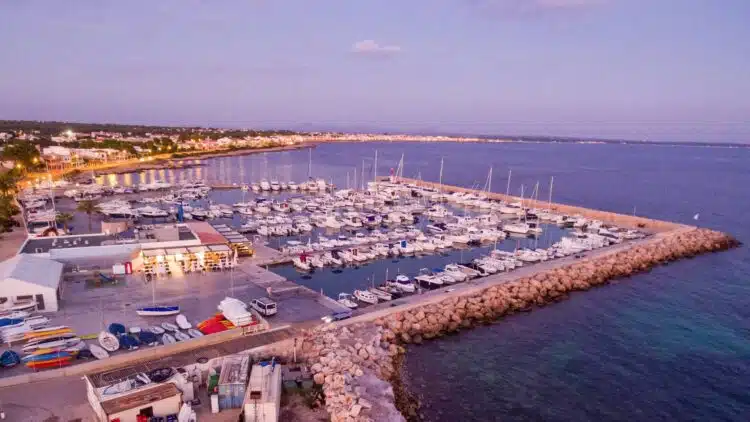
It was supposed to be a family outing. Six people had rented a small motorboat on Mallorca. On 18 August it capsized around 100 metres off the coast near s’Estanyol. A 69-year-old man died; the other occupants were rescued. The Guardia Civil is investigating the accident.
According to those involved, the family had noticed that conditions were becoming more difficult and wanted to turn back. A wave is then said to have come over the bow, bringing water into the boat. Another wave followed – the boat capsized.
“Whether it was a handling error, loading, weather, or several factors combined that led to the accident is still unclear. Placing blame is therefore not appropriate. Some seamanship lessons can nevertheless be drawn”, says SeaHelp Baleares manager Robert Perger.
Small boats have small reserves
A motorboat only a few metres long and fully loaded reacts sensitively to swell and shifts in weight. If several people move forward or to one side at the same time, the trim changes. As loading increases, freeboard also decreases.
If water comes over the bow or the side, the situation can quickly worsen: additional water increases the weight and reduces the remaining reserves. The next wave then hits a boat that is already significantly more at risk.
The maximum permitted number of persons should therefore be understood as an upper limit – not as a recommendation to be used to capacity in any weather.
Turning back in time
“Good seamanship also begins long before the first critical wave. Wind and sea state must be observed throughout a trip. Especially with small boats, the decision to turn back should be made early”, says Perger, who heads SeaHelp Service Baleares S.L. in Santa Ponsa, Mallorca (contact: tel. +34 646 086 090, email mallorca@sea-help.eu).
If the sea gets rougher, speed and course need to be adjusted. Hasty turning manoeuvres can be dangerous, because the boat is temporarily beam-on to the waves during the manoeuvre. There is no universal angle for the correct approach – hull shape, speed and wave pattern simply vary too much.
His advice: anyone with little experience should therefore not try to find out where their boat’s limits lie.
Life jackets belong on the body
Following the accident, investigations are also under way into what safety equipment was on board and whether all regulations were complied with. The outcome should not be speculated on.
Regardless of this, the following applies: on small open boats, life jackets should be worn on the body once the sea gets rougher – especially by children and non-swimmers. If a four- or five-metre boat capsizes suddenly, there is no time left to get jackets out of a locker.
The misunderstanding of the “licence-free boat”
The accident also raises a more fundamental question. In Spain, small motorboats up to five metres in length and a maximum of 15 hp may so far be operated without a nautical certificate of competence under certain conditions. The trip is limited to daylight hours and a maximum of two nautical miles from the starting point.
The problem already lies in the term “licence-free”. An engine can be operated after a short briefing. Seamanship, however, cannot.
When does a wave become critical for my boat? How does a fully loaded crew change the trim? How do I steer against the sea? When do I need to turn back? And what do I do if water has already come on board? A licence is not strictly necessary for this – but knowledge and experience are.
Spain tightens the rules
It is notable, then, that Spain had already changed the regulations before the current accident. As of 1 October 2026, the existing exemption from the licence requirement for such small boats will be limited to private or sporting use. Stricter requirements will therefore apply to commercial rental.
The legislator’s reasoning is remarkably clear: it explicitly refers to the high number of incidents and accidents involving such rental activities.
SeaHelp – Five rules for small rental boats:
- Turn back in good time: don’t wait until individual waves are already becoming problematic.
- Take loading seriously: the maximum permitted number of persons is an upper limit; distribute weight evenly.
- Put on life jackets in good time: as the sea builds, they belong on the body, not in the stern locker.
- Actively steer through waves: reduce speed, adjust course to the sea, and avoid abrupt turning manoeuvres.
- Call for help sooner rather than later – most easily via the practical and free SeaHelp app: anyone taking on water, losing their engine, or no longer able to safely control the boat should not wait until it becomes an acute emergency at sea.