Both Germany and Austria are extremely positive about the situation in Croatia due to the coronavirus pandemic, as the German Robert Koch Institute has exempted all of Croatia, with the exception of Medimurje and Varazdin counties, from risk area status effective June 13, 2021. German boat, ship and yacht owners, as well as all other holidaymakers, can now once again...
Read more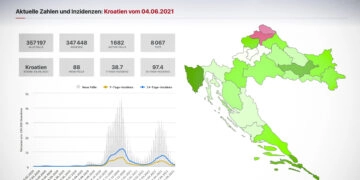
As the Robert Koch Institute announced on its homepage in an announcement today, the classification as a coronavirus risk area for numerous areas of Croatia, in particular the coastal regions of Istria, Dubrovnik-Neretva, and Split-Dalmatia, was withdrawn as of 6. June 2021, so that German travelers returning from Croatia do not have to present a test when entering Germany, nor...
Read more
Update 14.05.2021 The question of whether the respective quarantine ordinances of the individual federal states are still valid could only be conclusively and resiliently clarified today due to the holiday on Thursday. In addition the Federal Ministry of Health explained on inquiry: The entry regulation stepped on 13.5. into force. It applies nationwide and -uniformly. We have compiled information here....
Read more
Croatia's measures regarding the regulation of entry due to the Corona pandemic, issued on January 15, 2021, have been extended until shortly before Easter, i.e. March 31 (Wednesday). How the situation will continue from Maundy Thursday and during the Easter holidays will probably depend primarily on the development of incidence figures, particularly in the Croatian coastal regions. Despite rising incidences...
Read more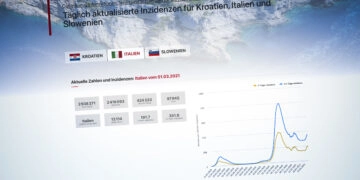
The Easter season is just around the corner and with the rising temperatures on the Adriatic Sea, the desire of many boat and yacht owners to return to their boats in Italy, Slovenia and Croatia after a long absence to prepare them for the coming summer is also increasing. However, the trip to the Adriatic always resonates with the uneasy...
Read more
The entry for Germans and Austrians to Italy, especially to the regions of the northern Adriatic little affected by the coronavirus, is quite different. While Austrians are subject to much stricter measures due to a special regulation according to the decree of February 13, valid until 5. March are subject to much stricter measures, for German citizens the presentation of...
Read more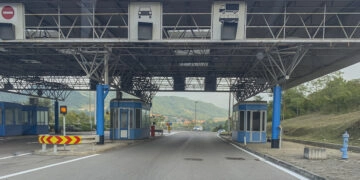
It almost takes a law degree to find out how and where you are still allowed to travel between Germany, Austria, Italy, Slovenia and Croatia and what quarantine regulations await you in the destination country and when you return from a coronavirus risk area. Mind you, this is not exclusively about vacationers, but about yacht owners or real estate owners...
Read more
On October 30, 2020, Germany updated its travel warnings due to the increasing number of new coronavirus infections throughout Europe and, among other countries, declared Italy (with the exception of the region of Calabria), Croatia (entire Croatia), Austria (excluding young wood and Mittelberg) and Slovenia as risk areas as of November 1, 2020. When returning from risk areas, a corona...
Read more
Anyone who still wants to travel from Germany or Austria to the Adriatic Sea to Italy, Slovenia or Croatia will hardly find their way through the jungle of mutual travel warnings in the context of the Corona Pandemic. One wrong decision, and at home, quarantine and one, sometimes two expensive PCR tests threaten. The SeaHelp editorial team once took the...
Read more| Datum | Provinz | RegionEN | Neue Fälle | Aktive Fälle | 7-Tag Inzidenz | 14-Tag Inzidenz |
|---|---|---|---|---|---|---|
| 28.02.2024 17:00 | Rovigo | Rovigo | 7 | 126887 | 7.700 | 17.900 |
| 28.02.2024 17:00 | Venezia | Venezia | 4 | 479932 | 1.800 | 5.900 |
| 28.02.2024 17:00 | Udine | Udine | 1 | 256140 | 0.600 | 2.300 |
| 28.02.2024 17:00 | Gorizia | Gorizia | 1 | 65666 | 2.200 | 5.000 |
| 28.02.2024 17:00 | Trieste | Trieste | 2 | 122432 | 3.400 | 10.200 |
On October 30, 2020, Germany updated its travel warnings<\/a> due to the increasing number of new coronavirus infections throughout Europe and, among other countries, declared Italy (with the exception of the region of Calabria), Croatia (entire Croatia), Austria (excluding young wood and Mittelberg) and Slovenia as risk areas<\/a> as of November 1, 2020. When returning from risk areas, a corona test must be carried out within ten days of returning home and quarantine is mandatory.<\/a><\/p>\r\n Even if at present on the part of the Austrian government in addition still nothing further communicated, one may assume that also Austria will follow shortly the German measures, at least regarding Croatia. In particular Austrian citizens, who are still in the areas of the with travel warning stage 4 (among other things Istria, Sibenik Knin and Zadar) should be prepared, because the Austrian Ministry of Health is well-known for \"quick shots\".<\/p>\r\n German travelers who enter Germany from a risk area must go into quarantine and inform their local health authority. Since August 8, every person entering Germany from a risk area must also present a negative corona test not older than 48 hours or be tested for corona infection within ten days of arrival. If the test result is negative, the quarantine can be lifted, according to the homepage of the German government.<\/p>\r\n It continues: On August 27, the federal and state governments decided to further develop the quarantine rules. A new model quarantine ordinance was drawn up to achieve a uniform regulation throughout Germany. The model quarantine ordinance is a working aid for the federal states, on the basis of which the states issue their own regulations within the scope of their jurisdiction. It is planned that the regulations of the different countries will generally come into force on November 8, 2020.<\/p>\r\n Regarding Croatia, the homepage of the German Foreign Office states that the COVID-19 infection rate in Croatia remains at a high level. In meanwhile all counties the incidences lie at present with more than 50 cases per 100,000 inhabitants on seven days, why Croatia was classified as risk area. Source: Federal Foreign Office<\/a><\/p>\r\n Regarding the situation in Slovenia, the German Foreign Office writes: \"Due to the high number of infections, there are warnings against unnecessary tourist trips to the regions of Primorsko-Notranjska, Koro\u0161ka, Zasavska, Osrednjeslovenska, Savinjska, Gorenjska, Jugovzhodna Slovenija, Pomurska, Podravska, Posavska and Gori\u0161ka. This applies to the whole of Slovenia from 1 November 2020. Source: German Federal Foreign Office<\/a><\/p>\r\n New infections have also increased in Italy. Here the partial travel warning was likewise extended to the whole country, as is written there: Before not necessary, routistic journeys into the regions Abruzzen, Aostatal, autonomous province Bozen South Tyrol, Emilia Romagna, Friuli Julian Veneto, Campania, Latium, Liguria, Lombardei, Piedmont, Sardinien, Toskana, Veneto and Umbrien is warned due to high infection numbers. From November 1, 2020, this applies to the whole of Italy, with the exception of the region of Calabria. Source: Federal Foreign Office<\/a><\/p>\r\n With regard to Austria, Germany has so far warned against unnecessary tourist trips to the provinces of Vienna, Tyrol (with the exception of the municipality of Jungholz), Vorarlberg (with the exception of Kleinwalsertal\/the municipality of Mittelberg), Salzburg, Upper Austria, Lower Austria, Burgenland and Styria due to high infection rates. This will apply to the whole of Austria from 1 November 2020, with the exception of the municipality of Jungholz (Tyrol) and Kleinwalsertals\/the municipality of Mittelberg (Vorarlberg). Source: Federal Foreign Office<\/a><\/p>\r\n These German travel warnings, which, as explicitly stated, do not constitute a travel ban, are likely to be related to the general measures in Germany aimed at reducing social contacts. In 30 days at the latest, and in 14 days at the earliest, we expect a reassessment of the situation, depending on the infection rates in the respective countries.<\/p>\r\n Anyone who still wants to travel from Germany or Austria to the Adriatic Sea to Italy, Slovenia or Croatia will hardly find their way through the jungle of mutual travel warnings in the context of the Corona Pandemic. One wrong decision, and at home, quarantine and one, sometimes two expensive PCR tests threaten. The SeaHelp editorial team once took the trouble to thoroughly sift through the thicket of travel warnings so that you can see at a glance what you are allowed to do and what you should leave alone or approach with extreme caution in times of corona virus.<\/p>\r\n One however in front: If Austria's Minister of Health Anschober in the German television on the occasion of the German travel warning for Austria<\/a> with the words, he is not a friend of inflationary mutual travel warnings can be quoted, is before this background again recalled, how he proceeded even at that time with the topic travel warning Croatia. Those of its compatriots, who stood 14 hours and longer in the traffic jam<\/a>, will surely not forget that so fast.<\/p>\r\n The Austrian Foreign Ministry informs on its homepage<\/a> that a partial travel warning (security level 5) exists for Croatia in connection with the spread of the coronavirus (COVID-19) for the entire national territory with the exception of the regions Brod-Posavina, Istria, Koprivnica-Kri\u017eevci, Osijek-Baranja, \u0160ibenik-Knin, Vara\u017edin and Zadar. [mapsvg id=\"24553\"]<\/p>\r\n The official text continues: For the regions (Brod-Posavina, Istria, Koprivnica-Kri\u017eevci , Osijek-Baranja, \u0160ibenik-Knin, Vara\u017edin and Zadar) a High Security Risk (Security Level 4) applies. Continued restrictions on air travel and travel and extensive restrictions on public life are to be expected for the time being. Therefore, we do not recommend travel that is not absolutely necessary. Without restrictions (PCR test\/quarantine) one may only enter Austria from the regions of Brod-Posavina, Istria, Koprivnica-Kri\u017eevci, Osijek-Baranja, \u0160ibenik-Knin, Vara\u017edin, Zadar.<\/p>\r\n Germany warns up-to-date (conditions 22.10.2020) before journeys into the following regions of Croatia, whose counties are considered at present as risk areas: Bjelovar-Bilogora (since 24 October), Dubrovnik-Neretva (since 9 September), degree (city) Zagreb (since 17 October), Krapina-Zagorje (since 7 October, Lika-Senj (since 23 September), Me\u0111imurje (since 17 October), Po\u017eega-Slavonia (since 9 September), Sisak-Moslavina (since 7. October), Split-Dalmatia (since August 20), Vara\u017edin (since October 24), Virovitica-Podravina (since September 16), Vukovar-Syrmia (since October 7), Karlovac (since October 24), Osijek-Baranja (since October 24), Zagreb (since October 24). The popular coastal regions of Istria, Sibenik and Zadar are excluded from the travel warning, while the counties of Karlovac, Osijek-Baranja, Zagreb, Vara\u017edin and Bjelovar-Bilogora have recently been added as risk areas. [mapsvg id=\"24548\"]<\/p>\r\n <\/p>\r\n Slovenia has a high security risk (security level 4) in connection with the spread of the coronavirus (COVID-19). From 23.10.2020 the coastal region (between Koper and Portoroz) is also a red zone. This means that the whole of Slovenia is a red zone. Here<\/a> you can also read on the page of the Austrian Foreign Ministry: From Slovenia you can enter Austria without any restrictions<\/a>.<\/p>\r\n In Slovenia, the following regions are considered risk areas for German tourists: Pomurska (since 17 October), Posavska (since 24 October), Primorsko-Notranjska (since 23 September), Savinjska (since 7 October), Zasavska (since 7 October). The Posavska and Gori\u0161ka regions were recently added as risk areas. Here is the link. [mapsvg id=\"24551\"]<\/p>\r\n <\/p>\r\n You can also read about this on the homepage of the Austrian Foreign Ministry: For the whole of Italy as well as for the Vatican (Holy See) and San Marino high security risk (security level 4) applies in connection with the spread of the corona virus (COVID-19). All persons entering Italy must carry the duly completed self-declaration form with them throughout their journey. More information here<\/a>.\u00a0Austrians<\/a> are not currently subject to quarantine obligations for travel from Italy either.<\/p>\r\n The following travel warnings apply to German citizens who currently intend to travel to Italy: Abrruzzo (since October 24), Valle d'Aosta (since October 24), Emilia-Romagna (since October 24), Friuli-Venezia Giulia (since October 24), Campania (since October 17), Lazio (since October 24), Liguria (since October 17) Lombardy (since October 24), Piedmont (since October 24), Sardinia (since October 24), Tuscany (since October 24), Umbria (since October 24), Veneto (since October 24), autonomous province of Bolzano-Alto Adige (since October 24). Here the link<\/a>.<\/p>\r\n <\/a><\/p>","post_title":"7-day incidence and 14-day incidence: <\/span><\/span>Now also Corona data daily updated for Slovenia and Italy.","post_excerpt":"","post_status":"publish","comment_status":"open","ping_status":"closed","post_password":"","post_name":"current-incidence-slovenia-italia","to_ping":"","pinged":"","post_modified":"2021-03-07 05:44:21","post_modified_gmt":"2021-03-07 04:44:21","post_content_filtered":"","post_parent":0,"guid":"https:\/\/www.sea-help.eu\/news-general\/current-incidence-slovenia-italia\/","menu_order":0,"post_type":"post","post_mime_type":"","comment_count":"0","filter":"raw"},{"ID":26498,"post_author":"4","post_date":"2021-02-26 08:33:05","post_date_gmt":"2021-02-26 07:33:05","post_content":"The entry for Germans and Austrians to Italy, especially to the regions of the northern Adriatic little affected by the coronavirus, is quite different. While Austrians are subject to much stricter measures due to a special regulation according to the decree of February 13<\/a>, valid until 5. March are subject to much stricter measures, for German citizens the presentation of an entry declaration and a negative PCR or antigen test, not older than 48 hours<\/a> is sufficient.\r\n
Spring temperatures actually attract boat owners<\/h2>\r\nAs spring-like temperatures slowly take hold in Italy and the SeaHelp employee in Lignano is allowed to leave his jacket in the office at least during the midday hours when it is almost 20 degrees in the shade, there is of course also an urgent desire among most boat and yacht owners to winterize their vessel for the upcoming 2021 water sports season.\r\n
Lignano yellow zone<\/h2>\r\nBut the trip to the Italian Adriatic does not turn out to be quite simple after all, even though the preferred region of Lignano is designated as a yellow zone, making it one of the areas less affected by the corona virus.\r\n
Declaration of entry and negative PCR or antigen test<\/h2>\r\nAs a general rule, entry into Italy is permitted from European Union countries, including Germany, as well as Iceland, Liechtenstein, Norway, and Switzerland; however, travel within Italy is permitted only for valid reasons. Presentation of an entry declaration and a negative PCR or antigen test, which must not be older than 48 hours, is required. Without a negative test result, travelers must go into quarantine.\r\n
Austrians: 3 tests and 14 days quarantine until at least March 5<\/h2>\r\nBecause of the spread of the South Africa variant of the coronavirus, Italy is tightening rules for travelers entering the country from Austria. Travelers from Austria to Italy, but especially Austrian citizens, must generally undergo a PCR\/antigen test and a 14-day quarantine if the travelers have stayed in or transited through Austria for more than 12 hours in the past 14 days. For them, it is expected to apply until March 5, 2021, in addition:\r\n
\r\n \t
Last decision is usually made at the border<\/h2>\r\nIf checks are carried out at the border on entry, much depends on the good will of the officials carrying out the checks, because the ban on traveling to other regions within Italy also applies until further notice; valid reasons are the exception. Police authorities may therefore prohibit entry into Italy if the stated final destination of the trip is in a region other than where the entry takes place.\r\n
Maintenance work on ships not a reason for entry<\/h2>\r\nIncidentally, necessary business trips, which previously included maintenance work on ships in Italian marinas, are no longer considered exceptions to the rule.\r\n
In practice: few controls on entry to Italy<\/h2>\r\nItaly would not be Italy, however, if there were not a solution for everything. Travelers report rather rare controls at the borders with Austria. About controls in the country we have so far hardly usable information. Nevertheless, those who \"cheat their way through\" can face heavy penalties.\r\n
Pre-Travel Clearance Form<\/h2>\r\nAustrian vacationers are required to complete a Pre-Travel Clearance Form<\/a> online, German travelers returning to Austria should not forget the digital entry registration<\/a>. Further restrictions may result from the regulations of the respective state of residence in Germany.","post_title":"Corona continues to affect entry to Italy: <\/span><\/span>Special regulation at Italy's border for Austrians entering.","post_excerpt":"","post_status":"publish","comment_status":"open","ping_status":"closed","post_password":"","post_name":"corona-entry-application-italia","to_ping":"","pinged":"","post_modified":"2021-02-26 08:33:05","post_modified_gmt":"2021-02-26 07:33:05","post_content_filtered":"","post_parent":0,"guid":"https:\/\/www.sea-help.eu\/news-general\/corona-entry-application-italia\/","menu_order":0,"post_type":"post","post_mime_type":"","comment_count":"0","filter":"raw"},{"ID":25306,"post_author":"4","post_date":"2020-12-17 00:54:03","post_date_gmt":"2020-12-16 23:54:03","post_content":"It almost takes a law degree to find out how and where you are still allowed to travel between Germany, Austria, Italy, Slovenia and Croatia and what quarantine regulations await you in the destination country and when you return from a coronavirus risk area. Mind you, this is not exclusively about vacationers, but about yacht owners or real estate owners who want to check on their property abroad. Or people who work abroad and want to return to their families over Christmas and New Year's Eve. For all these groups of people with their different interests, we are once again trying to explain the current situation in a simple and understandable way.\r\n\r\nHowever, we recommend that you always follow the links as well, because the expiration date of the respective regulations ultimately also depends on the further spread of the coronavirus.\r\n
What applies in Italy with regard to the coronavirus?<\/h2>\r\nItaly has a 14-day incidence 428.3<\/a> on 12\/14\/2020. Those entering will need proof of either a negative PCR or antigen test. The complete requirements are detailed on the Italian embassies' homepages<\/a>. In addition, however, there must be a valid reason that cannot be postponed.\r\n\r\nAt the express request of the Italian embassy, concerns about a yacht or real estate are not among the valid reasons for a visit to Italy. If you want to be on the safe side, you should clarify the issues in writing with the relevant authorities and the border police on the spot. However, as this is unlikely to be feasible in practice, the embassies strongly advise against tourist travel, especially as tightening of the situation from 21 December onwards cannot be ruled out, as Italy's government wants to prevent increased travel over Christmas and New Year's Eve in any case. Transit is possible at any time, border controls take place sporadically. Violations of the rapidly changing regulations are subject to fines, some of which are severe. Therefore, the same applies here: Before starting your trip, you should quickly get more information.\r\n
What is valid in Slovenia concerning the coronavirus?<\/h2>\r\nAt present, anyone who can present a negative PCR test for the coronavirus, which must not be older than 24 hours, is allowed to travel to Slovenia (14-day incidence 1006.0<\/a>), as stated on the homepage of the Slovenian embassy in Berlin<\/a>. Those who cannot present the PCR test must go into 10-day quarantine after entering Slovenia. The quarantine in Slovenia can be terminated prematurely if a PCR test is carried out on site on the fifth day, which documents a negative result for the COVID-19 pathogen. Transit through Slovenia, which may last a maximum of 12 hours, is possible at any time. Border controls take place.\r\n
What is the situation in Croatia regarding coronavirus?<\/h2>\r\nWith a 14-day incidence of 1208.8<\/a>, Croatia is clearly the EU country most affected by coronavirus. The spread of the COVID-19 pandemic is mainly inland, and the coastal regions are rather less affected, with the exception of the metropolitan areas of Rijeka and Split. Especially in Istria, the situation seems to be relatively relaxed.\r\n\r\nThose wishing to enter Croatia must be able to present a negative test, no older than 48 hours, otherwise they will be turned away at the border, where strict controls are now carried out. There is a theoretical possibility to make up for this test immediately after arrival in Croatia, but until the result you have to go into quarantine. Exceptions for foreign boat owners or real estate owners do not provide the latest regulations. By Christmas, a further tightening of the epidemiological regulations is to be expected, as the Croatian health system already seems to be overloaded. Here is the link<\/a> to the current regulations. Transit is also possible in Croatia.\r\n
What is valid in Austria regarding the coronavirus?<\/h2>\r\nFor travelers returning to Austria<\/a>, the following applies: according to the announcement of the Austrian federal government on December 2, 2020, entry from a risk country is to be determined from December 19, 2020, until presumably January 10, 2021, within the framework of an entry regulation yet to be published. Individuals entering from a high-risk area would then be required to spend 10 days in quarantine. After five days, a PCR test can be taken, allowing early termination of quarantine if the test result is negative. This regulation<\/a> is valid until December 19, no quarantine was therefore required upon return from the Croatian areas of Brod-Posavina, Istria, Koprivnica-Kri\u017eevci, Osijek-Baranja, \u0160ibenik-Knin, Vara\u017edin and Zadar.\r\n\r\nAfter December 19, the situation changes, then a quarantine is generally required upon return from Croatia, which can be broken only after the 5th day by PCR or antigen test, as announced in the Austrian Federal Law Gazette<\/a>.\r\n
What applies in Germany regarding coronavirus?<\/h2>\r\nTravelers returning<\/a> from coronavirus risk areas<\/a>, i.e., virtually from all over Europe with only a few exceptions, must register on the portal www.einreiseanmeldung.de<\/a> before re-entry and then receive a confirmation that must be presented during controls. In general, travelers returning to the country must spend ten days in quarantine, which can be ended at the earliest after the fifth day by presenting a negative test result. Ultimately, many powers regarding subsequent testing and quarantine regulations lie with the respective federal states, so it seems advisable to inquire with the health department responsible for the place of residence even before traveling to a risk area. The measures are initially limited until January 10, how it will continue thereafter depends on the epidemiological situation in Germany.\r\n
Corona measures shown are only a snapshot in time<\/h2>\r\nWe expressly point out that the measures presented here are a snapshot, which may change at any time as a result of more extensive regulations in the individual countries. In Italy and Croatia in particular, further tightening of the Corona measures is expected, and we will provide information on this on our homepage<\/a> as soon as possible.","post_title":"Entry chaos because of Corona pandemic throughout Europe: <\/span><\/span>Who may travel - what awaits travelers in times of Corona virus?","post_excerpt":"","post_status":"publish","comment_status":"open","ping_status":"closed","post_password":"","post_name":"corona-entry-croatia-adria-eu","to_ping":"","pinged":"","post_modified":"2020-12-17 13:38:53","post_modified_gmt":"2020-12-17 12:38:53","post_content_filtered":"","post_parent":0,"guid":"https:\/\/www.sea-help.eu\/news-general\/corona-entry-croatia-adria-eu\/","menu_order":0,"post_type":"post","post_mime_type":"","comment_count":"0","filter":"raw"},{"ID":24811,"post_author":"4","post_date":"2020-10-30 15:42:27","post_date_gmt":"2020-10-30 14:42:27","post_content":"
When is the travel warning from Austria for Adriatic region?<\/h2>\r\n
Quarantine and test for travel returnees from risk areas<\/h2>\r\n
Further regulations expected on November 8<\/h2>\r\n
Croatia: Now travel warning for whole Croatia<\/h2>\r\n
Slovenia: Travel Warning for all of Slovenia<\/h2>\r\n
Italy: Travel Warning for all of Italy except Calabria<\/h2>\r\n
Austria: Travel warning for all of Austria except Jungholz and Mittelberg<\/h2>\r\n
Adjustments to infection events in two weeks at the earliest<\/h2>\r\n
Further information:<\/h2>\r\n
<\/a><\/p>","post_title":"When does Austria move to ?: <\/span><\/span>Germany warns against travel to Croatia, Slovenia, Italy Austria","post_excerpt":"","post_status":"publish","comment_status":"open","ping_status":"closed","post_password":"","post_name":"germany-travel-warning-croatia","to_ping":"","pinged":"","post_modified":"2020-10-30 15:42:27","post_modified_gmt":"2020-10-30 14:42:27","post_content_filtered":"","post_parent":0,"guid":"https:\/\/www.sea-help.eu\/news-general\/germany-travel-warning-croatia\/","menu_order":0,"post_type":"post","post_mime_type":"","comment_count":"0","filter":"raw"},{"ID":24562,"post_author":"4","post_date":"2020-10-23 18:07:21","post_date_gmt":"2020-10-23 16:07:21","post_content":"German travel warning for almost all of Austria<\/h2>\r\n
Travel warning Austria<\/a> for Croatia<\/h2>\r\n
Austria's travel warning for Croatia: Those returning to Austria from the grey-shaded areas do not need to go into quarantine and do not require a PCR test. Transits through the regions marked in red and transit through Slovenia are considered transit. (Attention: The southern part of the island of Pag (town of Pag, Kolan and Povljana) belongs to the County of Zadar!)<\/em><\/div>\r\n
Travel Warning Germany for Croatia<\/h2>\r\n
Germany's travel warning for Croatia: Germany has issued only a partial travel warning for certain regions of Croatia. Also here applies analogously to Austria: Who returns from the grey deposited regions, must neither go into quarantine nor complete a PCR test. (Attention: The southern part of the island of Pag (town of Pag, Kolan and Povljana) belongs to the County of Zadar!)<\/em><\/div>\r\n
Travel Warning Austria for Slovenia<\/h2>\r\n
Travel Warning Germany for Slovenia<\/h2>\r\n
The eight municipalities Ankaran, Diva\u010da, Hrpelje-Kozina, Izola, Komen, Koper, Piran and Se\u017eana (shaded grey) are currently still excluded from the German travel warning for Slovenia, but this may change quickly in view of current developments.<\/div>\r\n Travel Warning Austria for Italy<\/h2>\r\n
Travel Warning Germany for Italy<\/h2>\r\n
Is Croatia treated differently by the Austrians?<\/h2>\r\n
You need to load content from reCAPTCHA to submit the form. Please note that doing so will share data with third-party providers.
More InformationYou are currently viewing a placeholder content from Vimeo. To access the actual content, click the button below. Please note that doing so will share data with third-party providers.
More InformationYou are currently viewing a placeholder content from YouTube. To access the actual content, click the button below. Please note that doing so will share data with third-party providers.
More InformationYou need to load content from reCAPTCHA to submit the form. Please note that doing so will share data with third-party providers.
More InformationYou are currently viewing a placeholder content from Facebook. To access the actual content, click the button below. Please note that doing so will share data with third-party providers.
More InformationYou are currently viewing a placeholder content from Instagram. To access the actual content, click the button below. Please note that doing so will share data with third-party providers.
More InformationYou are currently viewing a placeholder content from Google Maps. To access the actual content, click the button below. Please note that doing so will share data with third-party providers.
More InformationYou are currently viewing a placeholder content from OpenStreetMap. To access the actual content, click the button below. Please note that doing so will share data with third-party providers.
More InformationYou are currently viewing a placeholder content from Google Maps. To access the actual content, click the button below. Please note that doing so will share data with third-party providers.
More InformationYou are currently viewing a placeholder content from reCAPTCHA. To access the actual content, click the button below. Please note that doing so will share data with third-party providers.
More InformationYou are currently viewing a placeholder content from X. To access the actual content, click the button below. Please note that doing so will share data with third-party providers.
More Information