








When boats come out of winter storage in spring, the season begins for water sports enthusiasts. But while decks are still being scrubbed in local waters, the Germany SailGP Team is already preparing for the fifth event of the season in Hamilton, Bermuda (May 9–10). For driver Erik Kosegarten-Heil, Rio (Enel Rio Sail Grand Prix, 4th event of the 2026 season in April) was a special place: in 2016 he won Olympic bronze here in the 49er – ten years later he returned with the Germany SailGP Team, secured a race win in Race 4 and finished 6th in Rio. The team currently sits in 8th place overall. With this momentum, they now move on to Hamilton, Bermuda.
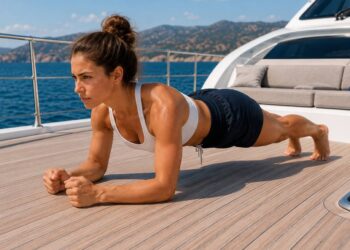
Currently, SailGP in Bermuda is all about maximum precision at high speed. To safely steer the F50 catamaran through the Great Sound at speeds of up to 100 km/h, Kosegarten-Heil relies on a holistic training approach that goes beyond strength training.
“Since my bronze medal in 2016, the sport has evolved tremendously in terms of technology,” explains Erik Kosegarten-Heil. “You can compare it to skiing. Anyone who hits the slopes untrained risks injury. Anyone who steps onto an F50 untrained loses control. We need top-level coordination, communication and concentration that don’t fade even under maximum stress.”
Erik’s personal top 4 tips for experienced sailors and ambitious racing crews alike to start the new racing season fit and focused:
1. Cold shock for focus
Erik often starts the day with an ice bath. What is part of recovery for professional athletes is the ultimate wake-up call in lifestyle terms. Erik Kosegarten-Heil: “An ice bath resets your focus. It’s about teaching your body to breathe calmly even under extreme stress. That helps me later in races when things get hectic on the water.”
2. “Neuro-drills” instead of just weights
Sailing at this level is like playing chess at 100 km/h: the team uses exercises that combine reaction and coordination, such as catching balls in unstable positions. Erik Kosegarten-Heil: “Pure muscle building is useless to us if the brain doesn’t react fast enough. We train hand-eye coordination under load. Anyone can integrate that—brushing their teeth on one leg or juggling, for example.”


3. Breathwork
In stressful situations, we tend to breathe shallowly. Kosegarten-Heil uses targeted techniques to immediately regulate the nervous system. Erik Kosegarten-Heil: “When your pulse rises, your breathing is your anchor. Three deep breaths into the belly can make the difference between a rushed and a well-considered decision at the helm.”


4. Playful training
Monotonous hours in the weight room are off-limits for the helmsman. His tip: functional training. Erik Kosegarten-Heil: “Whether wingfoiling or surfing, movement in the elements improves intuitive stability better than any machine. It’s about the feeling for your own body in motion.”


Next stop for Erik Kosegarten-Heil: Apex Group Bermuda Sail Grand Prix
From lifestyle workout straight into competition mode: On April 11 and 12, 2026, SailGP celebrated its debut in Brazil at the Enel Rio Sail Grand Prix. After the first stops in Australia and New Zealand, the German team is currently in 8th place in the overall standings of the sixth season.

You are currently viewing a placeholder content from YouTube. To access the actual content, click the button below. Please note that doing so will share data with third-party providers.