








The Total Solar Eclipse of 2026 – Where Sport Skippers Can Experience Europe’s Greatest Celestial Spectacle.
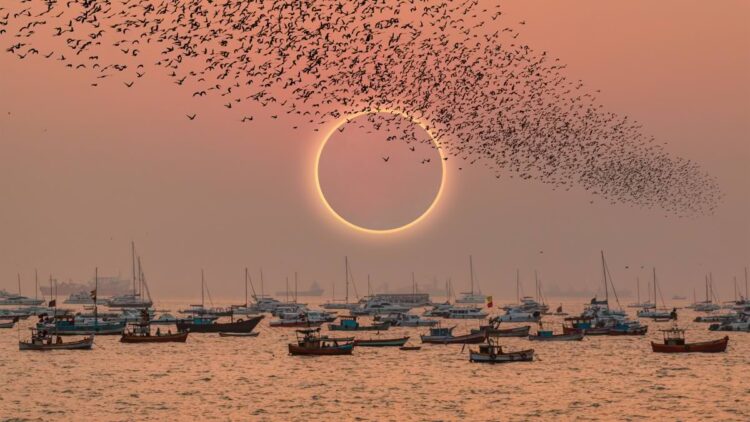
On 12 August 2026, many sport skippers will be looking not at the water, but at the sky. That’s when the moon will move directly in front of the sun, causing the first total solar eclipse over large parts of Europe in many years.
This offers a rare opportunity for sailors and motor yacht owners: anyone cruising in the right area will experience this natural phenomenon without buildings, trees or crowds – but with an open horizon and a truly unique atmosphere. The path of totality runs across Greenland, Iceland, northern Spain and the Balearic Islands. Mallorca in particular is currently considered one of Europe’s most attractive viewing locations.
Mallorca: Europe’s Hotspot for Skippers
The Mediterranean island lies directly within the path of totality. What matters here is not so much the island itself as the exact position of the boat: during totality, the sun will be only a few degrees above the western horizon. Anyone anchored in front of a high, steep coastline could miss the most spectacular moment entirely.
Ideal locations are therefore: the west or northwest coast of Mallorca, an open view of the western horizon ideally outside crowded anchorage areas, and calm weather without swell.
There’s an additional advantage: in August, the Balearic Islands are statistically among the regions with the best chances of clear skies along the path of totality – a significant advantage over Iceland or parts of northern Spain.
Other good areas: Menorca – also within the path of totality and often somewhat quieter than Mallorca, Ibiza – also well positioned, although popular bays are likely to get correspondingly crowded, northern Spain – Galicia, Asturias, Cantabria and the Basque Country also lie within totality, albeit with a somewhat higher weather risk. On the plus side, alternative locations on land are easier to reach.
Why Watch From a Boat?
A boat offers several advantages: an almost unobstructed 360-degree view, spectacular reflections on the water, no buildings or power lines in the frame, a unique play of light over the sea.
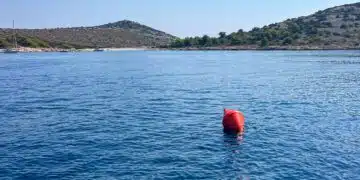
However, it’s also important to note: the skipper should not be navigating at the same time as watching the eclipse. Ideally, the boat should be safely anchored or moored to a buoy. Underway, the sudden darkness and the distraction it causes can quickly become a safety risk.
Safety First
A total solar eclipse is fascinating – but also treacherous. It is therefore essential to remember: the sun may only be viewed without protection during the brief phase of full totality. Before and immediately after totality, only certified eclipse glasses meeting ISO 12312-2 are suitable. Sunglasses, smoked glass or film do not provide adequate protection. Anyone wanting to take photographs will also need suitable solar filters for their camera or binoculars.
How Often Does a Total Solar Eclipse Occur?
Somewhere on Earth, a total solar eclipse occurs roughly every 18 months. At any specific location, however, it is extremely rare: on average, around 350 to 400 years pass before the same spot once again lies within the moon’s umbra. This is precisely why the 2026 eclipse is considered a once-in-a-century opportunity for observers in Europe.
When Is the Next Solar Eclipse?
After 12 August 2026, astronomy enthusiasts won’t have to wait long: 2 August 2027 – total solar eclipse over North Africa, Gibraltar and southern Spain. 26 January 2028 – total solar eclipse over Australia.
So anyone who doesn’t get a clear sky in 2026 will already get a second chance just a year later – though considerably further south.
One more tip for photographers: prepare your camera well in advance – totality lasts only around one to two minutes, leaving little time to experiment.