







The devastating fires near Omiš show how quickly a wildfire on the Croatian coast can become an immediate danger for holidaymakers and yacht skippers. Anyone out on a boat should know a few rules – and above all give firefighting planes plenty of room on the water, advises SeaHelp.
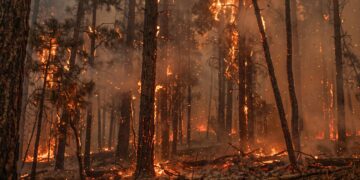
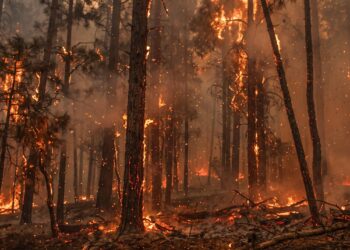
The images from Omiš are dramatic. Within a few hours, the fire spread to the edge of the town overnight on Friday. According to the fire brigade, around 1,000 hectares fell victim to the flames, with numerous houses, vehicles and boats also burning. 36 people were injured, 14 had to be treated as inpatients; on Friday morning, seven patients were in intensive care with life-threatening injuries. Around 1,000 residents and holidaymakers were evacuated. By the morning the situation had calmed down somewhat, but at the same time another fire broke out on the Pelješac peninsula.
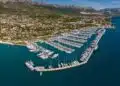
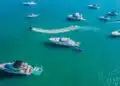
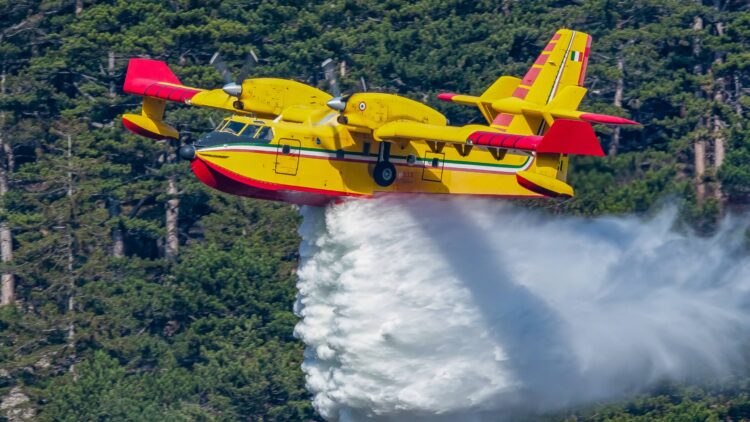
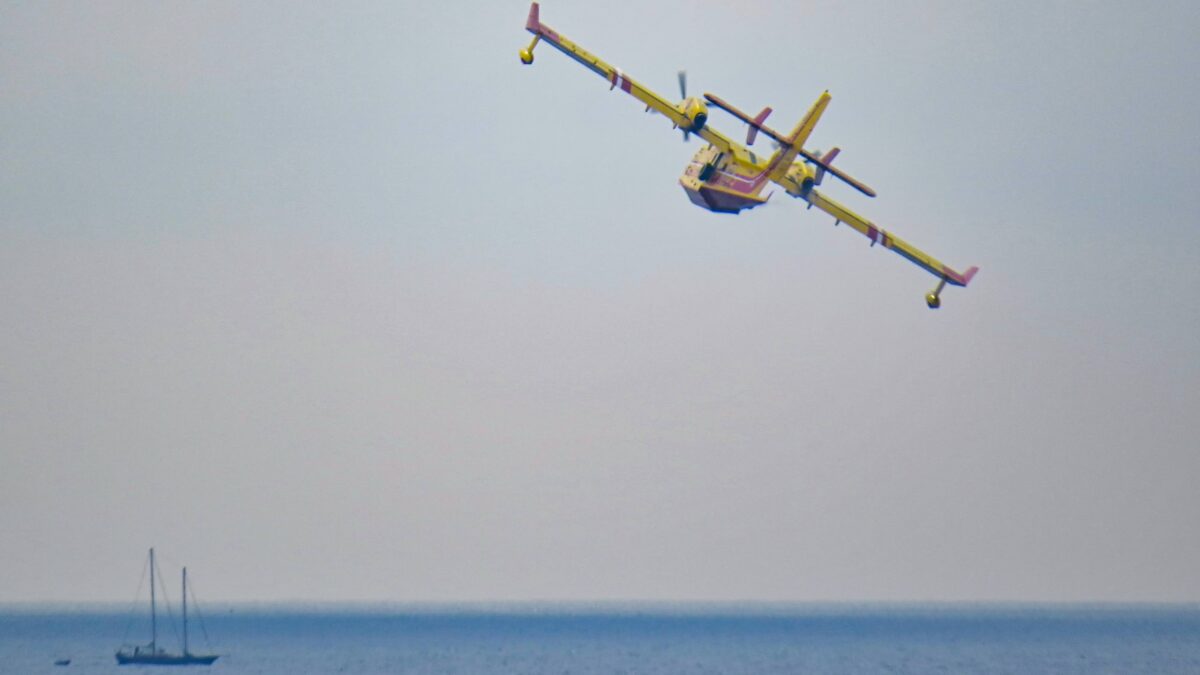
For yacht skippers, this creates a particular situation. On the rugged Dalmatian coast, major fires bring together two operational zones at once: land and sea. Canadair CL-415 firefighting planes scoop their water directly from the Adriatic – often as close as possible to the fire area. And in high summer, that is exactly where numerous sailing and motor boats are found.
When the Canadair arrives: clear the water immediately
“Anyone who spots a Canadair flying low over the water shouldn’t wait for the police or harbour master’s office to call for them to give way”, says Denis Lipovac from the SeaHelp operations centre in Punat. His advice: “Steer away from the sea area concerned, create distance and keep the water surface clear. Under no circumstances should anyone try to watch or even film the spectacular manoeuvre up close.”
The reason is simple: During what is known as “scooping”, the Canadair touches down on the water surface at high speed and takes on several tonnes of water while moving. For this manoeuvre the crew needs a long, clear stretch of water; Croatian pilots put the figure at a minimum of around 1,300 metres. Boats, jet skis, SUPs and swimmers in this area can endanger not only themselves but also the aircraft and its crew – and in the worst case prevent a firefighting run altogether.
Only in July, the municipality of Blato on Korčula had to explicitly call on boaters to keep away from Canadairs during water scooping. The authorities point out that any vessel in this area poses a considerable safety risk and can delay firefighting operations. Instructions from police, the harbour master’s office, the fire brigade or other emergency services therefore always take priority.
That said, no general “safety distance of X metres” should be derived from this. “What matters is clearing the entire visible approach, water-scooping and take-off path without delay,” says Lipovac. When in doubt, the rule is: better to take a wide detour than to fall a hundred metres short.
When a fire is spotted from a boat
Skippers should not regard smoke on land as someone else’s problem. Especially in dry terrain, small fires can turn into major blazes within minutes. If in doubt, call 112 immediately – alternatively the Croatian fire brigade can be reached on 193. In a maritime emergency, the maritime rescue coordination centre is also available on 195. 112 is reachable around the clock. SeaHelp’s operations centre can also be informed 24/7 via the free European emergency number 0043 50 43 112 (or the alternative European emergency number 00385 919 112 112).
“A precise location is important. From a boat, GPS coordinates are especially helpful,” says Denis Lipovac. This should be accompanied by details of what is burning, roughly how large the fire is, whether buildings or people are at risk, and which direction the wind is blowing.
Preventing fires: it starts with small things on board
This summer the Croatian authorities are explicitly urging locals and holidaymakers not to light fires outdoors and never to throw cigarettes away in nature. Smoke or fire should be reported immediately via 112 or 193.
In practical terms, this means for crews: no smouldering cigarettes overboard or on land, no barbecuing or open fires in dry vegetation, and particular caution when going ashore. Even a hot barbecue, sparks or carelessly discarded embers can be enough under current conditions.
Anyone anchoring in a bay who notices a fire nearby should also consider early on whether the anchorage is still safe. Don’t wait until smoke, fire or an official evacuation forces a retreat. Watch the wind direction, keep the engine ready to start, get the crew back on board and, if necessary, leave in good time. However, never sail into a sea area that is currently being used by firefighting planes to scoop water.