







The 117-year-old sailing yacht OWL ran aground off Mallorca – and was rescued at the very last minute. Behind the white wooden hull lies an astonishing story of British yacht-building craftsmanship, delusions of grandeur, world voyages, theft, and resurrection.
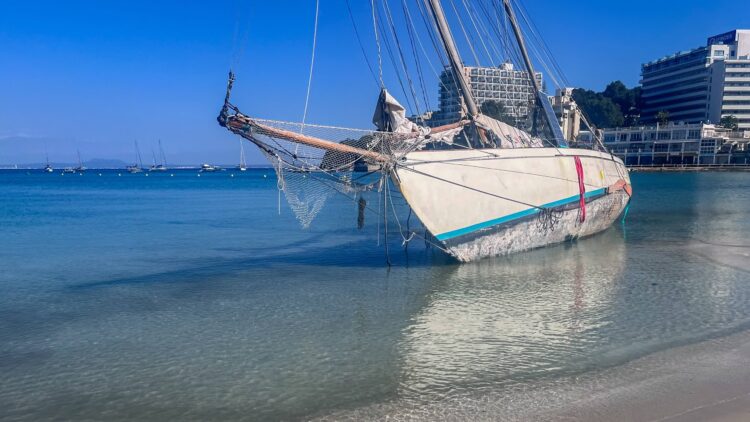
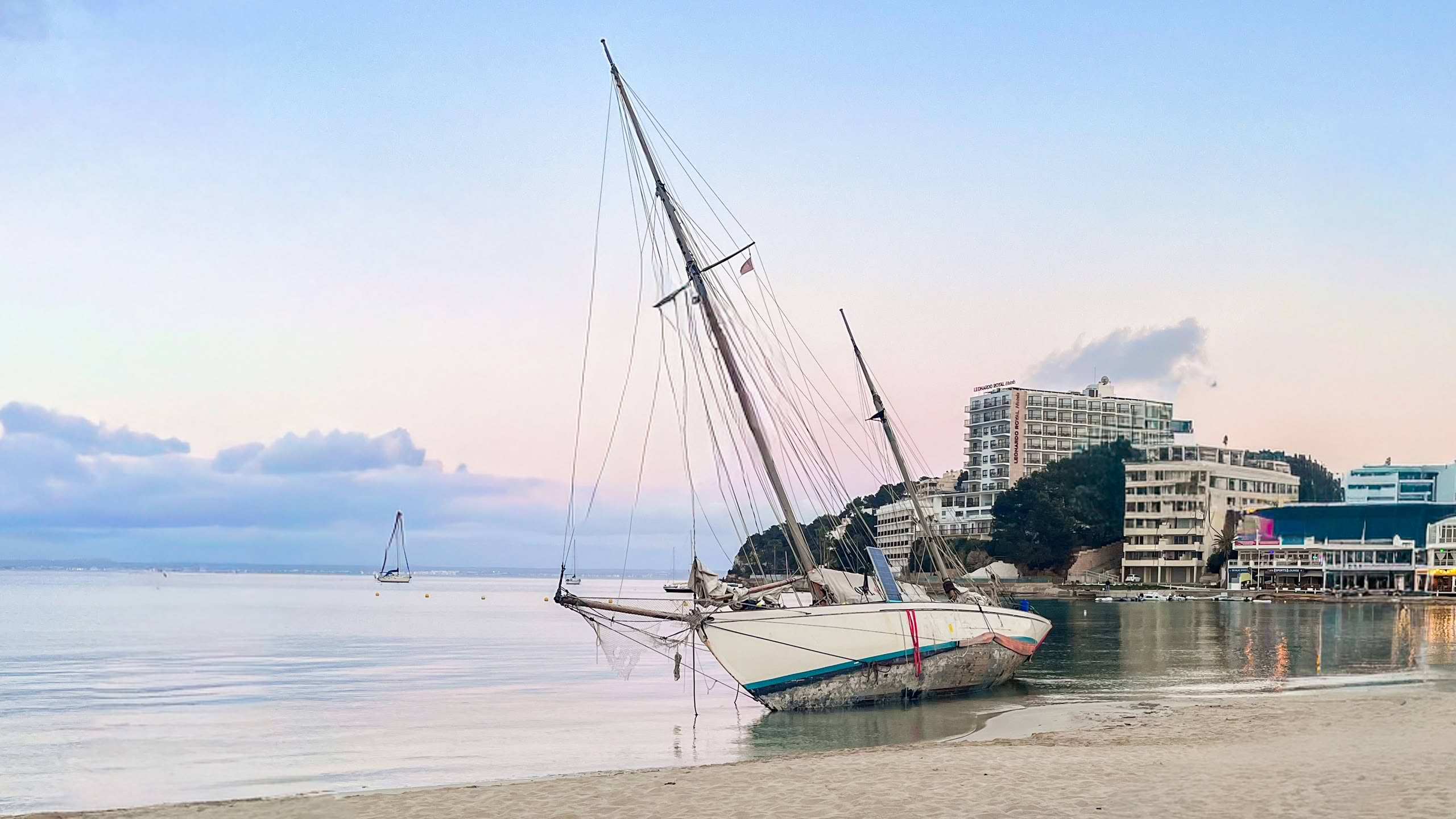
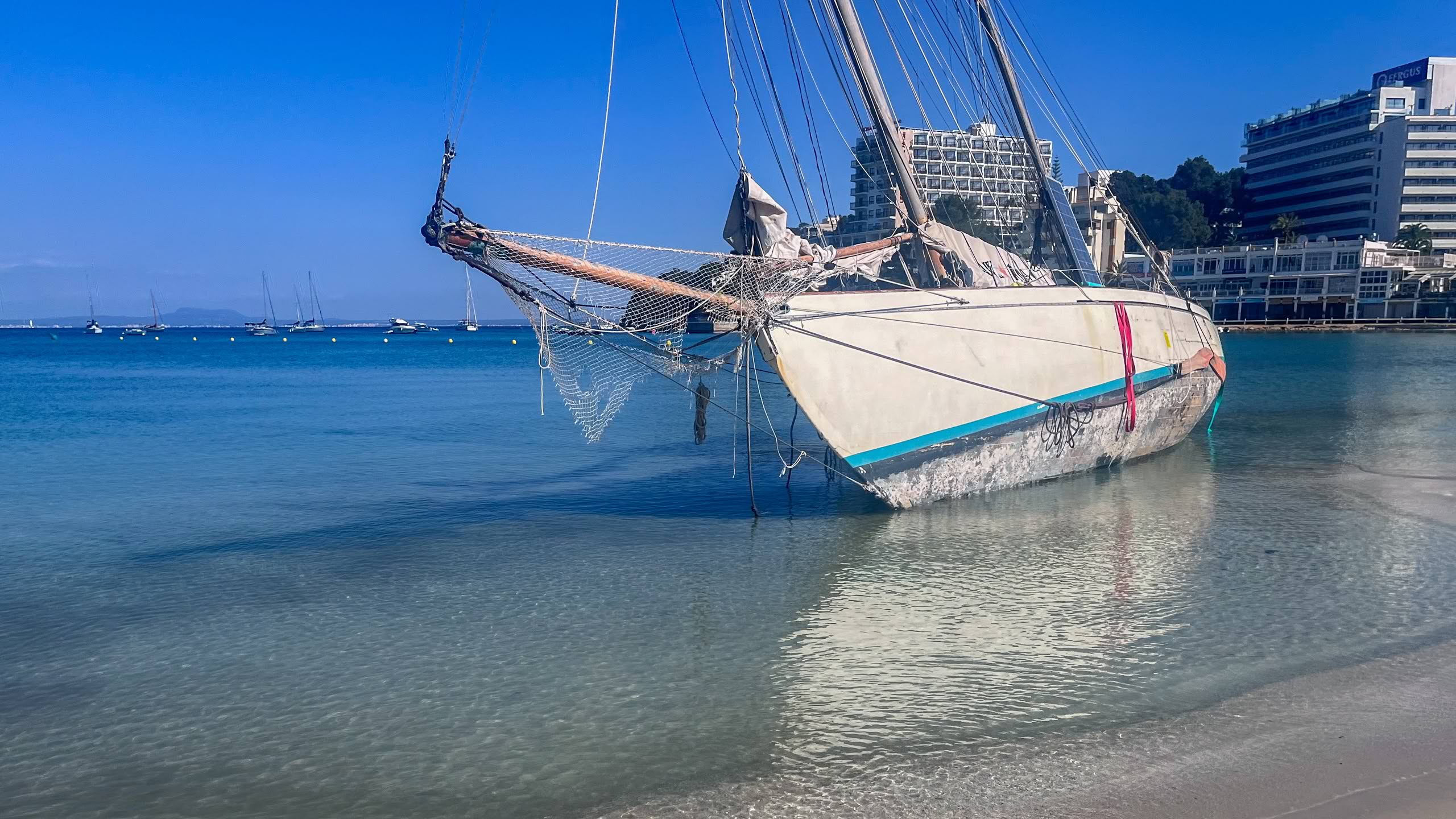
For almost three months she lay upright in the sand of Palmanova: a white hull, two wooden masts and a long bowsprit, with the hotels and apartment blocks of the Mallorcan holiday resort behind her. SeaHelp most recently reported on 9 December 2025 on the „Bay of the stranded yachts“ in Playa Son Maties in Palmanova.
What happened? The OWL, a gaff ketch built in Southampton in 1909, had broken loose from her apparently unregistered winter mooring buoy during a storm in early January 2026 and drifted onto the beach at Son Maties.
There her story threatened to end. According to British yacht manager Jim Passmore, the owner had made several salvage attempts, but apparently had neither insurance nor the funds and logistics for a professional rescue.
As the tourist season drew closer, the local council finally set him a short deadline: if no viable plan was in place, excavators would dismantle the ship on the beach and haul it away. Depending on the source, the deadline was either 24 or 48 hours, as The Islander Magazine reported.
Passmore, co-founder of the Mallorca-based yacht management company 8 Yachts, knew the OWL from Port d’Andratx. When he saw her lying in the sand, he began bringing together divers, surveyors, shipyards and authorities. What at first looked like the rescue of an old charter boat developed into a joint effort by Mallorca’s yachting industry. A press release now published by Passmore himself describes his involvement as the starting point of a planned restoration.
Painstaking work in shallow water
The salvage operation was technically delicate. The “Owl” was lying in only around 70 centimetres of water, yet has a draught of about 2.4 metres. An eight-person specialist team from Ocean Divers attached lines to the bow and stern and carefully rocked the ship back and forth to loosen the keel, which was deeply embedded in the sand. Buoyancy bodies were then placed under the keel. Two work boats, large anchors, pumps and salvage equipment were needed to free the yacht piece by piece, as The Islander Magazine further reported.
You are currently viewing a placeholder content from YouTube. To access the actual content, click the button below. Please note that doing so will share data with third-party providers.
After being towed free, it turned out that the hull had surprisingly little structural damage, but the ship was taking on water. The OWL was first towed to Calanova, where Passmore stayed on board overnight monitoring the pumps. The next morning she was towed onward to Palma. There, STP Shipyard lifted the yacht out of the water; the port authority made space available on an adjacent site for the historic hull.
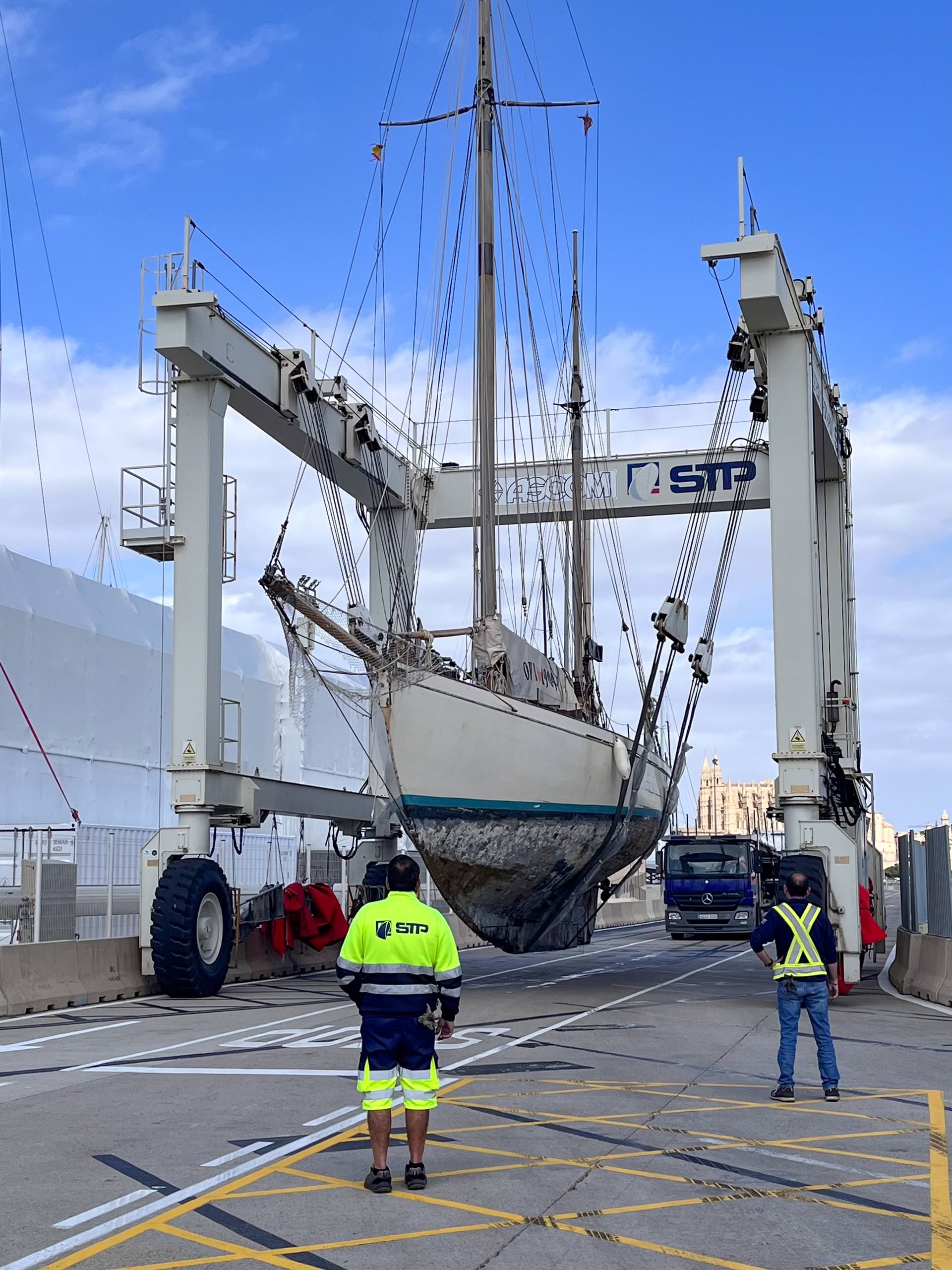
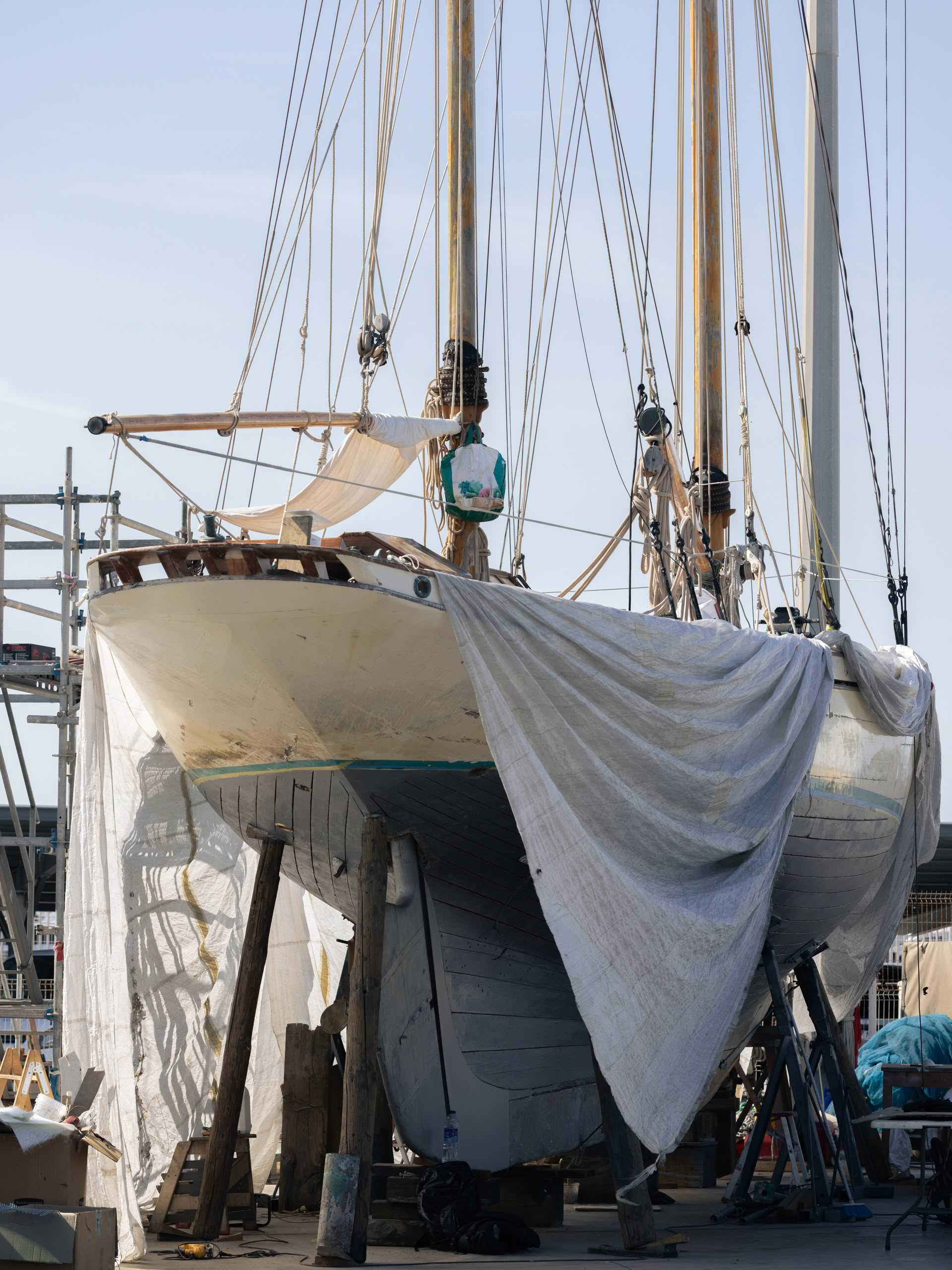
From the STP shipyard onward to Pendennis Vilanova
According to the press release, coatings specialist AkzoNobel is now involved in the restoration. The company examined the yacht’s condition and supplied products from its International brand for the underwater hull, bilges, keel and topsides. Among those named are the Micron 99 antifouling and the single-component high-gloss Toplac Plus varnish. After the work at STP, the OWL is to be taken to Vilanova, south of Barcelona, where Pendennis Vilanova is to rework the painted and clear-coated interior surfaces.
For now, the ship has been saved. Whether this will lead to a full restoration has not yet been decided. Passmore is currently looking either for a well-funded new owner or for a model in which shipyards, suppliers and private backers jointly fund her preservation.
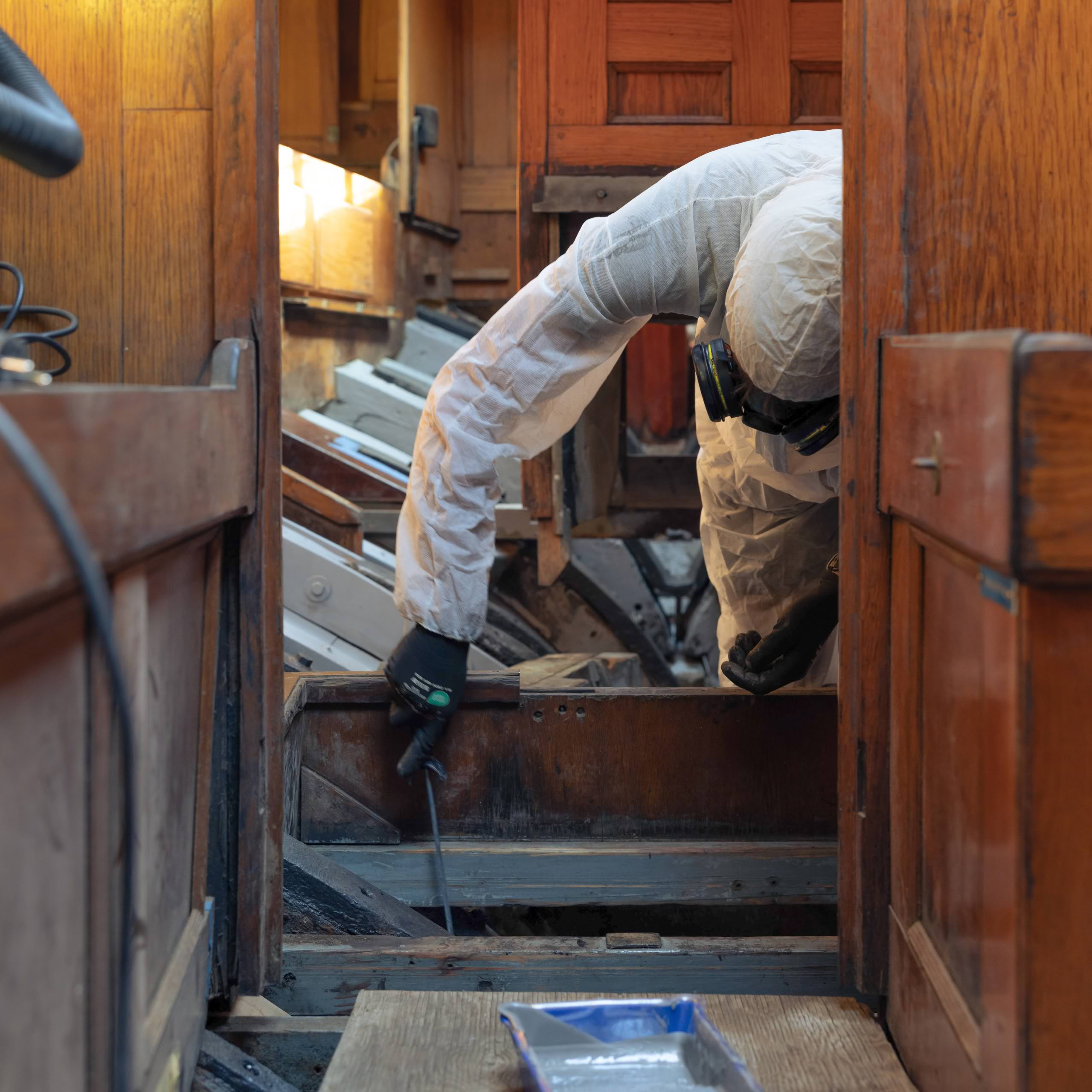
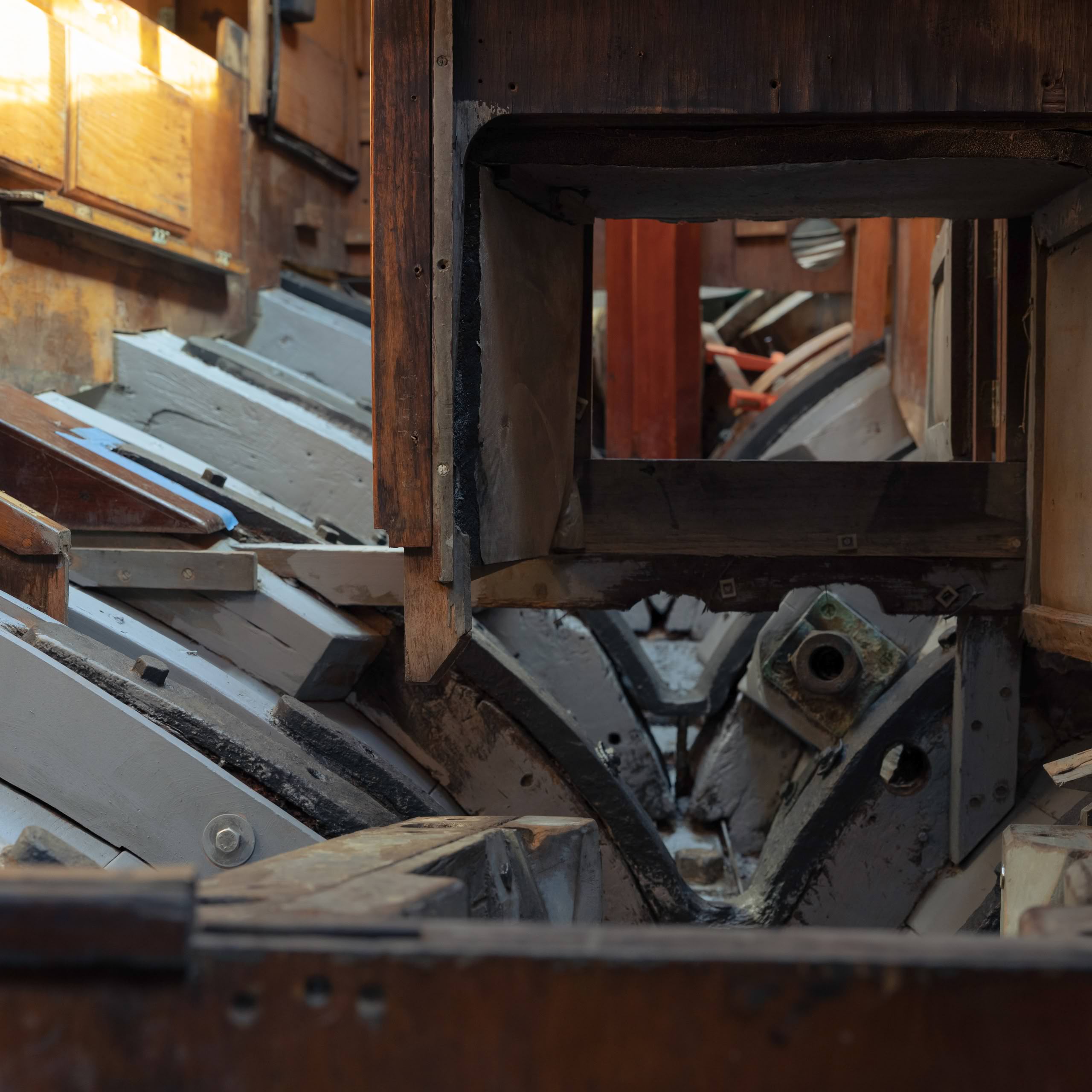
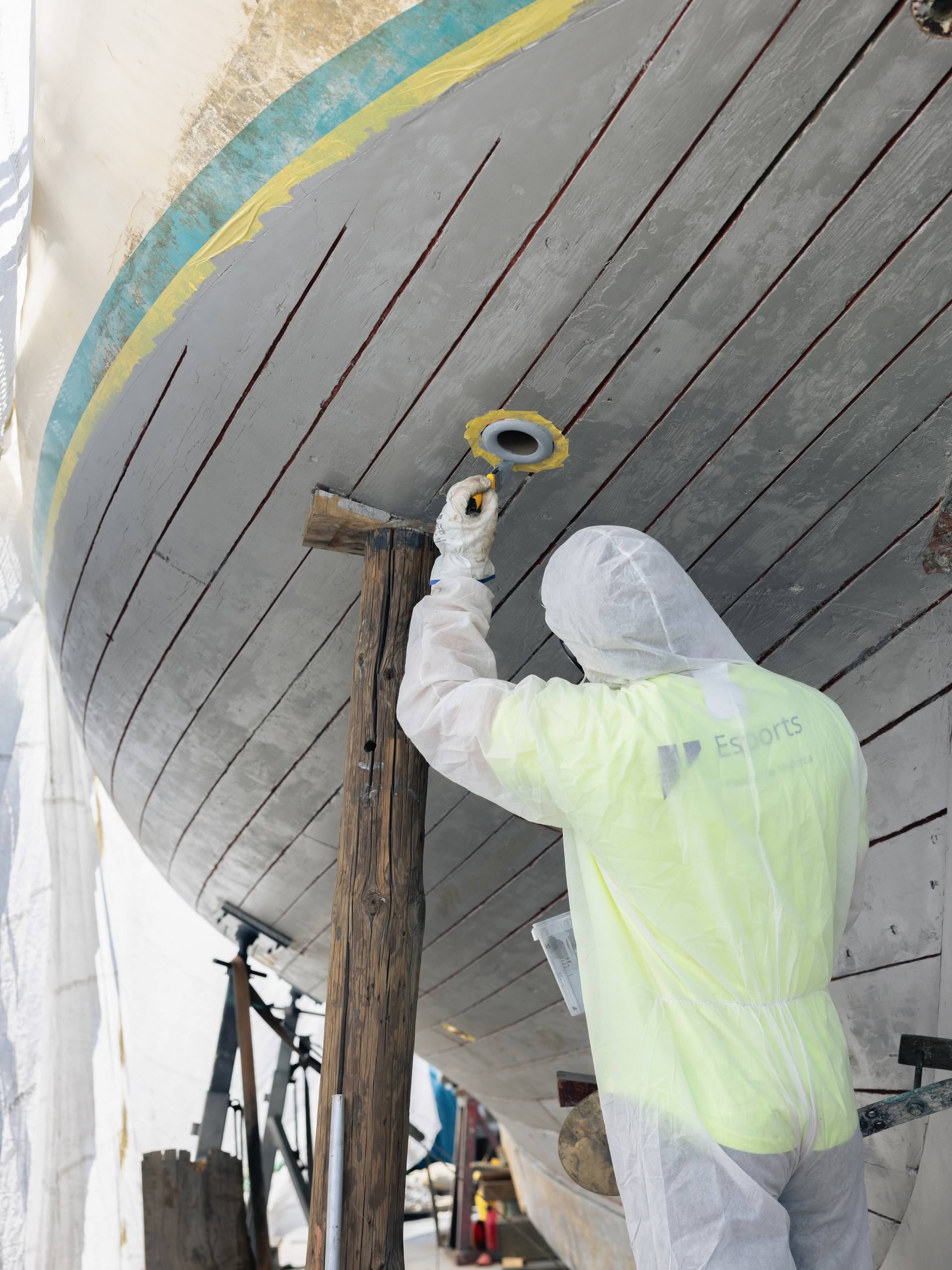
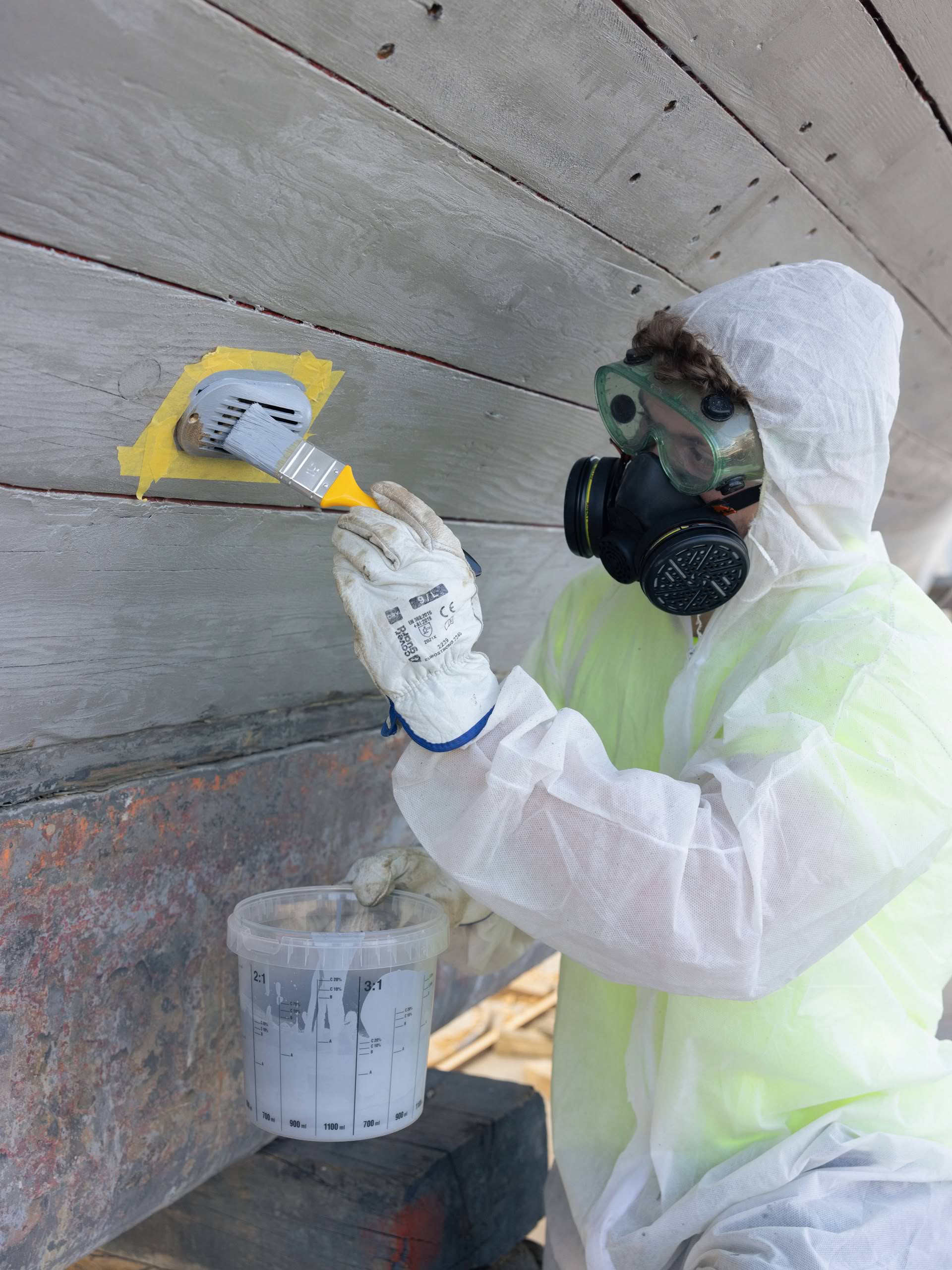
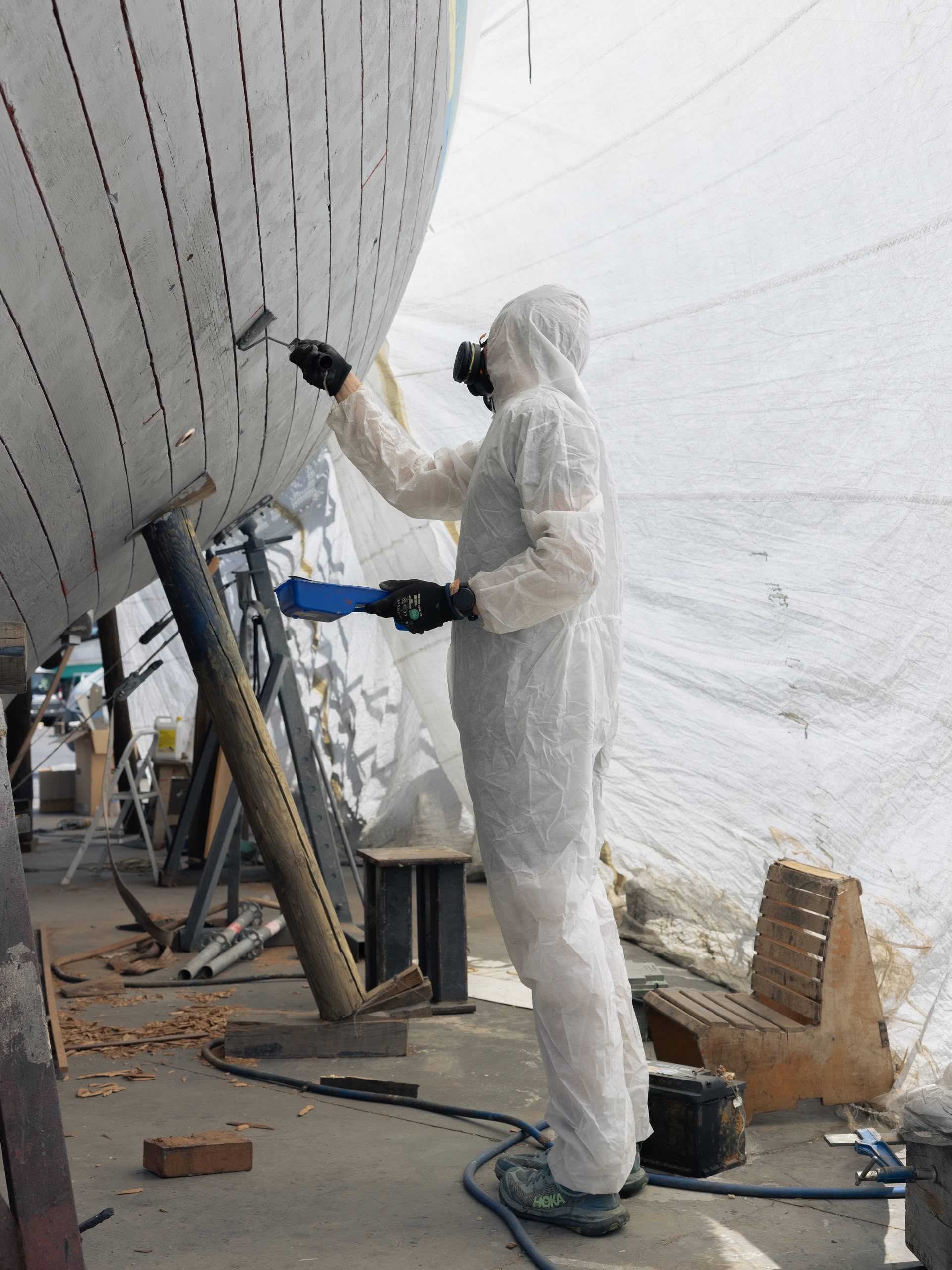
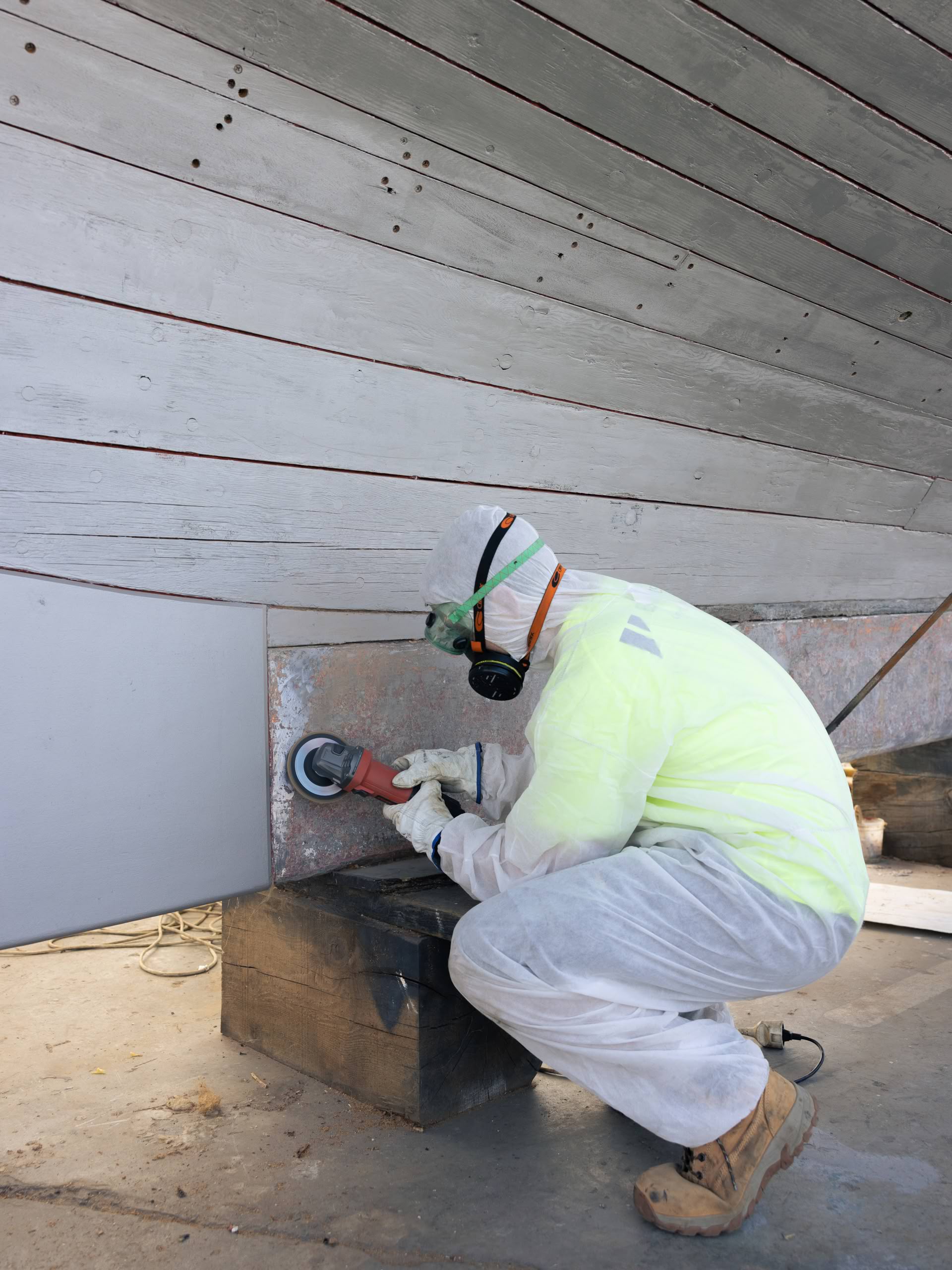
Sailing yacht OWL – Built for the Edwardian age
The OWL was built in 1909, at a time when Britain was still the centre of international yacht building. King Edward VII sat on the throne, steamships already dominated world trade, but among private yachts a carefully built wooden sailer was still considered the epitome of style and seamanship.
The ship was designed by Frederick Shepherd, one of the most remarkable British designers of his era. Shepherd, born in 1869, was no radical racing-boat designer. His speciality was elegant, well-balanced cruising yachts that were considered seaworthy and offered more space below deck than the often extremely narrow racing designs of those years.
After stints with Arthur E. Payne and the London brokerage and design firm Lory & Cornwallis, Shepherd opened his own office in 1899. Over the course of his career he produced more than 80 designs, according to Amokura: a classic boat archive.
This explains a key part of the OWL’s character. She was not a pure-bred racer, but a powerful, deep-draught cruising yacht with generous usable interior space. Her gaff ketch rig distributes the sail area across two masts and several comparatively manageable sails. This means such a ship can be handled by a smaller crew despite her size.
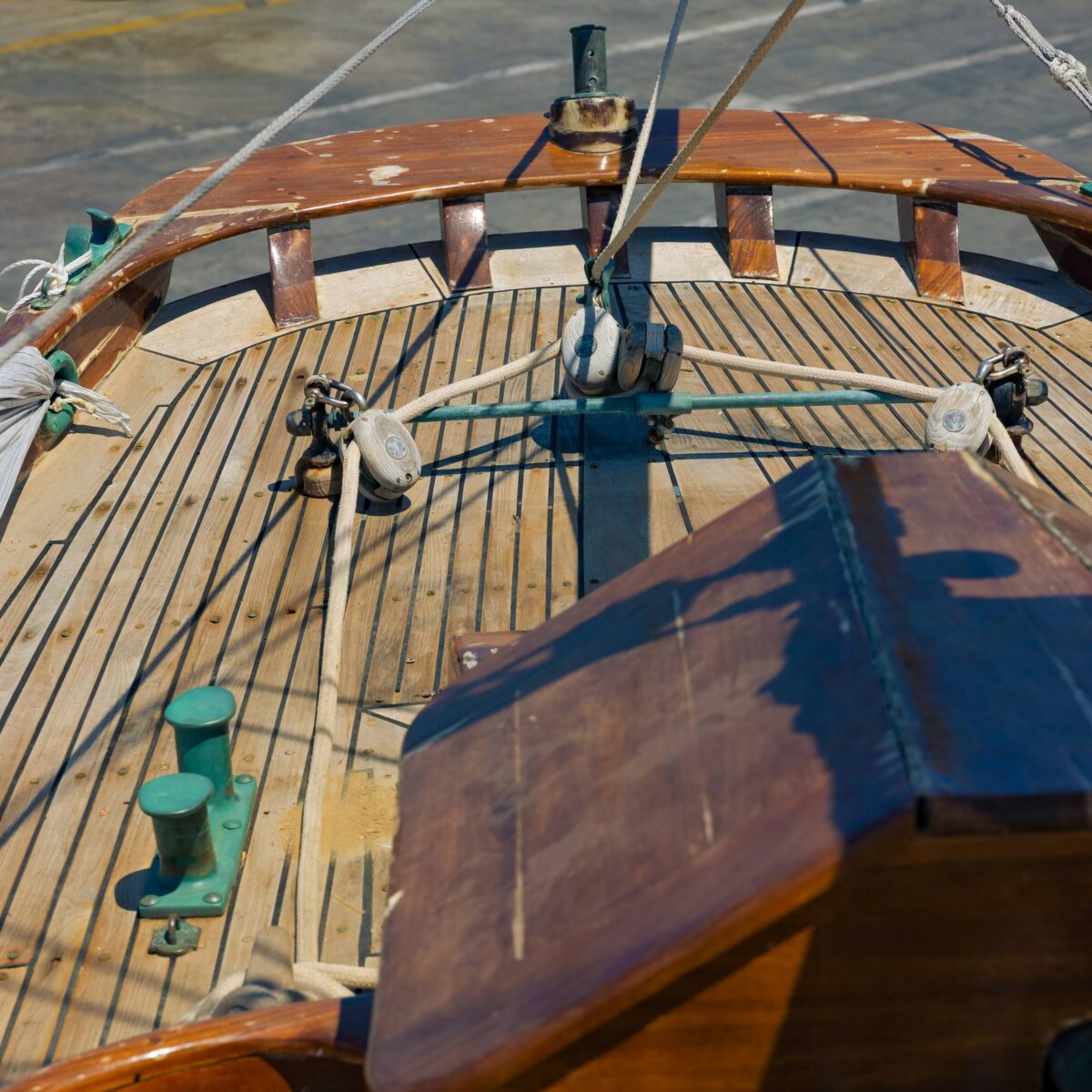
Contemporary and later descriptions, such as those from the Sandeman Yacht Company, describe the OWL as a well-balanced and good-natured sea boat, capable of crossing the Atlantic while offering plenty of space for extended voyages or charter guests.
The White Brothers of Itchen Ferry
The yacht was built by White Brothers on the River Itchen in Southampton. According to publicly available information, the yard was established after Arthur White and his family relocated from Cowes on the Isle of Wight to Itchen Ferry in the early 1890s.
The company later traded as “White Brothers, Yacht Builders, Engineers and Shiprepairers” and was, in the first decades of the 20th century, among the respected English yacht yards. The site lay on the western, or south-western, bank of the River Itchen in what was then the shipbuilding quarter of Itchen Ferry, opposite eastern Southampton and not far from today’s Itchen Bridge.
White Brothers built cruising yachts, racing yachts and motor yachts, often to designs by prominent naval architects, but also to plans by family member Herbert William White. The yard was known for high-quality traditional woodwork, prestigious one-off builds and large sailing yachts.
White Brothers also built the Big Class gaff cutter LULWORTH
Their most famous vessel is probably LULWORTH, launched in 1920. Originally named TERPSICHORE, the Big Class gaff cutter was built for the businessman Richard H. Lee and raced against yachts such as BRITANNIA, SHAMROCK and WESTWARD. After changes to her rig and keel, LULWORTH developed into a successful racing yacht and is today considered one of the most significant restored classic sailing yachts.
Other well-known White Brothers builds, according to National Historic Ships, include the yawl HELGA built in 1898, the Shepherd-designed yacht WAYWARD from 1908, the motor yacht KIWI built in 1914, and the nearly 27-metre ketch MILENA, also built to Shepherd’s plans in 1929.
In 1920 the previously family-run company was taken over by a syndicate and reorganised as White Bros. (Southampton) Ltd with a capital of £100,000. The yard no longer exists today; the company later went into liquidation.
Parts of the historic shipyard site and the other Itchen Ferry yards disappeared in the course of the industrial redevelopment of the riverbank and the construction of modern port and transport facilities, according to bartiesworld.co.uk.
More than an old charter boat
The OWL is not a production yacht and, strictly speaking, does not belong to any “boat type” in the modern sense. She is an individual design by Frederick Shepherd, an Edwardian cruising ketch whose current proportions resulted from the radical rebuild of the 1920s, when the boat was “lengthened” by inserting a mid-section, presumably to make her faster.
Her significance lies less in individual racing successes than in her largely preserved fabric and her unusual life story. Pitch pine on oak, bronze fittings, gaff sails, wooden spars and traditional skylights are not nostalgic replicas, but parts of a ship that was actually built in 1909 and used at sea for decades.
The OWL survived two world wars, was cut apart and lengthened, motorised, stolen, found dismasted in the Pacific, abandoned, restored, sailed across the Atlantic, raced at classic regattas, and finally chartered off Mallorca. In early 2026, only a few hours stood between her and disappearing under the blades of an excavator.
Now the old hull is back on land. That is not yet a rescue for the next hundred years. A proper restoration of a yacht this size can quickly run into seven figures. But over her long life, the OWL has already proven more than once that she is hard to keep down.