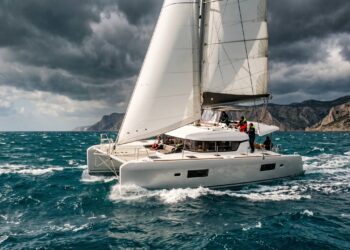








Within a few days, several serious accidents involving sports and pleasure boats have occurred in Croatia. Coincidence or not? And: What can sports skippers do to reduce the risk? An assessment by SeaHelp.
In a short space of time, there have been a number of accidents involving sports boats in Croatia. This raises the question: Are there reasons for this? Or is it pure coincidence? A few examples: On June 4, a boat crashed into the breakwater off Pula; one Austrian died, a second was seriously injured. The port authority spoke of “high speed” on mmpi.gov.hr, and Croatian media reported speeds of 20 to 30 knots.
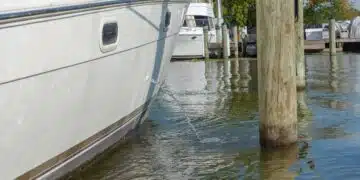
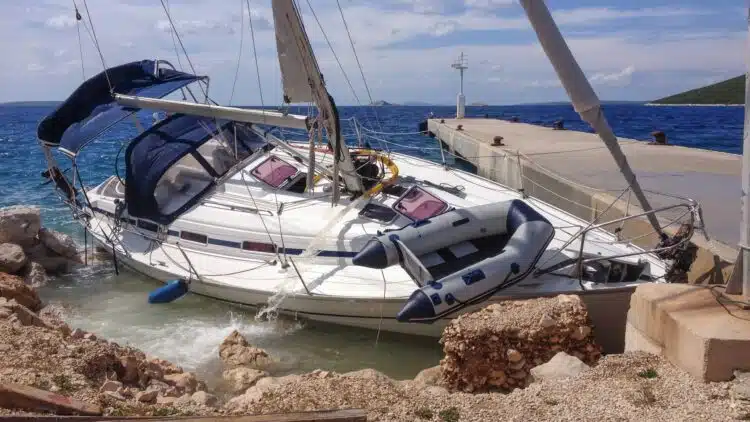
On June 12, a spectacular harbor accident occurred in the Marina Kaštela: A sailing yacht reportedly rammed another boat upon entering and finally hit the pier, as Kristijan Antic reports on his blog of the same name. According to available reports, no one apparently lost their lives, but the incident showed how quickly a maneuver in the harbor can result in serious damage.
The most serious case occurred on June 14 in the Splitska vrata between Brač and Šolta. A scheduled fast catamaran collided with a French-flagged sailing yacht carrying eight Czech citizens. Four people died, four were rescued; the yacht sank at a depth of around 50 meters.
Coincidence alone does not explain everything; Croatia is one of the densest water sports regions in Europe
Whether this accumulation is mere coincidence cannot be said with any seriousness until the investigations are completed. But coincidence alone does not explain everything. “Croatia is one of the densest water sports regions in Europe. In high season, charter yachts, private motorboats, fast excursion catamarans, ferries, jet skis, bathers, and divers all meet in a small space,” says SeaHelp Managing Director Wolfgang Dauser. In 2024, more than half a million boat arrivals were registered in Croatia, and there were more than three and a half million nautical overnight stays.
Added to this is a “known bundle of risks: excessive speed near the coast, poor all-round visibility, lack of local knowledge, underestimated commercial shipping traffic, and routine errors during harbor maneuvers,” says Dauser, who is himself out with his boat in Croatia for several weeks a year.
SeaHelp reported multiple times on the new rules on the water
It is no coincidence that the Croatian authorities have issued new safety rules: Depending on the boat’s length, minimum distances from the coast apply, and low speeds are prescribed in narrow passages, bays, and near harbors.
SeaHelp reported multiple times on the new rules on the water:
- Safety rules for boats in Croatia: More safety on Croatian waters
- Sports shipping in Croatia: Update on the new OSN regarding mooring and anchoring
- Sports shipping in Croatia: Update on the new Regulation regarding mooring and anchoring
- Sports shipping in Croatia: New Regulation governs coastal navigation, mooring, and anchoring
“Sports skippers cannot completely rule out serious accidents, but they can drastically reduce the risk,” says Dauser. Decisive is a “conservative driving style: reduce speed in narrow waterways,” the same applies near harbors and bathing zones, and “sports skippers are well advised to observe professional shipping traffic early on and never trust to be seen.” At sea, it is not enough to have the right of way. One must also do everything reasonable to prevent accidents in a foresightful manner.
Anyone who wants to skipper in Croatia should not only hold a license but also know the area, traffic density, and above all, their own limits
“That is precisely why in Croatia: Anyone who wants to skipper should not only hold a license but also know the area, traffic density, and above all, their own limits,” says Dauser. In this respect, the recent accidents are not proof of a systematic crisis in sports shipping in Croatia. “But they are a warning – and a loud one at that.”
Recommendation: In our news section at sea-help.eu, we report regularly and currently on new regulations for sports boats and point out present risks. Before going on a holiday Croatia trip with friends or family, the rule is therefore: Anyone who informs themselves thoroughly about the area beforehand is on the safe side – also helpful here is the free SeaHelp app, with which one can – if the trip doesn’t go exactly as planned – also quickly and easily call the SeaHelp emergency services.
24h EMERGENCY CALL EUROPE: 0043 50 43 112
In an emergency, the SeaHelp response boats can be called using the practical SeaHelp app, or under the free emergency number for Europe 0043 50 43 112 (or under the alternative emergency number for Europe 00385 919 112 112).
Download SeaHelp app:


* terminal device costs or telecommunications service costs may apply