






In Croatia, there is a new legal regulation that sports skippers should be aware of for their next cruise: the “Ordinance on the Safety of Maritime Navigation in Internal Sea Waters and the Territorial Sea of the Republic of Croatia and on the Manner and Conditions of Supervision and Traffic Control at Sea” (SSVO). SeaHelp had already presented the most important regulations in detail in the news on July 10 and 14, 2025. Now, further amendments to the SSVO have been announced.
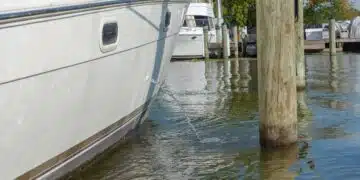
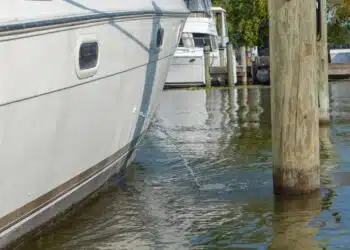
Until the new SSVO came into force last year, it was unclear exactly what the new regulation prescribed for, among other things, the anchoring and mooring of boats on the coast regarding the “50-meter distance” (Art. 53 Para. 7).
The legal norm states: “Vessels are prohibited from mooring to the shore in such a way that any part or accessory of the vessel is 50 meters or more from the shore.”
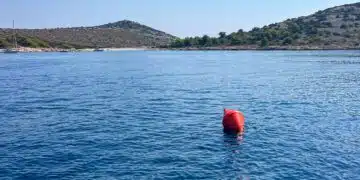
The anchoring zone in the SSVO is now to be extended from 50 to 70 m
This anchoring zone (from the coast to the point where the anchor chain enters the sea) is now to be extended from 50 to 70 m, as the Croatian Minister of Transport and Infrastructure, Oleg Butković, recently announced in a statement in which he presented ten new regulations and rules for road traffic, shipping, and the management of maritime property.

The Minister’s “Ten-Point Plan,” which, according to his own statement, also took into account the objections of some domestic boat operators, involves not only raising the anchor chain area but also:
- Introduction of new rules for vehicles powered by liquefied petroleum gas (LPG), including regular tank inspections and clear periods of use.
- For special transports, QR codes will be introduced on permits. Vehicles and accompanying persons must be registered in the system in the future; applications should also be possible via an app.
- Regulations for the transport of dangerous goods are being adapted to EU law. New rules for inspections, reporting, and breaches of contract are being introduced.
- The training of drivers for dangerous goods transport is being modernized. The premises, equipment, and teaching materials of the training centers must meet new standards.
- In the maritime sector, documents, permits, and data exchange systems are being harmonized with EU requirements. The national maritime information system will be more closely networked with European systems.
- New rules for the safety of navigation concern inland waters and the coastal sea of Croatia. Tugs must use AIS identification systems in the future. Regulations for seaplanes are also being specified.
- New standards and procedures for permits, supervision, and reports are being introduced for hydrographic surveys. A new regulation on the “Single Maritime Window” is intended to simplify administrative formalities in maritime transport and improve data exchange with EU systems.
- For events on maritime state property, municipalities can reduce the minimum fee of 1,000 euros per day or waive it entirely if the event is of public interest.
- Croatia is also implementing new EU rules for low-emission fuels in shipping. The goal is to reduce greenhouse gas emissions by up to 80% by 2050 and to increasingly use renewable energy and shore power supply in ports.
In principle, the aim is for Croatia to comprehensively modernize its regulations in road traffic and shipping, focusing on increased safety, digitalization, better monitoring, simplification of procedures, and alignment with European standards.
The authorities attach particular importance to the new rules for special transports, dangerous goods transports, maritime safety, and the reduction of emissions in maritime transport.