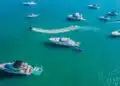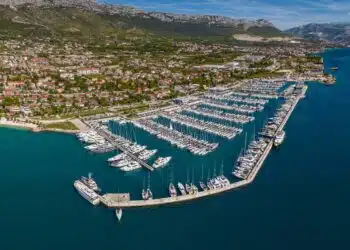









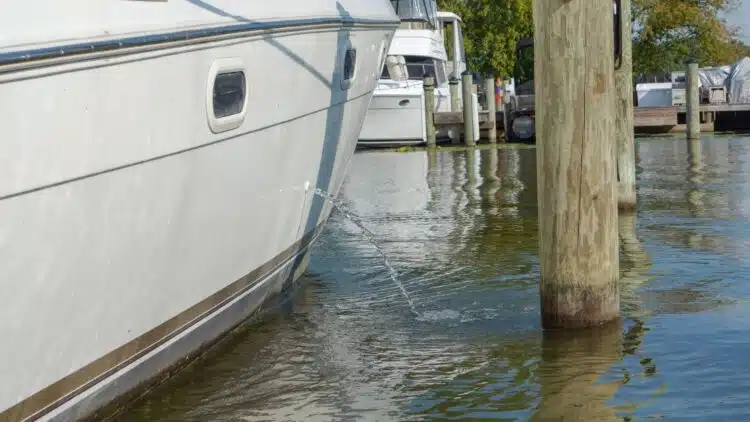
Within the space of a few weeks, two motor yachts have sunk in the Adriatic after taking on water. In both cases, everyone on board was rescued. The incidents nonetheless show how quickly a technical problem below the waterline can turn critical.
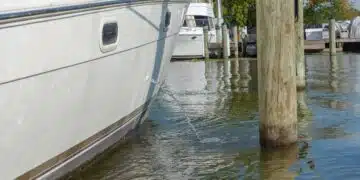
The most recent case occurred in Marina Tribunj in Croatia: a roughly 13-metre yacht flying the Austrian flag sank at her berth overnight on Friday. Two people were asleep on board and were only woken by the increasing list. They managed to leave the vessel in time and were uninjured. Emergency crews placed oil booms around the yacht, and the boat was lifted out on Friday afternoon.
The exact cause has not yet been established. The Kronen Zeitung, among others, along with Heute, cite a possible fault in a seacock or through-hull fitting, though this has not been officially confirmed to date.
As early as 29 August 2026, the DIWA II had sunk off Trieste. Ten Austrian holidaymakers were on board when the motorboat took on water on the outer side of the harbour breakwater. The coastguard and fire brigade rescued everyone on board unharmed. The Italian news agency ANSA reported that the DIWA II was registered in Koper/Capodistria; investigations into the cause continued afterwards.
Here too, much so far points to a technical problem. According to ORF, no external damage was initially apparent. Italy’s RAI reported a possible fault in the area of a seawater intake. However, a definitively confirmed cause of the accident has likewise not yet been established for this case either.
SeaHelp advises: check seacocks and the bilge regularly
Water ingress does not only occur after groundings or collisions. Seacocks, through-hull fittings, hoses or hose clamps can also become weak points. Particularly critical: small leaks often go unnoticed for a long time at night or during longer absences.
For this reason: “Whenever you leave the yacht — heading home for an extended period, or whenever your absence lasts longer than three to four days — the seacocks must always be closed, as insurers will otherwise often refuse to cover the damage,” advises SeaHelp managing director Wolfgang Dauser, himself an experienced motor yacht skipper.
If equipment such as air conditioning, an anchor chain washdown system, a watermaker or a generator is not required, the relevant seacocks should generally be kept closed. This can significantly reduce the likelihood of water ingress. Dauser’s advice: „Only ever open the seacocks that are actually needed for current operation — for example, those for the engines and for sewage or grey water.“
Furthermore, SeaHelp recommends regularly checking seacocks and through-hull fittings for corrosion and leaks, inspecting hose connections and clamps, and testing the function of the automatic bilge pump and float switch. An additional bilge alarm can provide valuable extra time.
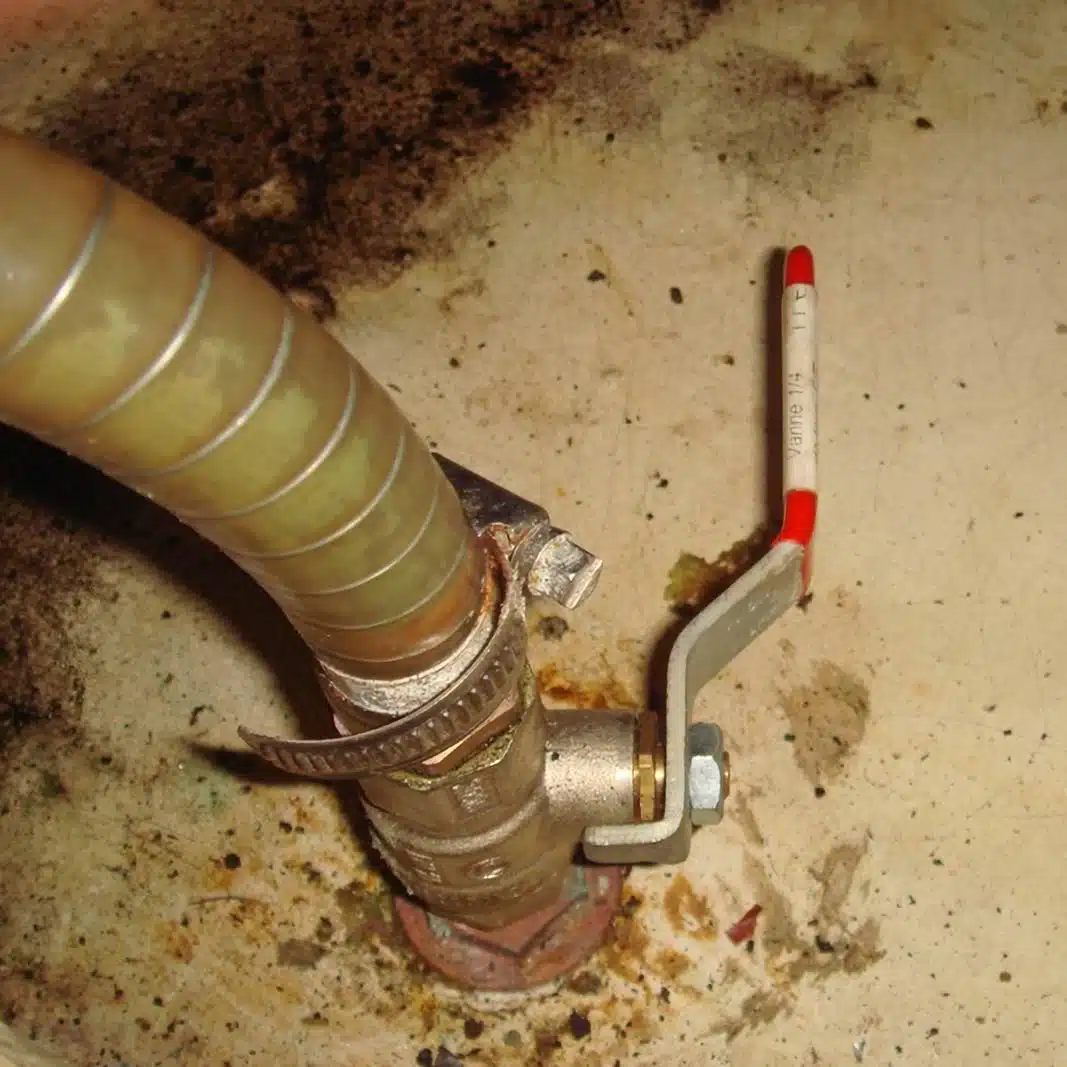
If a bilge pump switches on unusually often, or water suddenly appears somewhere that normally stays dry, the cause should be investigated immediately.
In an emergency: put on lifejackets, stop the ingress of water if possible, and call for help early. The two recent cases show that even a comparatively small technical problem can lead to the loss of the entire boat within a short space of time.
24-HOUR EMERGENCY NUMBER EUROPE: 0043 50 43 112
In an emergency, SeaHelp’s rescue boats can be called using the handy SeaHelp app, or via the free European emergency number 0043 50 43 112 (or the alternative European emergency number 00385 919 112 112).
Download the SeaHelp app:


* device or telecommunications provider charges may apply