
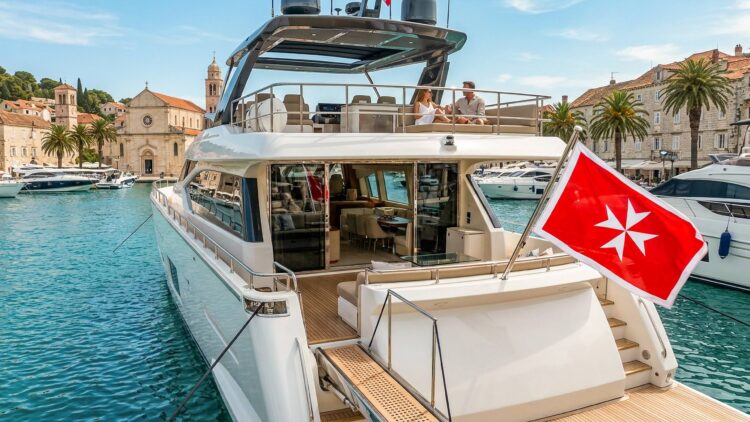
Private yachts flying the Maltese flag can now benefit from simplified entry and clearance procedures in the US. This makes Malta more attractive as a flag state for internationally cruising yacht owners. But when is a foreign registration truly worthwhile, which legal and tax aspects must be considered – and how does SeaHelp support boat owners in choosing and applying for the right flag?
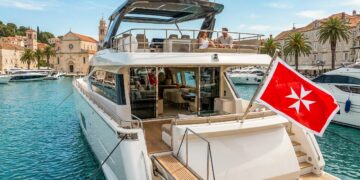
Malta has taken a further step to establish itself as an international hub for the registration of pleasure craft and yachts. As Minister for Transport Chris Bonett announced on October 30, 2026, during a press conference in Birgu, Malta, privately used yachts under the Maltese flag will in future be able to benefit from so-called U.S. Cruising Licenses.
The U.S. Customs and Border Protection (CBP) officially added Malta to the list of nations whose privately used yachts are eligible for such a license on October 29. The benefits apply retroactively from June 10, 2026.
The U.S. Ambassador to Malta, Somers Farkas, who joined via video message, described the decision as an important success for the maritime cooperation between the two nations. Bonett also sees this as an additional competitive advantage for the Maltese flag, which is particularly appealing for larger, internationally operated yachts.

Less bureaucracy and lower fees in US ports
In concrete terms, the new regulation means that owners of Maltese-registered private yachts can apply to the relevant US customs authority for a Cruising License. This can be issued for a maximum of twelve months and facilitates cruising between different American ports.
Consequently, yachts holding this license are exempt from certain formal entry and clearance procedures, such as the repeated issuance of permits to proceed. Certain fees, including specific port handling and tonnage duties, can also be waived.
However, things will not be entirely free of red tape in the future either: Arrivals at a US port must still be reported to the responsible CBP office. Applicable immigration, customs, and security regulations also remain in force.
Furthermore, the Cruising License is not issued automatically alongside the Maltese yacht registration; it must be applied for separately. Important for charter owners: Commercially operated yachts are excluded from the new concession.
Which flag is right for my boat?
The decision primarily makes the Maltese flag more appealing to owners who regularly cruise between Europe, the Caribbean, and American ports on their private yachts. Conversely, those operating primarily in the Baltic Sea, North Sea, or Adriatic are unlikely to benefit significantly from this particular update.
In principle, boat owners should carefully evaluate the choice of their flag state. It determines not only which ensign is flown at the stern. Depending on the registry country, requirements for ship papers, safety equipment, technical inspections, radio licenses, and running costs also vary.
Not every seemingly low-cost registration proves advantageous in the long run. The recognition of boat documents in the cruising areas navigated and insurance terms also play a critical role.
In addition, tax matters must be addressed. Registering a yacht under a foreign flag by no means automatically entails an exemption from value-added tax (VAT) or import duties. In the past, Malta in particular faced criticism from the European Commission over its tax-favorable yacht leasing models.
The regulations in question were subsequently thoroughly revised. However, the newly adopted American facilitations have nothing to do with those former tax schemes.
Poland, the Netherlands, or San Marino: Alternatives to the home flag
For many European boat owners, other foreign registries are more appealing than Malta anyway. This includes Poland in particular, where pleasure craft can be registered comparatively inexpensively and with manageable administrative effort. One advantage is that for qualifying vessels, no recurring renewal of the registration is required.
The Dutch flag also offers an alternative. While the costs are higher, various registration models and additional services are available.
Furthermore, San Marino is an option for certain owners residing outside the European Union. The microstate maintains its own ship registry, which also facilitates international yacht registrations. However, specific prerequisites apply here for registration and operation.
Which solution makes sense ultimately depends on individual circumstances: the owner’s place of residence and nationality, the cruising area, the size and intended use of the vessel, as well as the desired legal and administrative framework.
SeaHelp Service: Easily apply for foreign yacht registration online
Those wishing to register their boat or yacht under a foreign flag can also use the SeaHelp registration service. In collaboration with specialized partners, SeaHelp arranges applications for foreign boat and yacht registrations and supports owners in compiling the necessary documents.
Currently, SeaHelp primarily offers registrations under the Polish, Dutch, and – for eligible owners – San Marino flags. The application can be processed online. After filling out the application form and submitting the required documents, the registration partners handle the remaining processing steps.
Depending on the flag state, required documents include proof of identity of the owner, a purchase agreement or proof of ownership, technical vessel data, and, where applicable, a certificate of deletion from the previous ship register.
Cost structures vary as well: While Polish registration often involves a one-time fee, other registers may incur additional costs for surveys, documentation, or recurring annual administrative services.
Good to know: SeaHelp offers discounts for members across its published registration offers. The exact terms and conditions applicable in each case depend on the chosen registry and the respective offer.
For individual questions regarding yacht registration, Petr Zajíček is available as the point of contact at SeaHelp, reachable via email at yachtregistration@sea-help.eu or by phone at +420 602 325 965.
The new agreement between Malta and the US clearly demonstrates that the choice of flag state can have practical consequences for yacht operations. For skippers, comparing available options thoroughly prior to an initial registration or re-flagging is well worth the effort. Ultimately, what matters most is not the most prestigious or lowest-cost flag, but the one that aligns best with one’s own vessel, cruising grounds, and planned usage.