







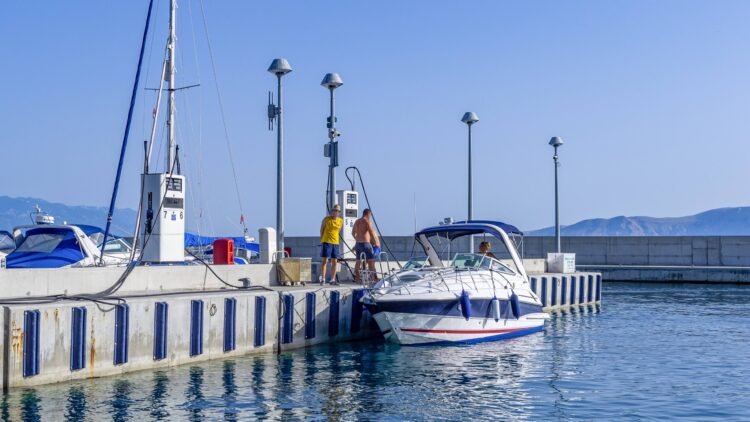
Fuel supply for recreational boats in Croatia is generally secure. However, the availability and delivery schedules of individual fuel docks can currently change at short notice. Anyone wanting to avoid unnecessary detours should therefore pick up the phone before refueling, SeaHelp advises.
Croatia is one of the best-developed water sports regions in the Mediterranean – and normally, refueling along the coast is not a major issue either. This summer, however, a bit more planning is advisable. High seasonal demand and the tense situation on international energy markets have recently already led to changes in Croatia’s fuel station network, as SeaHelp has reported several times.
INA had temporarily limited the dispensing volume at numerous road fuel stations to 300 liters per fueling in late July, to prevent local supply shortages. This volume limit explicitly does not apply to refueling boats – as reported.
However, this does not automatically mean that every boat gas station always has every desired type of fuel available in any quantity.
A Phone Call Can Save Many Nautical Miles
That’s why a simple recommendation currently applies: “Before a planned larger refueling stop, contact the relevant fuel station by phone. You should not only ask whether diesel or petrol is available, but for larger quantities also state the approximate amount needed and, if possible, arrange for it to be set aside or reserved,” advises Denis Lipovac from SeaHelp headquarters in Punat, Croatia.
This only takes a few minutes and can save a considerable detour, says Lipovac. After all, a fuel dock marked on the nautical chart or plotter is of little help if the required fuel is not currently available in sufficient quantity and the tanker truck with the next delivery isn’t expected for hours or even days.
INA itself shows that a phone inquiry is easy to make: For its fuel docks, the company publishes not only opening hours and available fuel types but also phone numbers. For the Jezera-Marina station, for example, Eurodiesel and Eurosuper 95 are currently listed, along with explicit mention of service for watercraft.
Especially Important for Charter Crews
Advance fuel planning is even more important for charter skippers. As a rule, charter yachts must be returned to base with a full tank in accordance with the agreed return conditions. Anyone who only heads to the nearest fuel dock right before check-out and doesn’t get any or enough fuel there can quickly find themselves under time pressure.
In the worst case, the yacht has to be returned with an incomplete tank – and the subsequent refueling by the charter company can incur additional costs under the charter terms.
That’s why, at the latest the day before the return, it should be clarified which fuel station will be approached, when it is open, and whether the required amount of fuel is available. For large tanks, it’s advisable to state the approximate number of liters by phone in advance. Anyone wanting to play it safe doesn’t wait to refuel until the last nautical miles before the charter base.
Don’t Wait Until the Last Liter
Even independent of the charter business, an old seafaring rule applies now more than ever: range should not be pushed all the way down to reserve. An alternative refueling option along the planned route is just as much a part of trip planning as the weather forecast and mooring.