








At the latest before the start of the coming season, boat owners should think about the contents of their fuel tanks, because: fuel can go “bad” – and at different rates depending on the type. This is particularly relevant for boat and yacht owners, as long periods of standstill, humidity and temperature fluctuations can further accelerate aging. Recommendations for the period after the winter break.
Boat owners should always consider the age, condition and correct storage of fuels (ideally as early as when hauling out the boats in autumn), because fuel is not a product with an unlimited shelf life. For example, the typical shelf life (without additives, under everyday conditions) for petrol (E5 / E10) is only about 3 to 6 months, and for two-stroke mixtures (due to the oil content) it can even be as little as 1 to 3 months.
Diesel (B7) lasts for about 6 to 12 months (often shorter in boats) – only HVO / GTL diesel can last significantly longer, namely up to 3 years. Please note: fuel in a boat tank can also age faster than in a car because boat tanks are often only partially filled (which means more air and more moisture due to temperature changes between winter storage / spring start) and low throughput.
Fuels can go “bad” in different ways
How does fuel go “bad”? A distinction must be made here: with petrol, lighter components evaporate over time, leading to poorer ignitability. Oxidation also causes resins and deposits to form, and ethanol (E5 / E10) “pulls” water, which can lead to phase separation. Consequences: poor starting, rough running, clogged carburetors / injectors – if not worse.
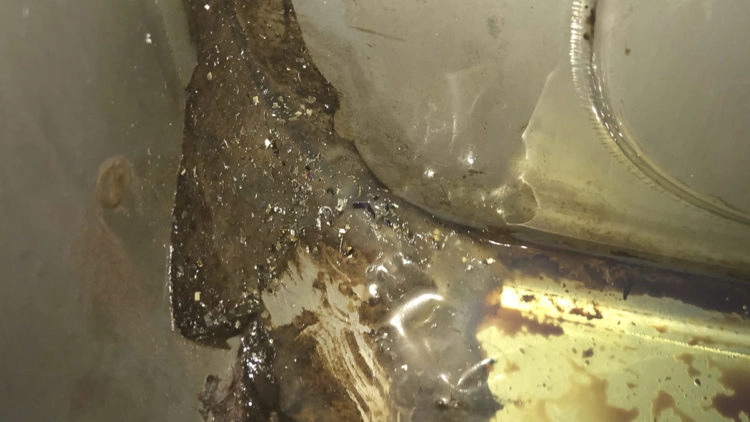
If diesel is stored for too long, it can age and oxidize. This can result in the so-called “diesel bug” (bacteria / yeasts at the water-diesel interface), and the fuel can become sludgy and clog the filters. The consequences can be: loss of power, engine failure and/or expensive tank cleaning. With two-stroke mixtures, the oil can “separate” and the additives in the oil can break down due to long periods of inactivity. The consequences here are a lack of lubrication, and in some circumstances, a piston seizure may occur.
Fuel checklist at the start of the season
At the latest by the start of the season, boat owners should observe a few things. A checklist has proven its worth here before the first start:
- Smell and look – Petrol: does it smell “old / varnish-like”? Diesel: cloudy? Streaks? Dark particles?
- Check the tank bottom – is there water or sludge present?
- Check fuel filters – especially water separators for diesel
- Decision aid: if the fuel is 6 months old or less and clean, it can usually be used without problems. If the age is over 12 months (petrol / diesel), caution is advised, and two-stroke mixtures older than 2 months should no longer be used.
What to do with old fuel?
If fuel has been stored in a jerry can in the garage, the following applies to petrol / two-stroke mixtures: do not use it for the boat anymore; if at all, only a (heavily diluted) application in a car might be considered (applies only to petrol, not to 2-stroke mixtures).
Diesel should generally only be used after a positive visual inspection and appropriate filtering – however, in case of doubt, the fuel should be disposed of to save yourself trouble. Note: old fuel belongs at a hazardous waste collection point!
If the overaged fuel is in the boat tank, it should be pumped out or heavily diluted with fresh fuel (petrol); for diesel, a professional tank cleaning is recommended (if diesel bug is suspected), and the filters should definitely be replaced.

Additives can help if used correctly – and in good time
Many boat owners ask whether adding additives can help. Answer: yes – but only if they are used or applied correctly. For petrol and diesel, certain stabilizers are suitable, whose task is to slow down oxidation. For diesel, specific biocides can also help against the diesel bug, whereas so-called “water binders” for petrol are only of limited help.
Correctly used, additives can lead to a longer shelf life, minimize deposits to a certain degree and thus reduce the risk during winter storage. However, it should be noted that they cannot work “miracles”; for example, additives do not work retroactively (e.g., if the fuel is already bad), incorrect dosing can do more harm than good, and biocides are also relevant to the environment and health. In any case, the principle applies: additives should be added before storage, and not only in the spring.
What is the best way to prevent fuel from going bad?
Before winter, you should keep the tank either completely full (less air and water) or completely empty (especially for petrol), additives should be added in good time, and fresh fuel should be run through briefly.
During the season: it is better to refuel with fresh fuel more often rather than letting it stand for months. If possible, ethanol-free petrol should be used. For diesel: check the water separator regularly.

Recommendations for boat owners after the winter break – always renew two-stroke mixtures, petrol older than 1 year: do not use anymore, check diesel critically, change filters – if unsure, the rule is: pumping out is often cheaper than repairing.