






Adriatic seagrass meadows are threatened by coastal land reclamation, polluted wastewater, fish farms, and the use of trawl nets, but also by boats and yachts anchoring freely. Biopressadria, a cross-border strategy to reduce biodiversity loss along the Adriatic coast, shows skippers how to behave correctly.
Many skippers – whether locals or tourists – enjoy sailing the Adriatic during the summer season, often simply looking for the “perfect holiday bay to anchor in.” However, few boaters consider the impact that so-called “free anchoring” can have on the seabed.
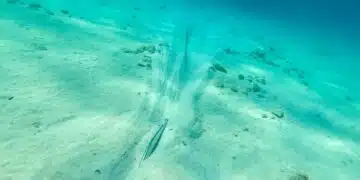
The problem: while crews enjoy the beauty of the Adriatic Sea, free anchoring puts enormous pressure on the seabed, threatening biodiversity and the health of the entire marine ecosystem. At first glance, anchoring may seem harmless, but the consequences can be disastrous and long-lasting.
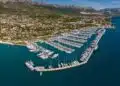
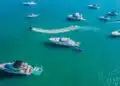
Management plans for marine protected areas in Croatia often point out that water tourism and free anchoring of ships are among the greatest threats to these areas. This is hardly surprising, as Croatia’s charter fleet is one of the largest in the world. However, the number of vessels in the Adriatic during the tourist season is significantly higher than the capacity of the berths. As a result, many of them anchor freely on the seabed.
Sunce, a Croatian nature conservation association based in Split, founded in 1998 and considered one of the largest and oldest environmental associations in Croatia, has been analyzing the impact of human activities on marine and coastal ecosystems, especially Posidonia seagrass beds, for many years and proposes possible solutions to reduce it.
Seagrass beds are among the most important and most endangered marine habitats
This is because seagrass beds are among the most important and most endangered marine habitats. They provide food, shelter, breeding and development opportunities for numerous marine organisms, produce oxygen and protect the coast from erosion.
The Biopressadria project, which started in 2024 and involves Sunce among other partners, will run for 30 months. The aim is to test and implement a joint cross-border strategy to find practical solutions to reduce the impact of coastal and boat tourism on marine and coastal biodiversity.
“The construction of new moorings leads to further destruction of natural coasts, and free anchoring leads to the destruction of marine habitats. A necessary prerequisite for greater sustainability is strategic consideration of the development of nautical tourism by limiting the number of vessels, improving service quality, and investing more in ecological infrastructure and nature conservation,” says Matea Špika, senior specialist in the Nature Conservation Department in Sunce.
Free anchoring of ships often causes physical damage to the seabed and coastal ecosystems
Free anchoring of ships often causes physical damage to the seabed and coastal ecosystems and poses a particular threat to sensitive seagrass beds, says Špika. This pressure has serious consequences, including habitat loss, loss of biodiversity, and general disruption of the marine ecosystem.
These consequences are “in many cases irreversible,” meaning that the restoration of certain habitats “often takes an extremely long time.” Posidonia meadows grow on average only one centimeter per year, soft corals such as gorgonians up to about two centimeters, and stony corals even more slowly.
Špika is certain that these meadows are irretrievably destroyed and fragmented by ship anchors and mooring chains, which directly endangers their function and has long-term consequences for the preservation of the marine environment.
“Posidonia meadows form a dense network of roots and rhizomes that extend over and into the seabed (mainly sedimentary rock) to form deposits several meters thick, known as mats,” says Vida Zrnčić, senior expert in the Department of Nature Conservation. These deposits bind “extremely large amounts of CO2,” so that “anchoring in areas where Posidonia has died out continues to have a very negative impact on the environment.”
Frequent anchoring, digging up the seabed and the associated tearing off of parts of the algae promotes the spread of the algae Caulerpa cylindracea
Frequent anchoring, digging up the seabed and the associated tearing off of parts of the algae significantly promotes the spread of invasive species, such as the algae Caulerpa cylindracea, according to Zrnčić.
If it were up to Sunce e.V., anchor pressure could be reduced by setting up ecological anchorage systems (which, according to environmentalists, are still very rare in Croatia) and by banning anchoring in Posidonia seagrass beds outside fixed anchorages.
Sunce cites France and Spain as positive examples of the direction Croatia should take, saying they have “done the most” to “regulate anchoring over Posidonia seagrass beds and create a more environmentally friendly infrastructure.”
So-called “ecological anchoring systems,” which are now increasingly used there, are “drilled” directly into the seabed, and therefore have less impact than the traditionally used Colpo Morto systems, which occupy a much larger area of the seabed. The Colpo Morto system involves anchoring floating pontoons with anchor chains or alternative means attached to concrete blocks on the seabed.
Biopressadria assesses and evaluates the state of habitats and the impact of water tourism in pilot areas in the Adriatic Sea
This is where the Biopressadria project comes in. As part of this project, Sunce and its partners assess and evaluate the state of habitats and the impact of water tourism in pilot areas in the Adriatic Sea.
The main objective is to implement a joint cross-border strategy to achieve practical solutions (such as an ecological anchorage system) that will reduce the impact of coastal and water tourism on marine and coastal biodiversity.
This should be a no-brainer for charter crews and local boaters, as they are mostly people who love the sea and therefore want to protect it.
Conservationists are certain that a significant part of the problem of the negative effects of anchoring lies simply in their lack of information about the importance and endangerment of seagrasses and how the negative effects of anchoring can be reduced. For this reason, they need to be better informed and offered a real alternative to anchoring in Posidonia meadows.
“A positive example here is the Spanish Balearic Islands, where the local authorities have been running an information campaign for boaters for three years since the introduction of a ban on free anchoring over Posidonia meadows – without any intention of imposing fines. Information and education preceded surveillance and punishment measures in the Balearic Islands,“ says Špika. With success: within a few years, ”a situation has been achieved in which there are (almost) no ships” violating the ban on anchoring freely in Posidonia meadows.
You are currently viewing a placeholder content from YouTube. To access the actual content, click the button below. Please note that doing so will share data with third-party providers.
The Sunce campaign “A di se ti sidriš?” (“Where do you anchor?”) aims to raise awareness of the problem among boaters and provide them with information.
Sunce followed this example and launched the “A di se ti sidriš?” (“Where do you anchor?”) campaign to raise awareness of the problem among boaters and provide them with information (Brochure). “These measures have shown us that many boaters are aware of the problem of free anchoring, especially those who already sail in France and Spain, where this issue has been addressed for many years,” says Zrnčić.
“So if anchor bans were introduced over the extremely valuable Posidonia meadows, most boaters in the Adriatic would already understand why – and we are sure they would be willing to respect this.”
SeaHelp agrees, but also brings a very practical aspect of free anchoring into play: “An anchor usually only holds well on sandy ground where it can dig in,” SeaHelp managing director Wolfgang Dauser points out; on sea grass beds, it’s totally different because the anchor doesn’t hold as well. For this reason alone, a sandy anchorage simply “makes much more sense.”
Near the shore, the use of shore lines can also be a sensible alternative to anchoring, according to the SeaHelp managing director. Dauser: “Land lines protect the seabed, as the yachts do not then turn 360 degrees in a circle with the wind and thus plow up a relatively large area of the seabed.”
Until the protection of the valuable Posidonia seagrass meadows is secured by anchoring regulations, boaters should pay particular attention to where exactly they anchor, says Špika. The senior specialist in the nature conservation department at Sunce has five tips that skippers should follow:
- If infrastructure is available, use it and avoid free anchoring.
- If you anchor freely, make sure you do not do so on Posidonia meadows.
- And to minimize the impact, make sure you anchor correctly.
- When choosing an anchorage, look for a light-colored seabed (e.g., sand). This will help you avoid anchoring in Posidonia meadows.
- Make sure that the chain does not touch the Posidonia, as both the anchor and the chain have a negative impact.
Further information about Sunce e.V., the Biopressadria project and the campaign “Where do you anchor?” / “A di se ti sidriš?”.