






In the past week, a powerful storm system occurred over the Mediterranean, referred to in the media and weather reports as Cyclone “Harry” or a severe low-pressure system. This severe weather has particularly affected southern Italy, Sicily, Sardinia, and parts of Malta in recent days, causing extensive damage. What is a cyclone – what triggers it, and how should boat owners prepare?
A strong low-pressure/storm system named “Harry” tracked across the western and central Mediterranean in recent days, bringing hurricane-force winds, torrential rainfall, and massive waves. As a result, many coastal areas were flooded, and there were landslides and storm surges with significant damage to infrastructure, especially in southern Italy. For example, cruise ships had to skip several ports, and authorities reported evacuations in some of the affected regions.
Although the main phase of “Harry” is likely over or currently approaching its end, local effects (rain, wind, high seas) may still persist for several days. The situation remains tense, especially along the coasts, as serious damage and unstable weather conditions are still present in many places.
But what actually triggers such a storm system?
Usually, the trigger is a low-pressure area (a depression or storm low) that forms over the Mediterranean and combines very warm marine air with very cold air at high altitudes. This leads to a sharp drop in air pressure at the center, large temperature and humidity differences, as well as intense convection and strong winds.
Meteorologically, it is a form of Mediterranean cyclone (occasionally called a “Medicane,” short for Mediterranean tropical-like cyclone). These systems are not classified exactly like tropical hurricanes in the Atlantic, but they can exhibit similar characteristics (e.g., rotating winds and stormy weather) — only on a smaller scale and usually weaker.
This is exactly the case with “Harry” – it is a powerful low-pressure area over the sea that intensified into a storm-like system (cyclone), though it is not a tropical hurricane in the classic sense. This storm system was fueled by climate change – which is what made it so destructive. Photos and videos on social media show the unimaginable force of the system and offer only a glimpse of the devastation.
What is a cyclone, and what types are there?
In general, a cyclone is an area of low atmospheric pressure in which the air rotates counterclockwise (in the Northern Hemisphere). In addition to tropical cyclones (hurricanes/typhoons), which originate in tropical oceans and draw their energy from warm seas, there are also so-called extratropical cyclones. These form in middle latitudes due to temperature differences between air masses.
The tropical-like cyclone currently moving across the Mediterranean (“Medicane”) is a rarer, “smaller” storm in the Mediterranean that nevertheless shares some characteristics with tropical cyclones. Such low-pressure systems typically move eastward across the Mediterranean and weaken after a few days.
What should boat owners keep in mind? What is the situation in Croatia?
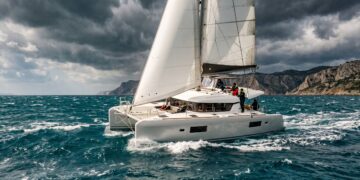
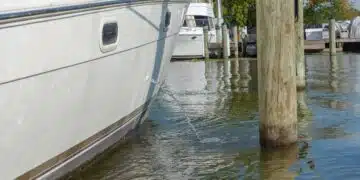
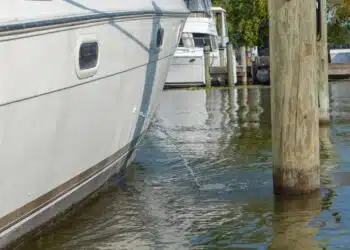
Anyone who currently has a boat in a Mediterranean port should take the weather warnings seriously, secure the berth well, and set extra mooring lines if necessary. If not already done, sails, covers, and loose objects should be removed or firmly secured. Boat owners should check that bilge pumps are in proper working order, keep batteries charged, and check (or have someone check) their boat regularly. Furthermore, they should regularly obtain up-to-date local information (harbor master, coast guard, local weather services).
Even though the final effects of the storm system (“Harry”) are still being felt in the western Mediterranean, its direct influence on the eastern Adriatic (Croatia) is no longer noticeable. However, low-pressure systems over the western Mediterranean can still exert weather effects in the Adriatic through shifts or offshoots, particularly in the form of rain and wind (not necessarily as a “Medicane”).
These systems are rather rare in Croatia; nevertheless, short-term, current severe weather warnings should always be monitored, for instance by checking local warning systems regularly in addition to the major ones.