

More operations carried out in Croatia and Italy, more jump-starts, tows, and groundings: The SeaHelp operations statistics as of October 15, 2026, show a slight increase in operational workload compared to the previous year. A comparison with the years 2023 to 2025 provides interesting insights – and important advice for recreational skippers.
The 2026 water sports season is drawing to a close, making it time for an initial assessment. For SeaHelp, the nautical breakdown and recovery service in the Adriatic, a nuanced picture emerges: While the number of operations carried out in Croatia and Italy increased, the number of calls handled by the operations center declined. Particularly noticeable are the numerous towing services, more jump-starts, and minor groundings.
According to information from the SeaHelp operations center in Punat, Croatia, around 5.9 percent more operations were recorded in Croatia between January 1 and October 15, 2026, than in the same period of the previous year. Compared to 2024, the increase is 0.8 percent, and compared to 2023, it is around 6.6 percent.
Towing Assistance Remains the Most Important Service
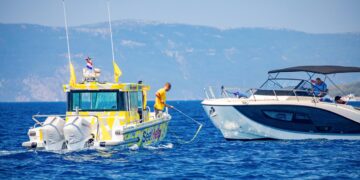
Technical defects and propulsion failures continue to dominate the daily routine of the SeaHelp crews. In Croatia, around 5.9 percent more towing services were recorded in 2026 than in the previous year. Compared to 2023, however, their number remains about ten percent lower.
In addition, there are so-called marina-to-marina towing trips, for example to transfer a boat to a shipyard. Their number fell by around seven percent compared to 2025, but is about 82 percent above the 2024 level.
The name of these tows will be changed to “Pannenschlepp PLUS” (Breakdown Tow PLUS) starting in 2027, as many members had misinterpreted this service in the past. Explanation: With this breakdown tow, yachts are not towed “from marina to marina” per se, but rather (with the appropriate membership) can be towed to a desired port up to 30 nautical miles away.
This service, in which a boat is transferred between two marinas for a shipyard visit, for instance, is included under the respective conditions in the scope of services of the SeaHelp SMART and PREMIUM memberships.
More Jump-Starts and Groundings
One striking development concerns onboard electronics. Due to dead batteries, a lack of onboard voltage, or similar problems, the response crews had to provide jump-starts around 32.6 percent more frequently than in 2025. Compared to 2023, the increase is as high as 72.7 percent. However, the figure was already at a similarly high level in 2024 as it is today.
Whether aging batteries, defective charging systems, or rising power consumption are responsible cannot be deduced from the statistics. For boat owners, regular inspection of batteries, connections, and charging equipment therefore remains one of the most important preventive measures.
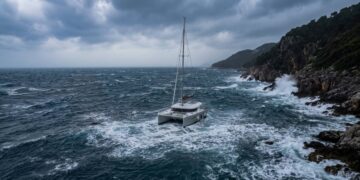
Minor groundings also increased. In Croatia, their number was around 45 percent higher than the previous year and about 71 percent higher than in 2024.
“The most common reason for a minor grounding is drifting into shallow water when the wind shifts, during sudden wind gusts, or in an approaching thunderstorm when the anchor fails to hold,” explains SeaHelp Managing Director Wolfgang Dauser. Less frequently, the causes are a lack of local area knowledge, navigation errors, or insufficient monitoring of the depth sounder.
Nevertheless, the increase underscores how important careful passage planning is, especially in the Croatian island cruising grounds.
Skippers should never skimp on anchor chain length – even in supposedly good weather – or rely exclusively on electronic nautical charts and plotters, the professional advises. Up-to-date nautical information, a sufficiently large safety margin to shallows, and taking the actual draft into account are indispensable.
If a grounding does occur, skippers should not rashly attempt to free the boat using high engine power. First, crew members, hull, propulsion, rudder system, and potential water ingress must be checked. In the event of damage or uncertainty, requesting professional assistance is recommended.
Salvage Operations and Minor Breakdowns
The number of salvage operations, which are mostly required after thunderstorms, remained almost constant with an increase of around 3.3 percent compared to 2025. Technical problems, on the other hand, could be resolved on the spot in around 22 percent fewer cases than in the previous year.
Operations due to fuel shortages decreased slightly compared to 2025, and by almost 31 percent compared to 2024. Nevertheless, a sufficiently calculated fuel reserve remains indispensable. Headwinds, swell, and detours can significantly increase actual fuel consumption.
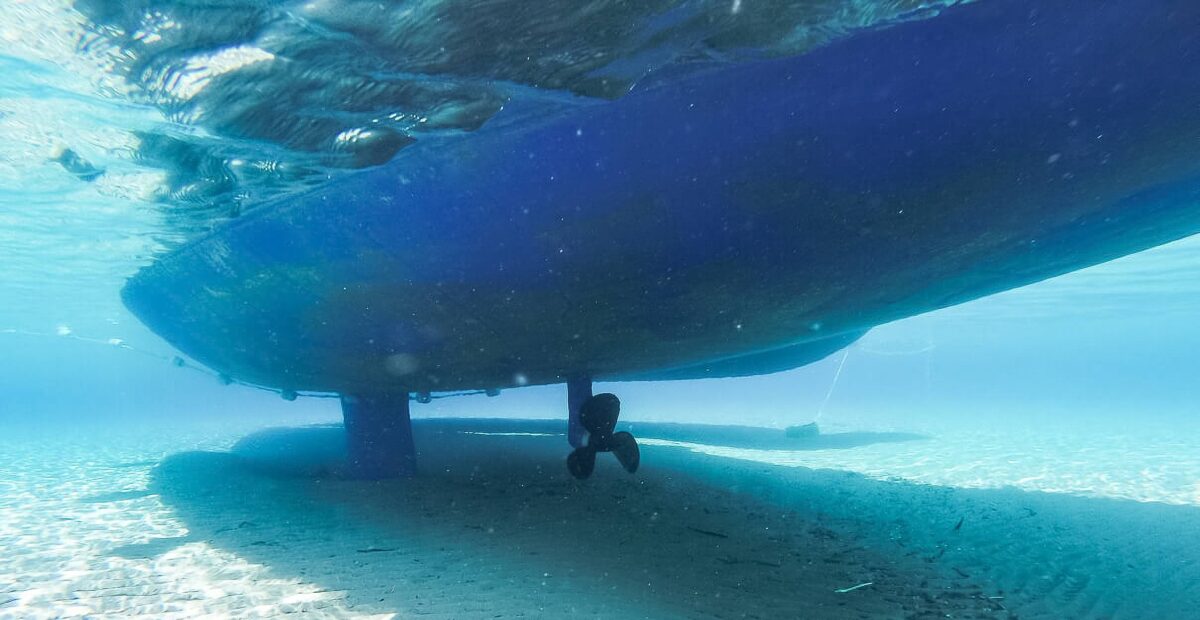
Lines fouled in propellers, anchor problems, and missing spare parts also kept the crews busy. The number of propeller clearances rose by around 18 percent compared to the previous year, while spare part deliveries increased by about a third. Diving operations in connection with anchors remained at the previous year’s level.
Italy: Particularly Significant Increase
In Italy, the increase in operations carried out was much more pronounced than in Croatia. Compared to 2025, SeaHelp recorded an increase of 34.7 percent there. Towing services in particular rose – by 39.1 percent. Minor groundings increased by around 47 percent.
However, the following also applies here: More recorded operational trips do not automatically mean a correspondingly higher number of independent marine casualties.
More Towing Miles with Virtually Unchanged Mileage
A closer look at the operational data shows how the workload has shifted. The total mileage of the SeaHelp fleet decreased by just 0.5 percent compared to 2025. Compared to 2024, however, it is 17.8 percent lower. The reason: the densification of operational bases with the two new stations in Pula Veruda and the island of Rab.
At the same time, the distance covered under tow increased by 7.8 percent compared to the previous year. The share of towing miles in total mileage thus rose from 32.8 to 35.5 percent.
A larger proportion of operational trips was therefore dedicated to transporting boats and yachts in need of assistance. For the crews, this means increased demands on maneuvering, seamanship, and equipment. However, these figures do not indicate the average difficulty of individual towing operations.
Fuel Consumption: Significant Long-Term Increase per Nautical Mile
Gasoline consumption also shows an interesting development. Overall, the SeaHelp operational fleet required around 6.3 percent more fuel up to mid-October than in the same period of the previous year. Compared to 2024, however, consumption was 2.9 percent lower. Compared to 2023, it is around 26 percent higher.
More meaningful is the calculated fuel consumption per nautical mile covered. This has risen continuously since 2023 – by around 34 percent in total. Compared to 2025 alone, the increase is about 6.8 percent.
The causes cannot be clearly determined. Conceivable factors include changed operating conditions, cruising speeds, longer trips under towing load, or changes within the fleet. The increased share of towing operations could also play a role.
Fewer Calls and SOS Alerts
Although more operational trips were recorded, the number of calls handled by the SeaHelp operations center for Croatia, Italy, and Slovenia fell by around nine percent compared to 2025.
SOS alerts received via the SeaHelp app also dropped by about four percent. Compared to 2023, the decline is even around 21 percent.
While this does not indicate a generally reduced risk of accidents, the declining contact numbers argue against concluding from the higher number of operational trips that there was a corresponding across-the-board increase in all requests for assistance.
Conclusion: More Operations Carried Out, More Towing Miles
“The SeaHelp 2026 report shows that the nautical breakdown service in the Adriatic remains in high demand,” says SeaHelp Managing Director Wolfgang Dauser. Croatia is slightly above the level of previous years in terms of operations carried out, while Italy recorded a significant increase compared to 2025.
At the same time, the number of calls handled is falling. “In the summer of 2026, noticeably fewer boats and yachts were out on the water, yet the number of operations remained almost the same,” explains Dauser, adding that this means owners cut back on maintenance work.
The operational data completes the picture: Although total mileage remained virtually unchanged compared to 2025, more nautical miles were covered under tow and slightly more fuel was consumed.
For recreational skippers, the operations statistics yield clear takeaways: “Check batteries and onboard electronics regularly, keep an eye on draft and potential shallows, plan for sufficient fuel reserves, and secure lines carefully,” recommends SeaHelp Operations Manager Marko Orlić.
Because even if not every breakdown constitutes a dangerous situation: “On the water, a comparatively minor technical problem can quickly turn into a serious incident,” says Orlić.