






Occasionally, one still hears the term “Leuchtfeuer-Abgabe” (lighthouse fee) among Croatian sports skippers. What does it mean? What is this fee intended for? Who has to pay it, and where is the best place to do so?
The so-called “lighthouse fee” in Croatia is actually part of a larger state fee today. Officially, it is called: “Fee for the safety of navigation and the protection of the sea from pollution” (Croatian equivalent: “Naknada za sigurnost plovidbe i zaštitu mora od onečišćenja”). However, among skippers, it is still often simply referred to as the “lighthouse fee”. More common terms today are “vignette” or “navigation fee” or, currently, “permit,” all of which mean the same thing.
What is this fee intended for?
This fee, which incidentally has not been increased for boat owners in Croatia for 13 years — only the calculation method was changed in 2017 — is used by Croatia to fund, among other things, lighthouses and navigation marks, buoys and beaconing, nautical safety systems, coastal surveillance, harbour master’s offices, and parts of marine environmental protection. The revenue also helps cover the administrative costs associated with foreign boats and yachts.
The somewhat dated historical term “lighthouse fee” comes from the fact that, in the past, the charge was indeed used primarily to finance maritime beaconing.
Who has to pay?
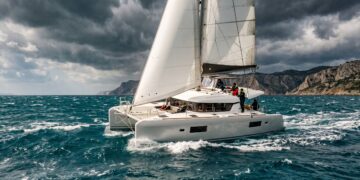
In principle, this fee applies to almost all pleasure craft and yachts using Croatian coastal waters, especially motorboats, sailing yachts, catamarans, inflatable boats with more powerful engines, trailer boats, foreign charter yachts, and privately imported boats. Even smaller dinghies can be affected if they are longer than 2.5 meters or have an engine power of more than 5 kW.
Does the fee only apply to tourists?
No. The fee basically applies to both Croatian and foreign boats. The only difference is that owners of boats under the Croatian flag often receive the invoice by mail.
Foreign skippers must actively pay the fee; it is a form of debt to be discharged by the debtor. In practice, the “lighthouse fee” or “permit” therefore primarily affects vacationers and foreign boaters.
Does this also apply to boats on trailers?
Yes. The decisive factor is not the method of entry, but the use of Croatian territorial waters. This means: a boat arriving in Croatia by sea is subject to the fee, and a boat imported on a trailer, for example via Austria/Slovenia, is also subject to the fee as soon as it enters the water.
Where do you pay the fee?
Previously, the “lighthouse fee” was paid exclusively at the port office / port master (Lučka kapetanija).

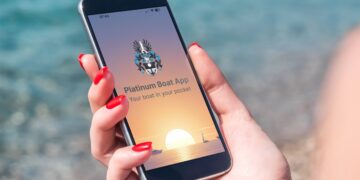
Today, there is also the option of making the payment online via the state system “e-Nautics,” but only if the boat is already registered in the system. However, the permit for boats in Croatia can also be conveniently requested and paid for online via SeaHelp in cooperation with their partner Mandinus d.o.o. – and here’s how it works:
Step 1
Anyone who decides to join Europe’s largest maritime breakdown service can easily calculate the corresponding membership fee, including the application fee for the permit itself, online by entering the boat length. Non-members can also process the application via SeaHelp, in which case the processing fee is simply slightly higher.
Step 2
The SeaHelp partner Mandinus d.o.o. then immediately applies for the permit and sends the applicant the invoice (permit fee + application fee) for payment, including all necessary data (bank details, purpose of payment).
Step 3
The applicant transfers the invoice amount with the specified purpose (exactly as received from Mandinus d.o.o.) to Mandinus d.o.o., which then makes the payment to the Ministry (Ministarstvo mora, prometa i infrastrukture) in Zagreb.
Step 4
Upon receipt of payment, Mandinus d.o.o. organizes the navigation permit and forwards it as a PDF via email to the applicant.
Advantages: Through online processing, sports skippers avoid long waiting times at the local port captain’s office.

Attention: SeaHelp requires 3-5 working days for processing, so the application should definitely be made well in advance of the planned start of the vacation. While there are small fees for the service provided by SeaHelp/Mandinus, these are reduced for SeaHelp members.
By the way: The tourist tax (stay fee, “Sojourn Tax”) is to be paid separately and can also be paid online via the portal nautika.evisitor.hr. It is due if you stay overnight on the boat. Boats under 7 meters in length are exempt from paying the tourist tax.
What happens in case of non-payment?
Controls are carried out regularly by the port authorities (Kapetanija), police, and customs. The data is now recorded digitally. During inspections, it can therefore be checked quickly and without further effort whether the permit (the good old “lighthouse fee”) has been paid and whether the tourist tax has been settled. A lack of payment can lead to significant fines.