








Responsible skippering as well as the safety of crew and boat are the foundations of all nautical thinking and acting. This includes not only safety rules, but also other skills and knowledge, the most important of which we describe below for all boaters in the spirit of good seamanship.
Seamanship – Safety First
With the simple rule “One hand for me and one hand for the boat”, man/woman/child is on the safe side. Anyone who makes this a routine for themselves and their crew on board – and of course also when entering and leaving the floating leisure facility – is safe from surprises; for example during an emergency stop maneuver or from an unannounced wave that sets the boat from zero to one hundred into violent rocking movements. This is also why, in addition to the (checked) technical equipment, defined procedures and assigned tasks must “sit” not only in the event of a distress at sea or a fire on board. Experience and routine are, on the one hand, an important asset in every respect, but on the other hand, habitual routine must not become negligence according to the motto: The oil level has “fitted” the whole season, so I don’t have to check it every week”.
Weather as a Factor
Never start a trip without checking the weather report beforehand. The weather and wind changes noticeable for years do not necessarily make weather forecasts easier. Regular checking of the prevailing and predicted weather and sea conditions must therefore be mandatory in the daily routine. Storms also represent a danger that should not be underestimated for larger yachts, and conversely, this can also help the dedicated sailing crew to avoid a leaden calm.
On Du and Du with the GPS
The good old nautical chart (current date) belongs on every boat. Even if GPS navigation is quite common nowadays even on small boats, chart reading (and understanding!) as well as working with the navigation set should still be on the program. Not everyone on board is called to the high school of tidal and current science, but often a crew member is found who throws himself committed and willing to learn onto the plotter and soon even has the radar system running. And via electronic topics, the mobile phone and internet-savvy next generation can often be inspired to active participation. But despite all the technology and calculated days’ runs, consistent lookout is announced, because even the best collision warning system does not recognize drifting trees or similar dangers. As a side effect, possible emergency situations of other water sports enthusiasts can also be recognized and important help can be provided.

Appropriate Speed
Motor boaters must always adapt their speed to the circumstances; this is nothing new, nevertheless the speed rowdies do not feel less. Appropriate speed is not only announced when entering the anchorage bay, but also applies of course to passages, bathing beaches and last but not least also for marinas and ports, where the max speed is often already noted in the port handbook or indicated on information boards.
Right before Left or how?
For a safe togetherness on the water there are clear rules. The right-of-way rules apply to all watercraft and whoever does not know them or does not apply them consistently, puts himself and others in danger and will probably also be overwhelmed with the “maneuver of the last moment”.
VHF-DSC, SART, AIS & Co.
Not only when it gets dicey on board, the radio can save lives. Whoever means the omnipresent mobile phone with it, has it only partially on the safe side. On the one hand, you do not reach the nearby ships in the area, and on the other hand, there is not everywhere “network”. For sending correct radio messages, practice is often missing on board, which makes objective message transmission difficult in connection with possibly occurring stress. Also for supposed professionals, prepared radio messages including radio alphabet and flow chart have proven themselves in this context, which certainly find space in every document folder as an internet printout.
Berthing and Mooring
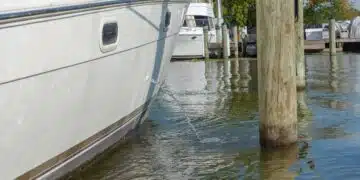
Mastering the in principle few important knots ensures the necessary safety for crew and boat when mooring/berthing and at sea. Nothing is more problematic than a knot that opens under load or – because incorrectly inserted – does not open in the event of a fall. In the port or in the marina, your own lines are always used. Not only when it is urgent, one is thus usually self-sufficient also when casting off.
You are currently viewing a placeholder content from YouTube. To access the actual content, click the button below. Please note that doing so will share data with third-party providers.
Help among Boaters
To the self-understanding of good seamanship belongs the help among water sports enthusiasts, this goes from accepting lines of entering boats to first aid services, which are also legally prescribed, as long as one does not put oneself in danger.
Watersports Etiquette & No-Go`s
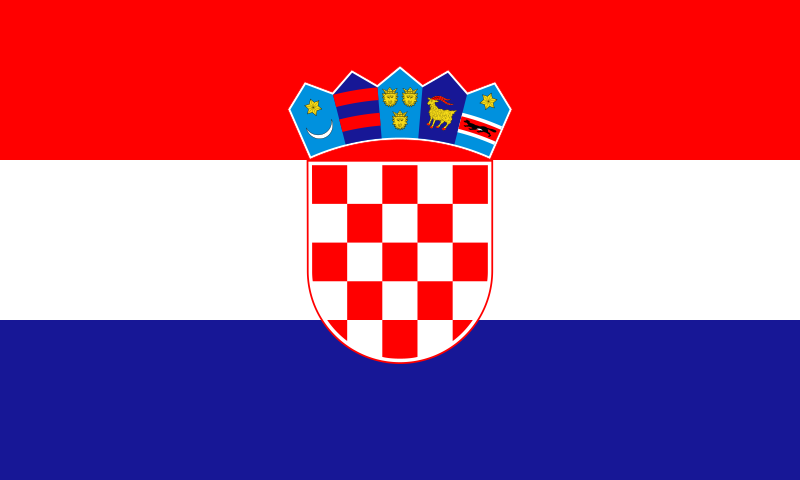
Not only in the port is greeting among water sports enthusiasts more than just friendliness, because how easily can one get into a situation at sea in which one is dependent on the help of the former neighbor on the jetty or passer-by. To the international customs belongs of course also the (correct) setting of the guest country flag. And whoever then enters with a bare upper body or only in swimwear, quickly reaps irritated glances. Should then “to round off” still the pier be supplied with loud music and corresponding mood, the overall impression is complete.
Conclusion: Safety for crew and boat, navigation, weather, rules of conduct… all actually matter-of-course, but an occasional questioning of one’s own doing and acting on board and on the sea does us boat people good.