








Following its first practical deployment on Azimut yachts at the Cannes Yachting Festival 2025 and its industry presentation at Metstrade in Amsterdam the same year, Watchit unveiled its AI-powered grounding and collision avoidance system for recreational boats for the first time in Germany this January. The system is also said to be suitable for smaller yachts and boats, and easy to retrofit on more modern vessels.
With some products, you have to wonder why they didn’t come to market much sooner. This is also true of Watchit technology, which was first introduced in 2025 and was also shown at this year’s boot Düsseldorf.
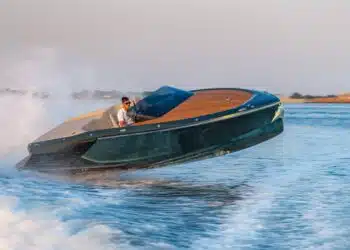
Watchit is, first and foremost, a maritime safety product that, in short, combines marine AI with proximity sensor technology. What has been known in automotive safety for several years is now finally available for boats too – and the system is said to be suitable for “all types of boats, from small tenders to luxurious superyachts,” according to the company – such as an Azimut motor yacht, on which Watchit was first installed and presented to the public last year.
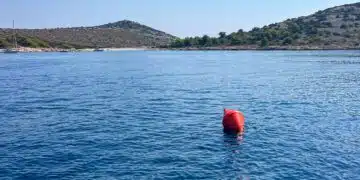
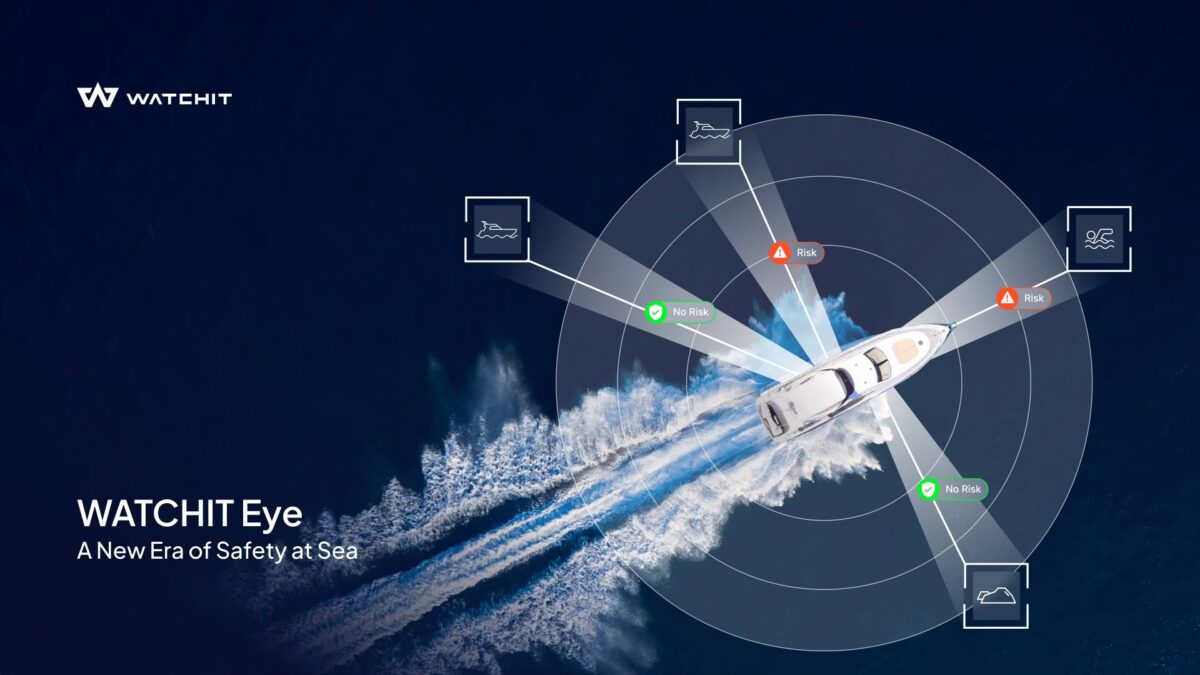
„Watchit Eye was developed to independently detect nearby hazards, including buoys, small fishing boats, jet skis and risks from other watercraft“, says Yotam Levy, who demonstrates the system to us in Düsseldorf. According to him, the system helps captains „stay in control, make faster and smarter decisions, and avoid costly accidents – without any additional complexity or distraction“.
You are currently viewing a placeholder content from YouTube. To access the actual content, click the button below. Please note that doing so will share data with third-party providers.
Skippers are meant to be supported in avoiding accidents before they happen
„We took the safety concept of modern advanced driver assistance systems (ADAS) from the automotive industry and rethought it for use on the water“, adds Tal Duvdevany, CEO of the small Israeli startup. With Watchit Eye, boats can now proactively detect risks and react to them – „and support captains in avoiding accidents before they happen, even under the most difficult conditions.“
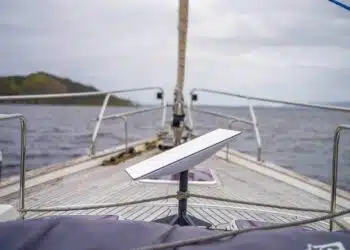
Typical installation locations, depending on the type and geometry of the vessel, are the mast, the radar arch or the hardtop. Data and power are transmitted via cable (a wired connection) – no wireless or WiFi data transmission is used.
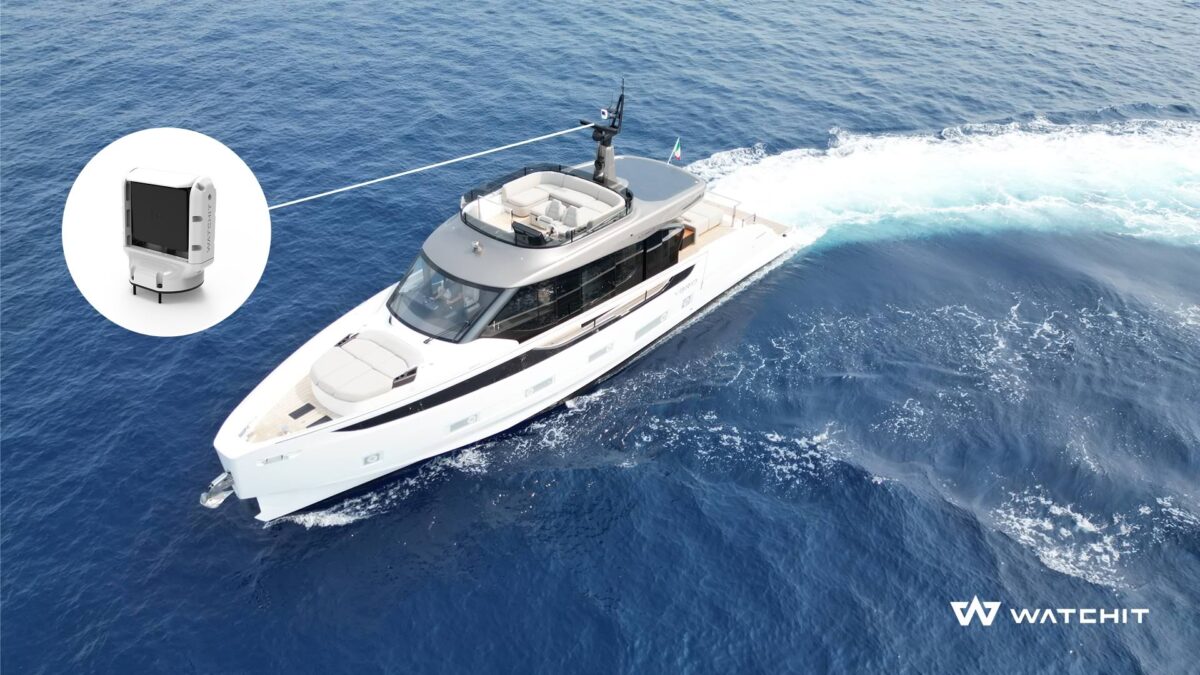
How does the system work? Watchit Eye is not just a sensor, but is described by its inventors as a “comprehensive risk analysis engine.” The system continuously analyzes real-time data from the boat’s onboard systems, AIS, GPS, chart data as well as its 4D imaging radar, and independently assesses potential hazards. The captain is only alerted when it is truly necessary.
Unlike autonomous or semi-autonomous car systems, some of which also rely on LiDAR technology (such as Waymo, Mercedes-Benz’s “Drive Pilot” in certain markets, and Volvo in its newer high-end models; see our previous coverage on this), Watchit uses a 4D imaging radar, which plays to its strengths at sea above all in terms of its physical measurement principle, environmental robustness, and the type of data it delivers.
Watchit is already in use on superyachts, but is also suitable for smaller boats and yachts
According to the manufacturer, the new, patented Watchit system, which consists of hardware (“Eye”) and AI-based software, is designed to help prevent collisions equally on open water and inland waterways, ensure reliable operation in darkness, fog and poor visibility, and issue real-time warnings of grounding, obstacles and other hazards in the immediate vicinity.
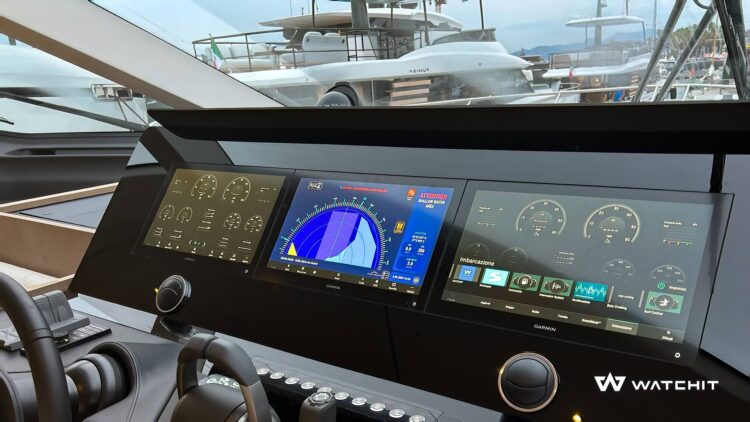
Advantage: Watchit does not require its own screen; instead, the system is designed for integration with existing onboard displays such as Garmin, Raymarine, B&G and other NMEA 2000-compatible chartplotters – warnings and hazard alerts can be displayed directly on existing screens, together with acoustic signals.
„A single Watchit Eye covers “approx. ±50° forward (approx. 100° total horizontal field of view)“, says Yotam Levy. For most vessels, a single forward-facing Eye offers sufficient and effective collision avoidance. However, installing multiple Eye units is technically possible and can extend coverage depending on the vessel’s operational needs.
The system was first installed on an Azimut yacht in 2025, but according to Watchit manager Yotam Levy, the new system also makes a lot of sense on smaller pleasure yachts and boats – he himself has been successfully using his own unit for some time on his family’s own sailing yacht, a smaller Hallberg-Rassy.
The system works unobtrusively in the background; if another boat, a buoy or even land gets “in the way,” Watchit speaks up with a friendly female voice: „Watchit! – Collision Alert!“, providing extra safety and, with it, peace of mind on the water.
The Watchit system can be mounted on the mast, the radar arch or the hardtop
Typical installation locations, depending on the type and geometry of the vessel, are the mast, the radar arch or the hardtop. Data and power are transmitted via cable (a wired connection) – wireless or WiFi data transmission is not used.
Connected to the existing systems of the respective boat, Watchit is integrated quite simply via standard marine interfaces, primarily NMEA 2000. In practice, the system can receive data from chartplotters, GPS, heading sensors, depth sounders, speed logs, autopilots and other available onboard sensors.
According to Watchit employee Yotam Levy, the system is suitable for both new builds and retrofits: „retrofitting is straightforward on most yachts, since the system is based on standard marine wiring and interfaces that are already present on most modern vessels“, says Levy.
The prices of the Watchit system depend on the respective system configuration: prices vary depending on whether customers opt for the “Core” or “Eye” package, or for a “Core + Eye” combination.
The corresponding configurations are based „not exclusively on the size of the boat, but rather on the use case, the desired level of detection and the system integration“; a detailed price range can therefore only be provided upon specific request.