








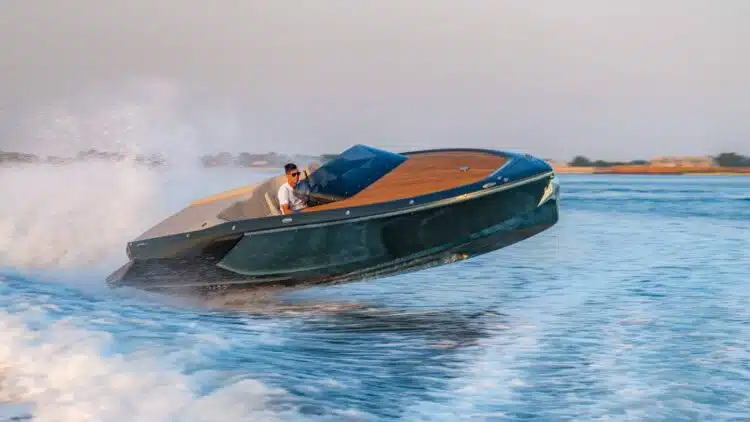
Quiet, clean – and by now seriously fast: electric boats are pushing onto the market. Just how far the technology has come is demonstrated by the new Frauscher x Porsche 790 Spectre. At the Salone Nautico Venezia in May this year, we had the opportunity to drive the new electric sports boat ourselves. Just a few weeks later, it set a new speed record.
The future of motorized boating is electric. At least where long distances do not have to be covered in one stretch, there is now a great deal to be said for it. Electric boats are quiet, locally emission-free and require far fewer moving, wear-prone components than conventional combustion engines. Oil changes, spark plugs and exhaust systems are a thing of the past, and maximum torque is available practically instantly.
That electric boating by no means requires sacrificing driving pleasure is something we were able to experience for ourselves at the Salone Nautico Venezia. In the historic Arsenale of Venice, we stepped aboard the new Frauscher x Porsche 790 Spectre – and headed out into the lagoon.
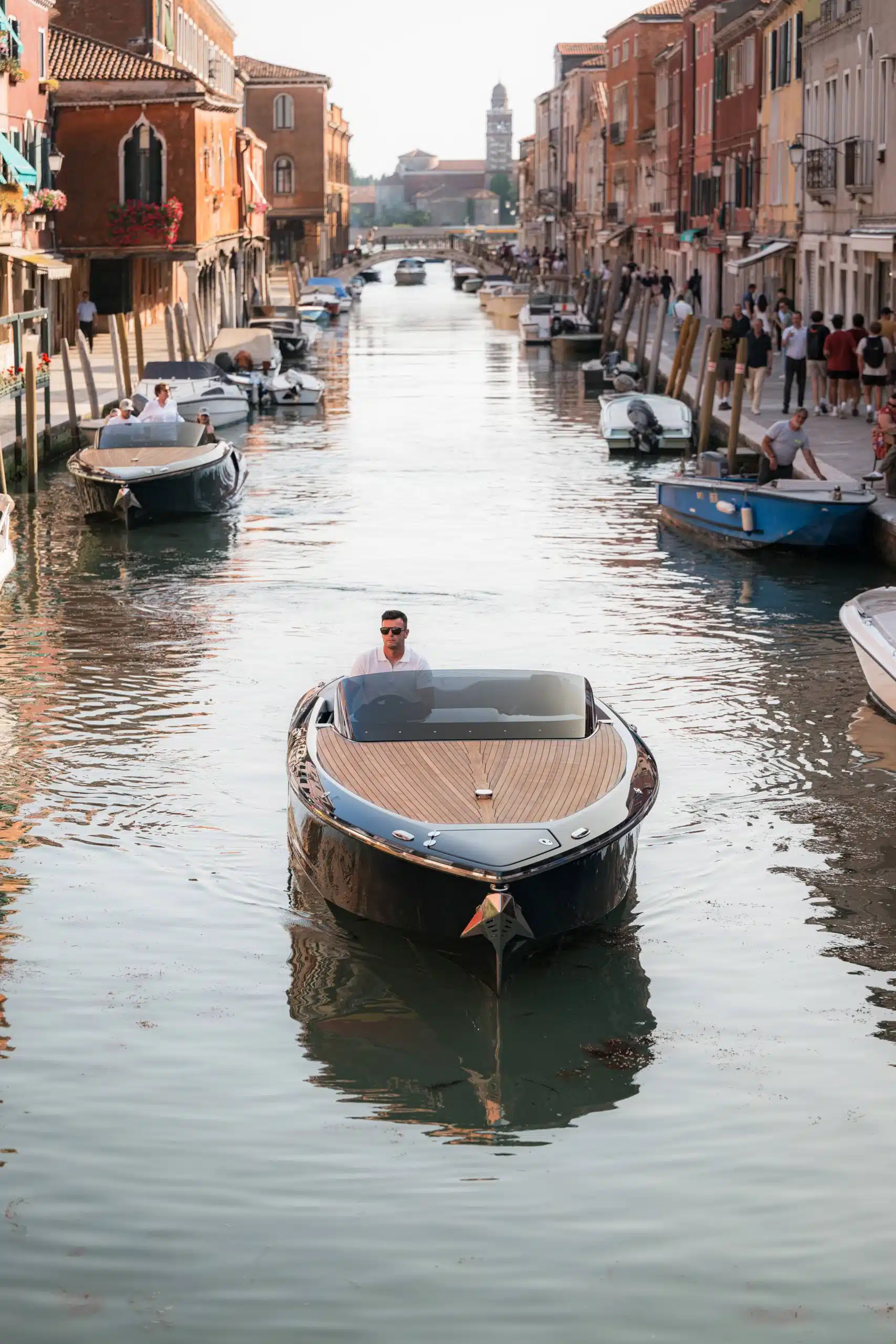
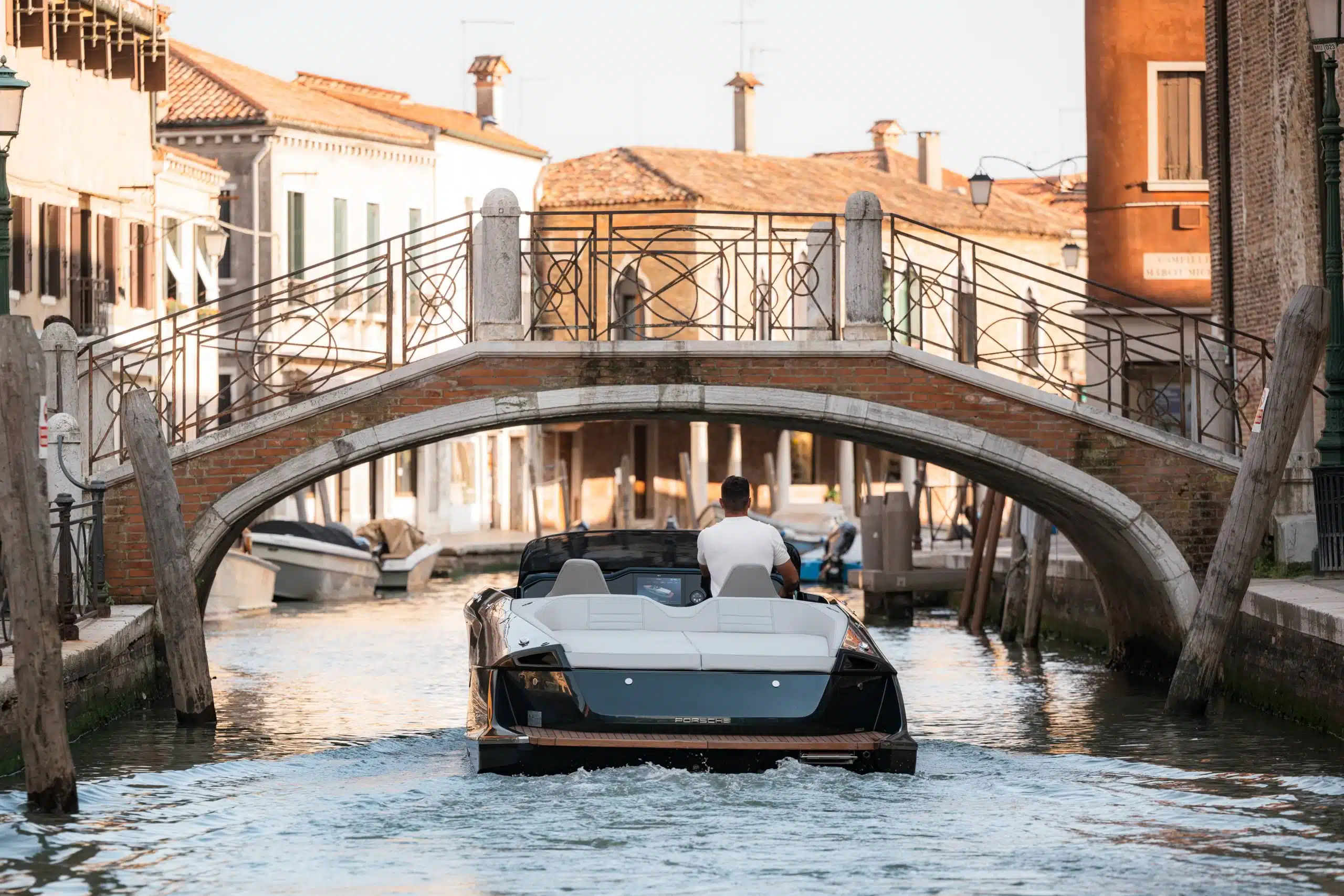
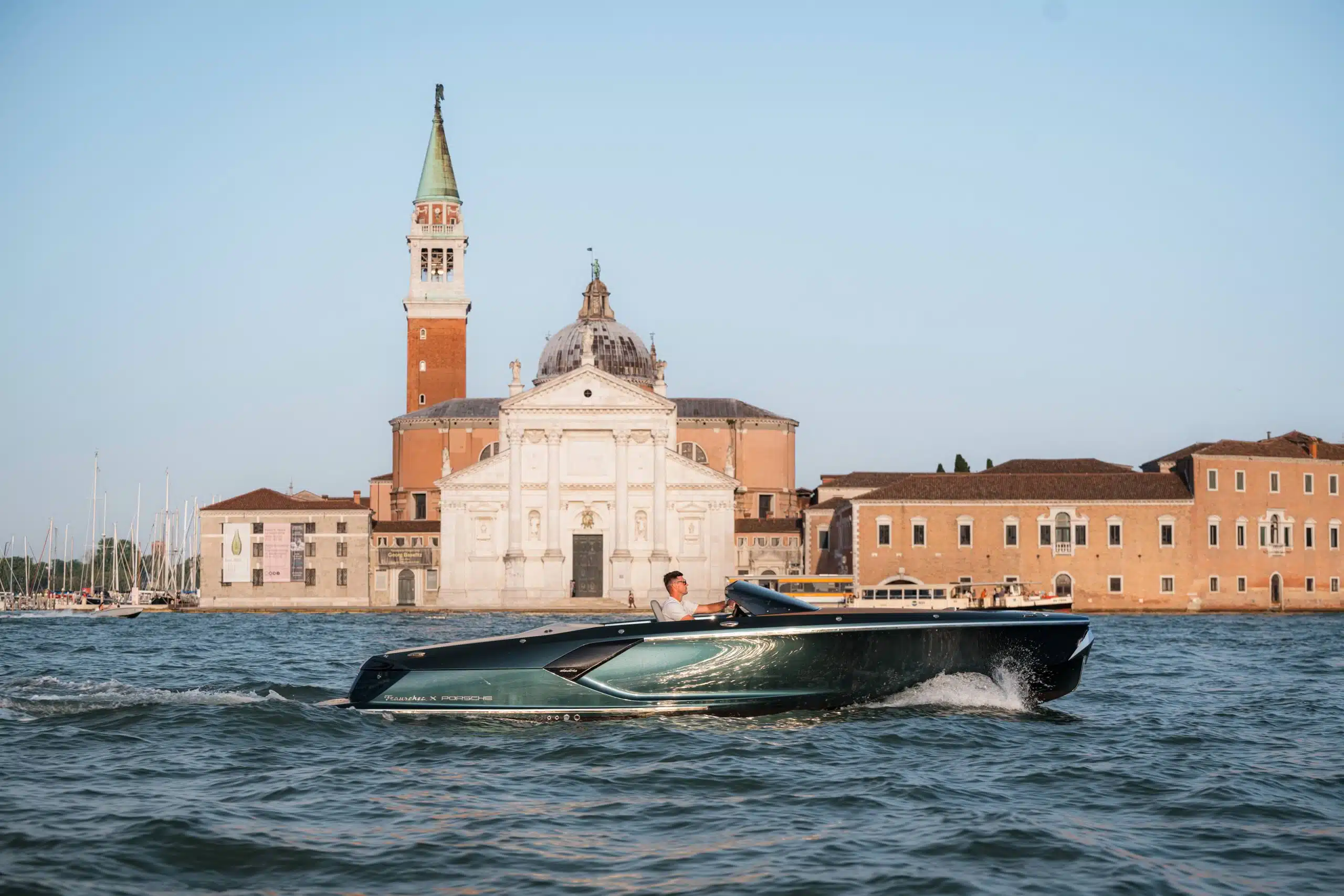
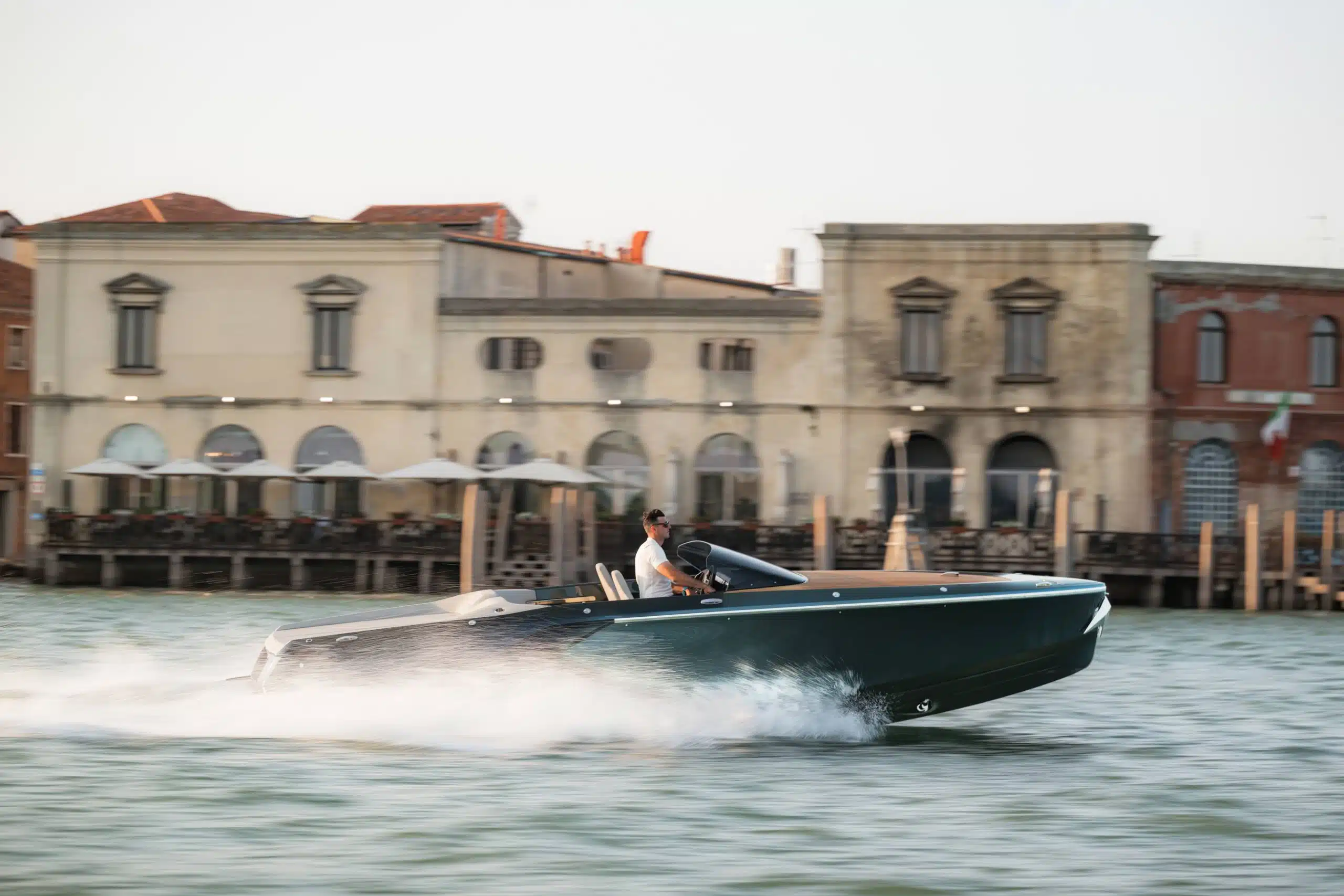
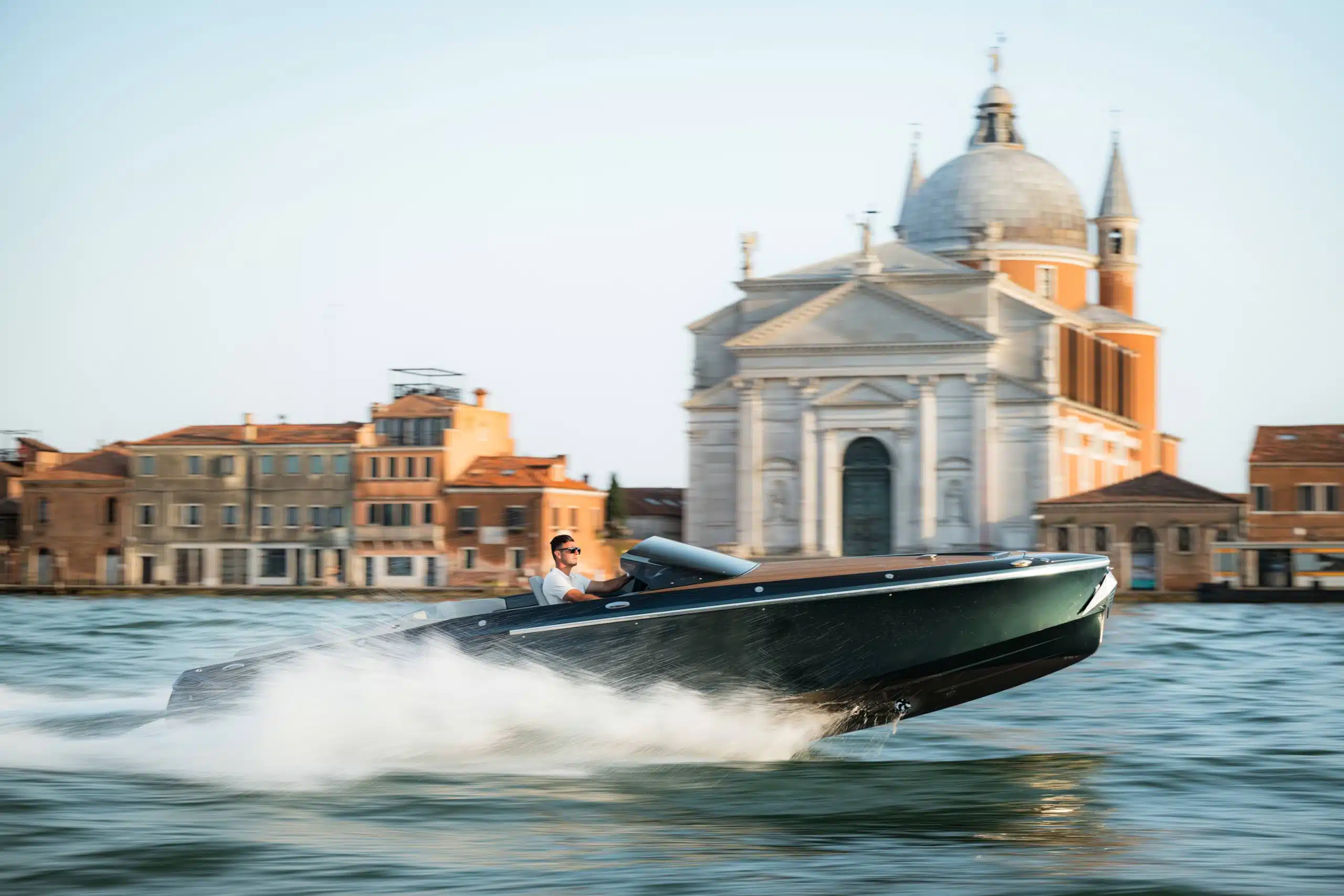
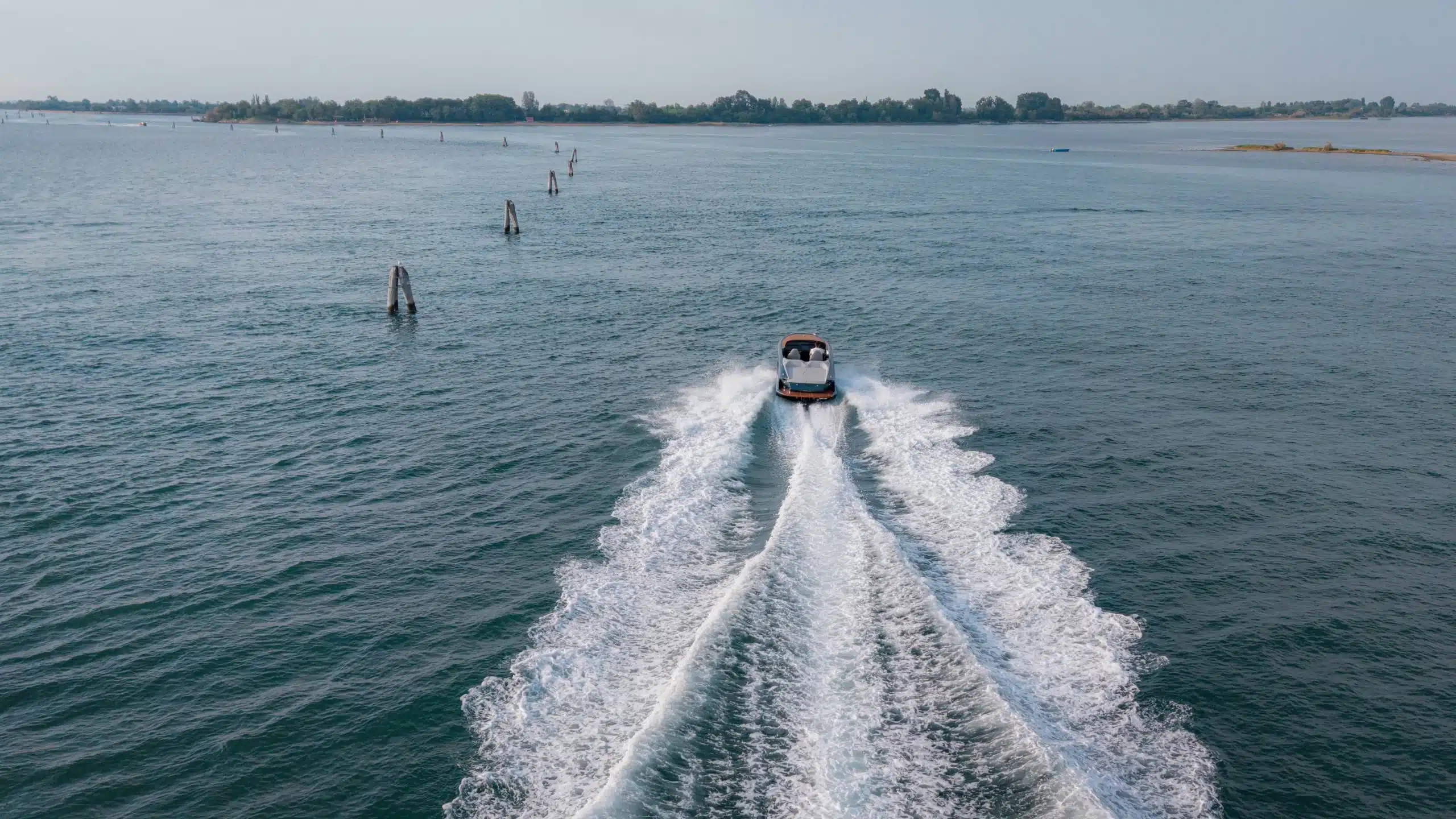
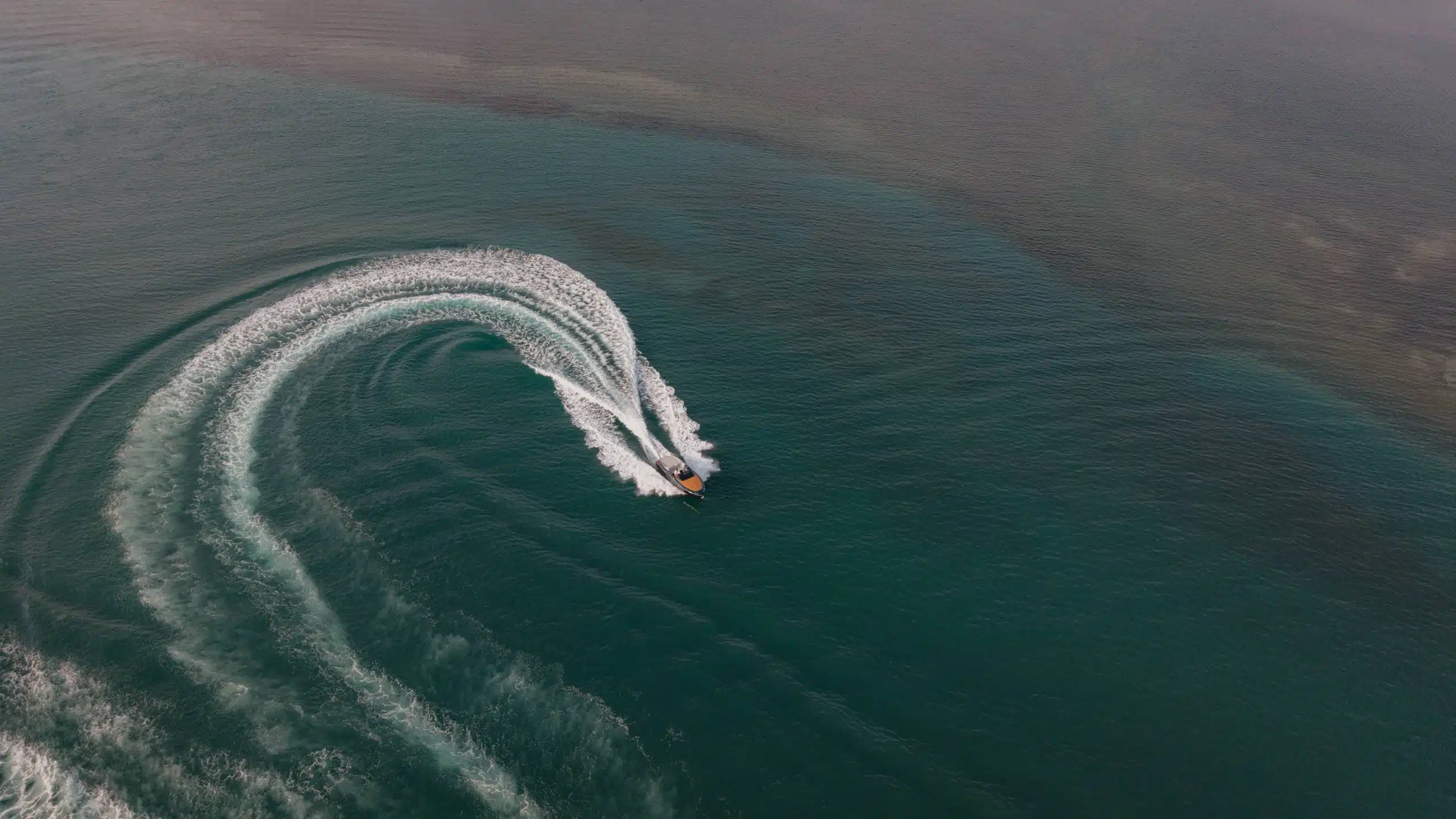
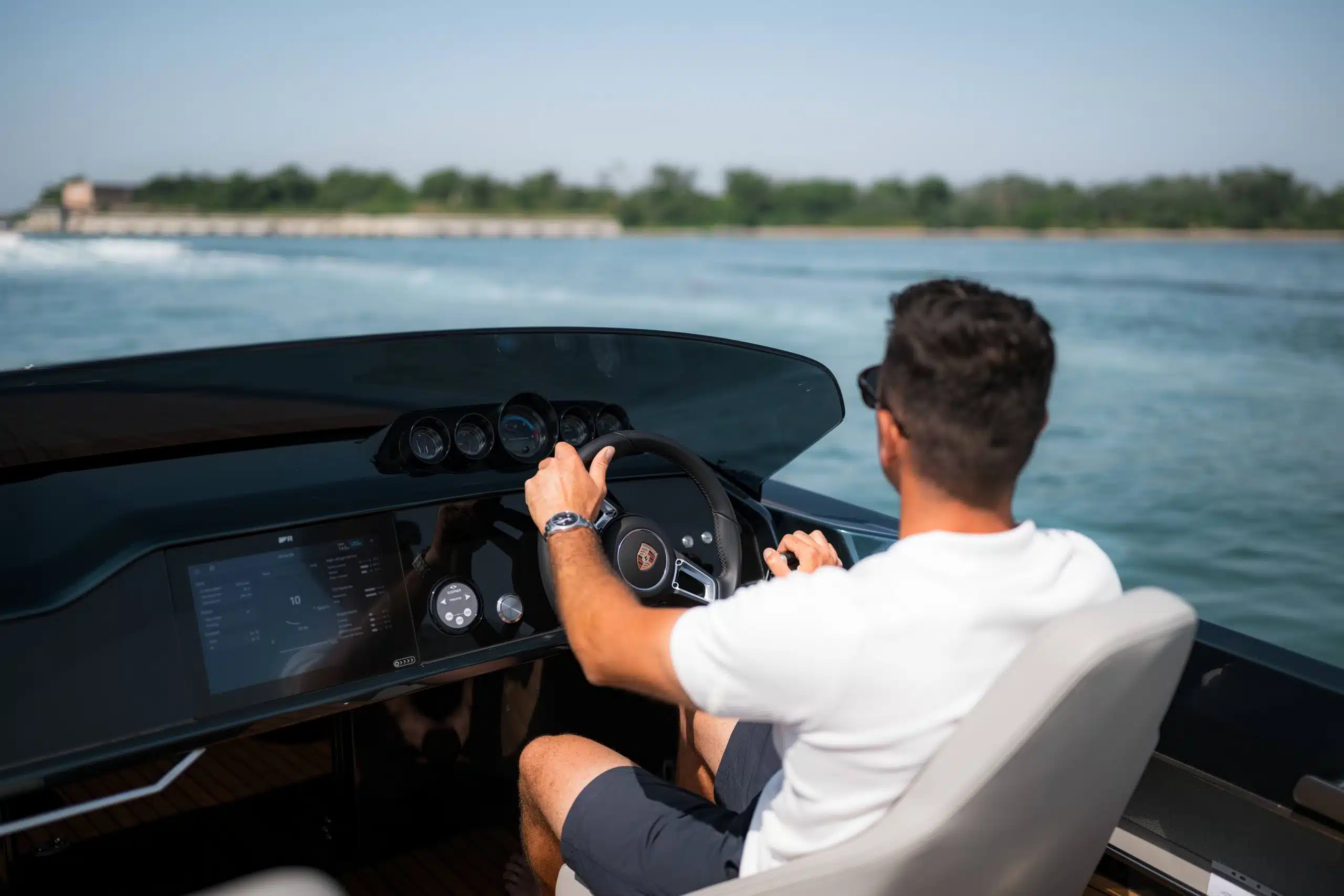
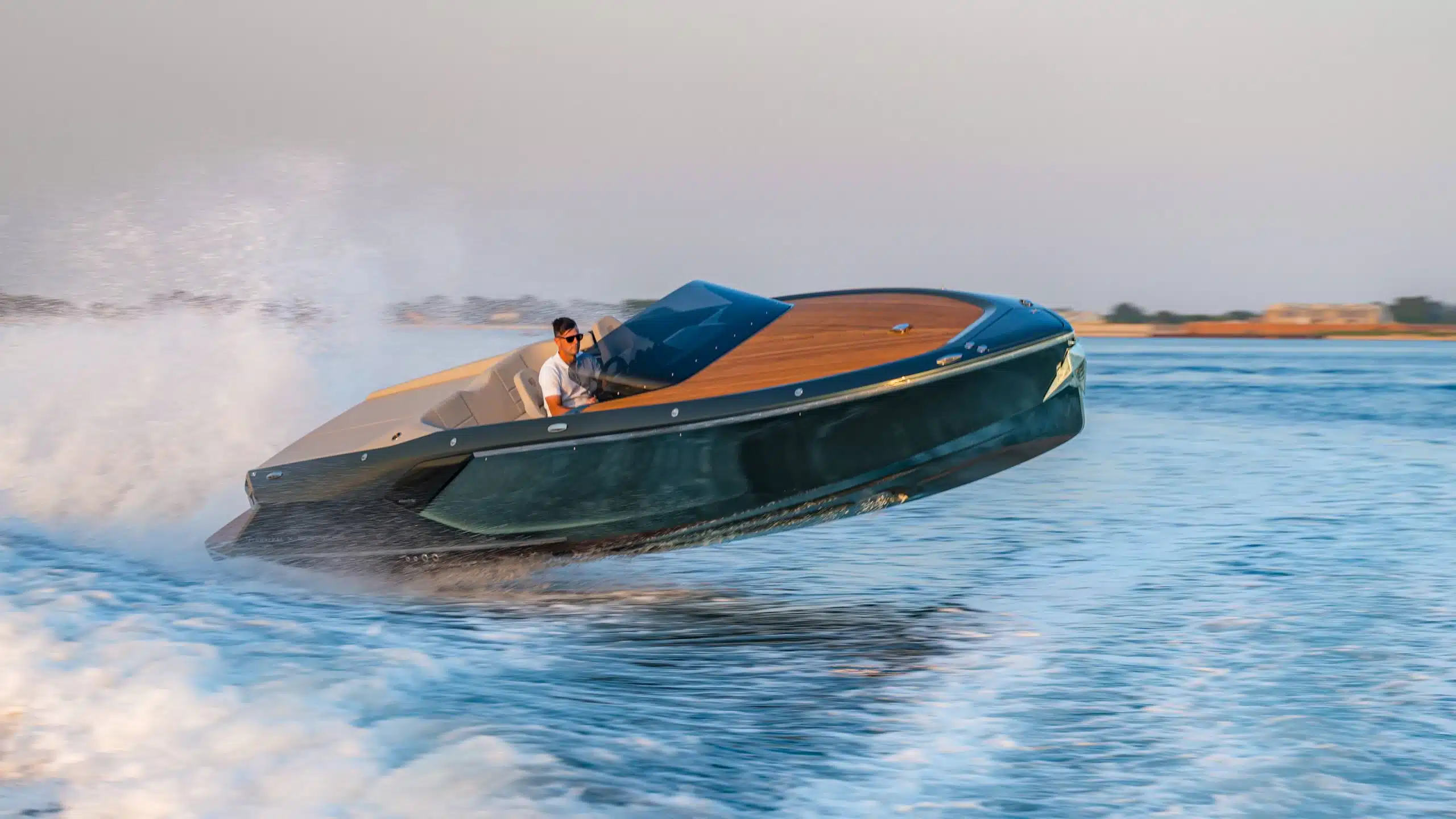
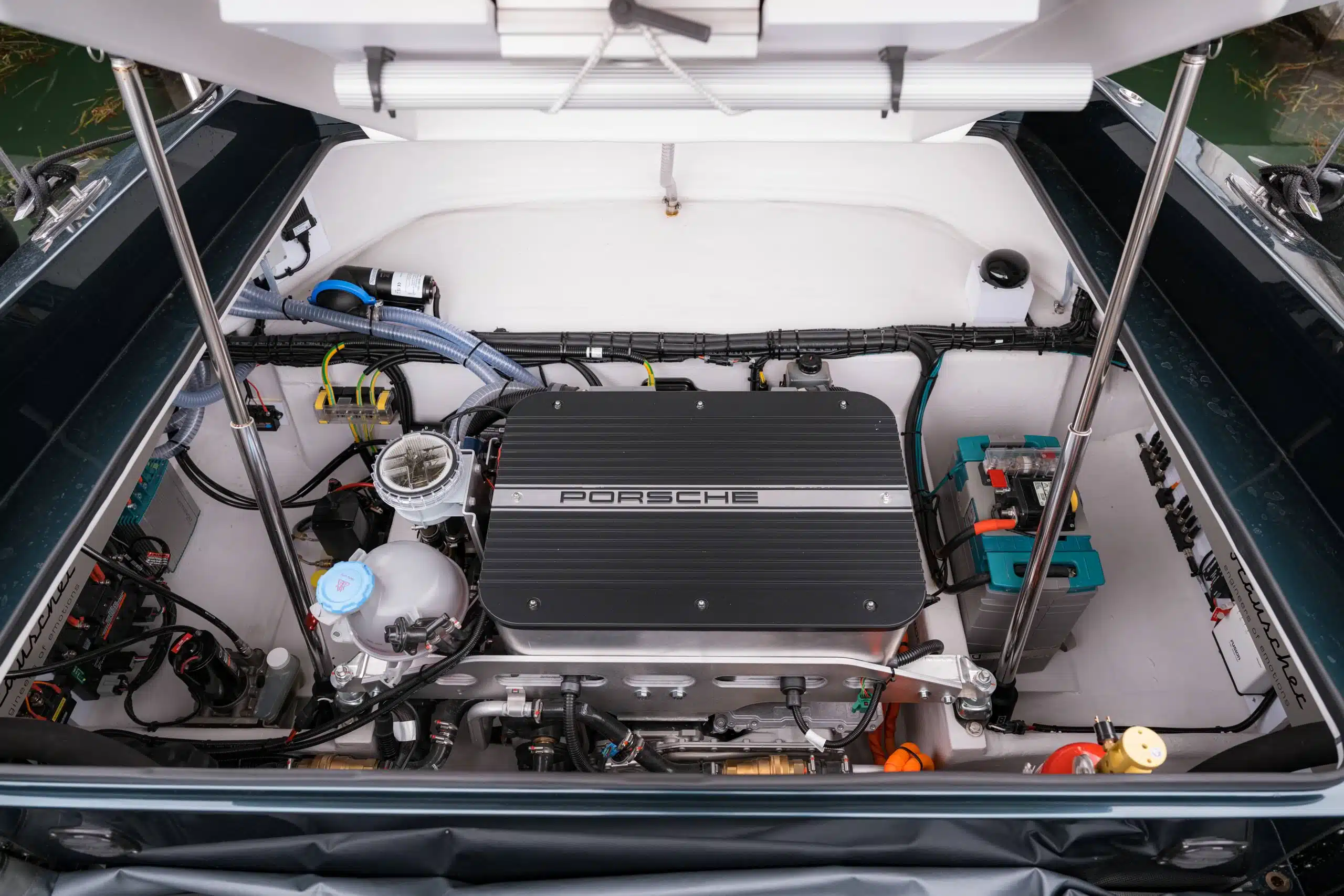
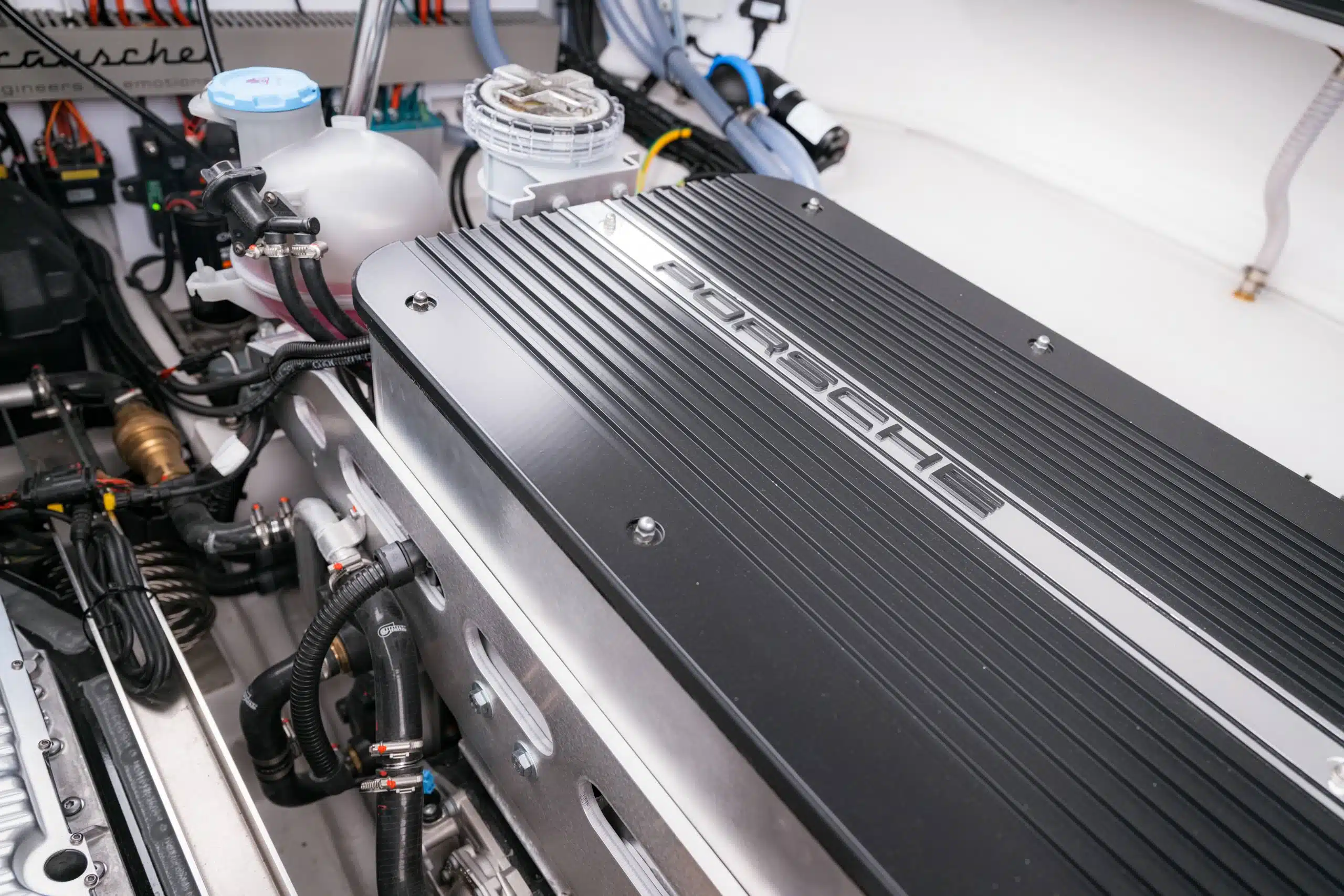
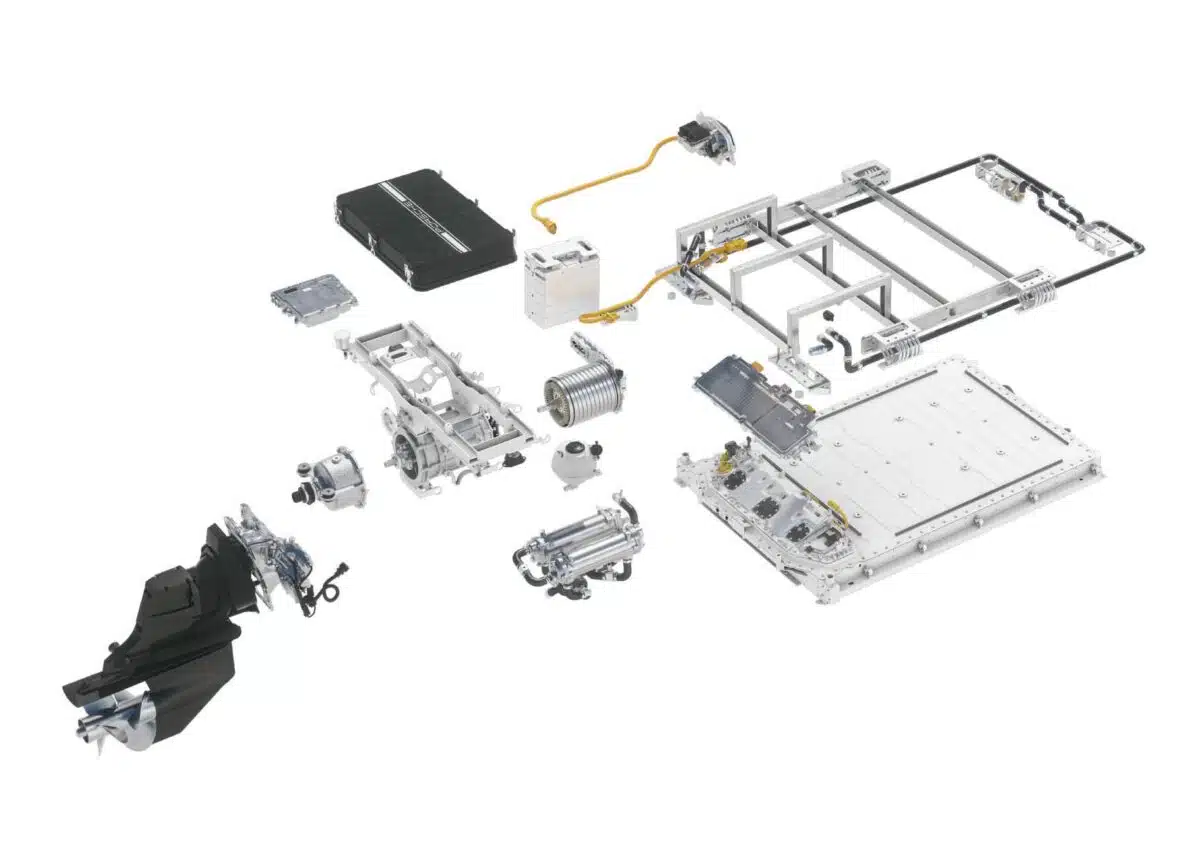
The sports boat, just under eight meters long, is the second result of the collaboration between the Austrian Frauscher shipyard and Porsche. But while the first joint yacht, the 850 Fantom Air, essentially integrated the electric drivetrain into an existing boat concept, the developers took a decisive step further with the Spectre: they designed the boat from the ground up around the electric drive of the Porsche Macan Turbo.
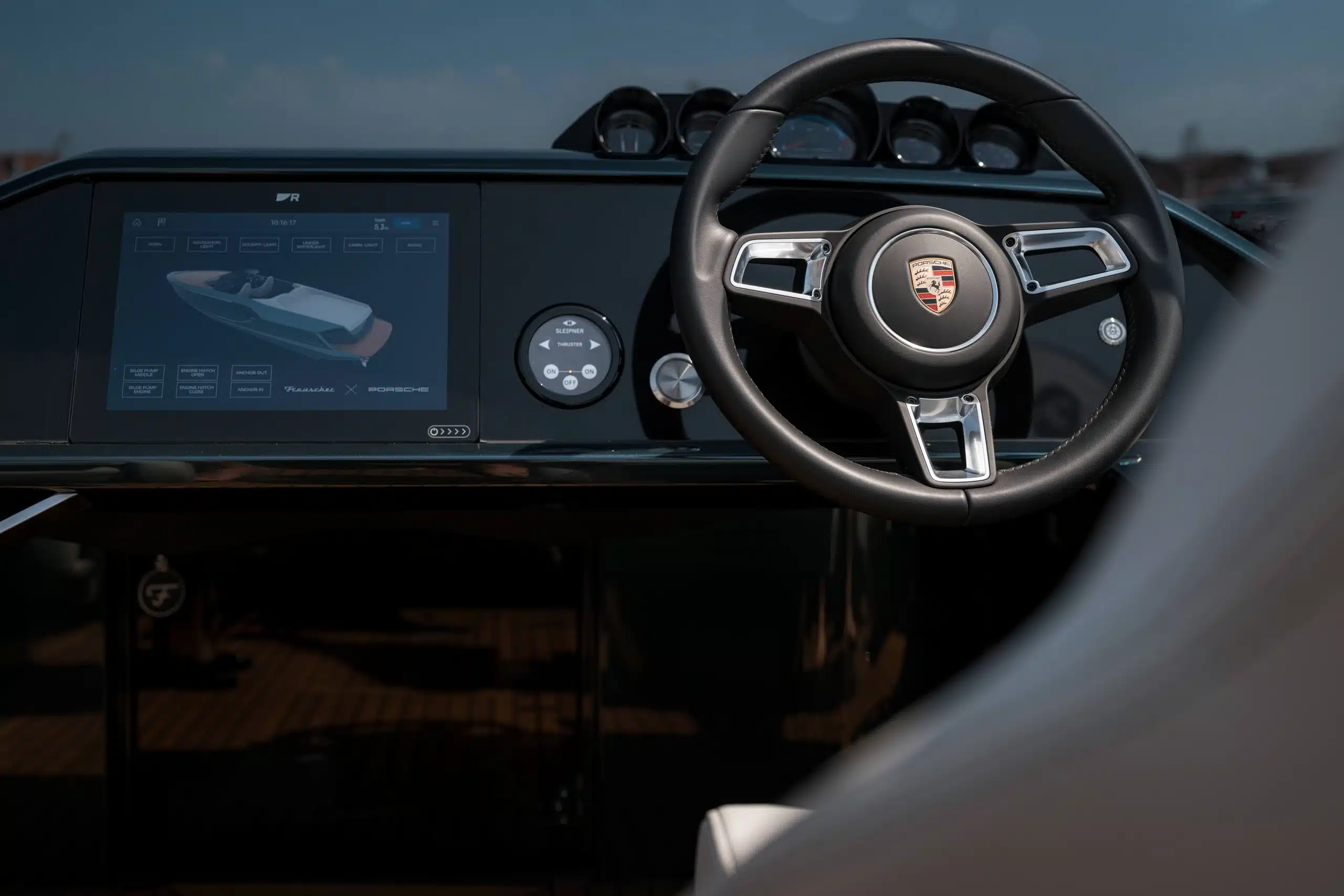
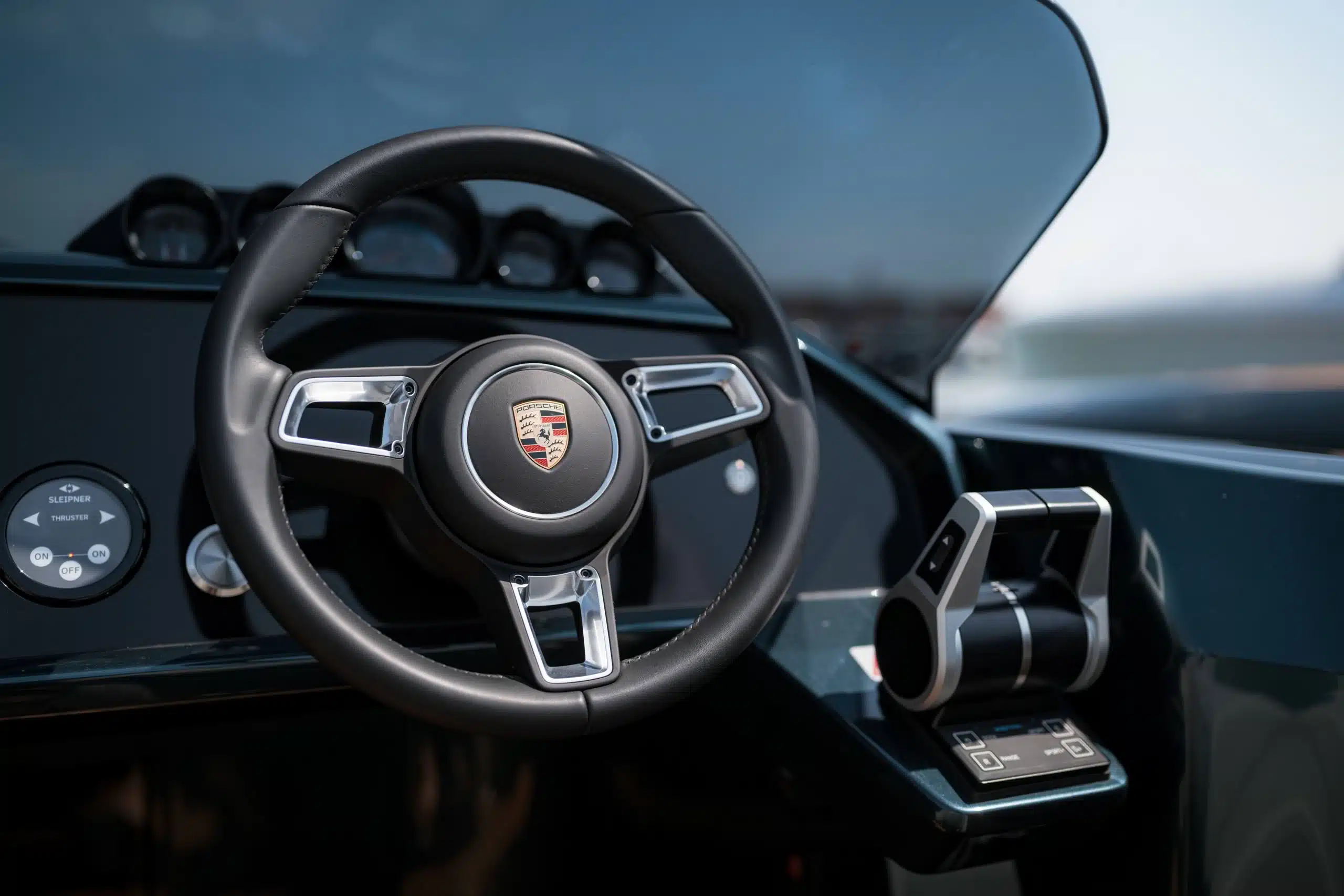
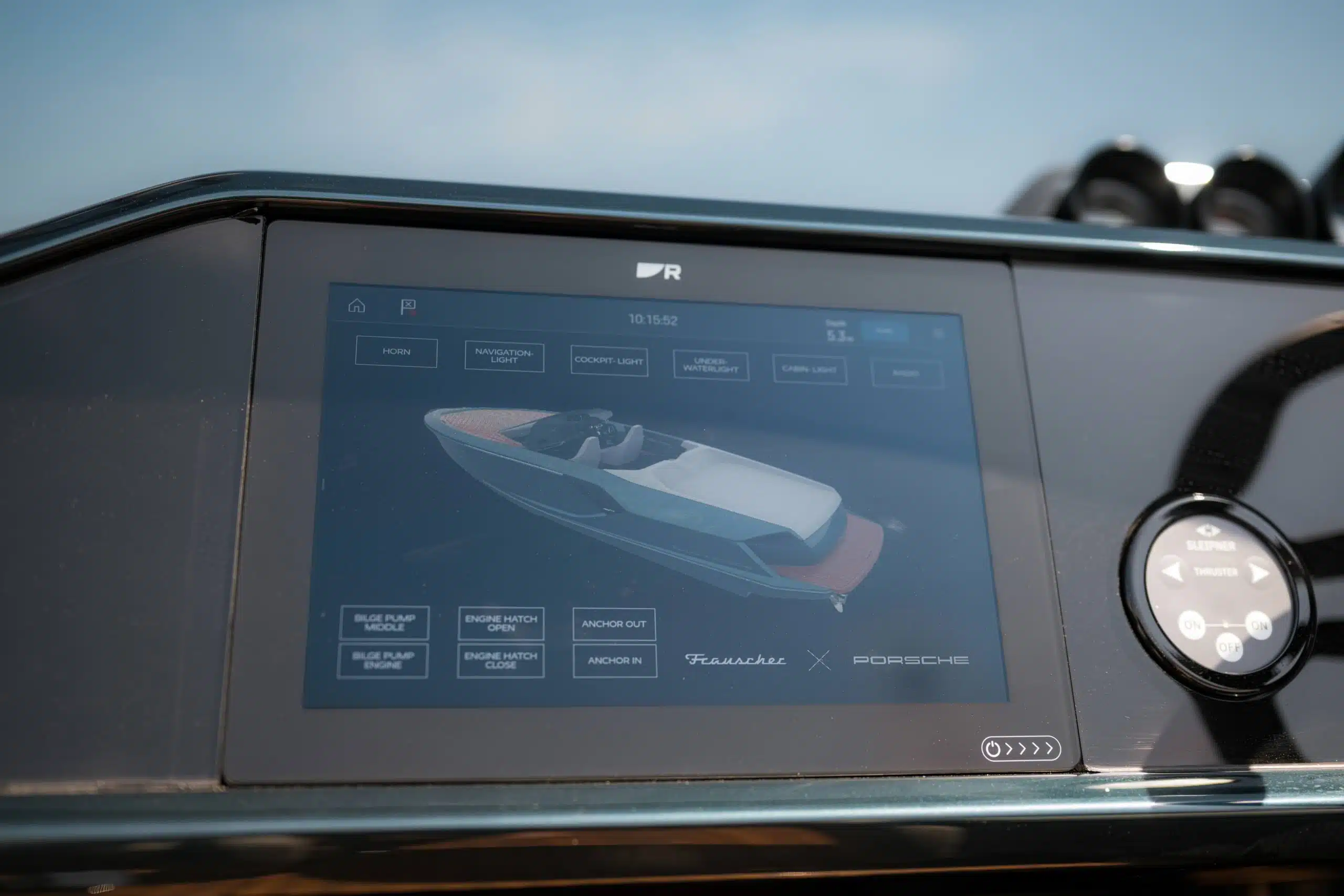
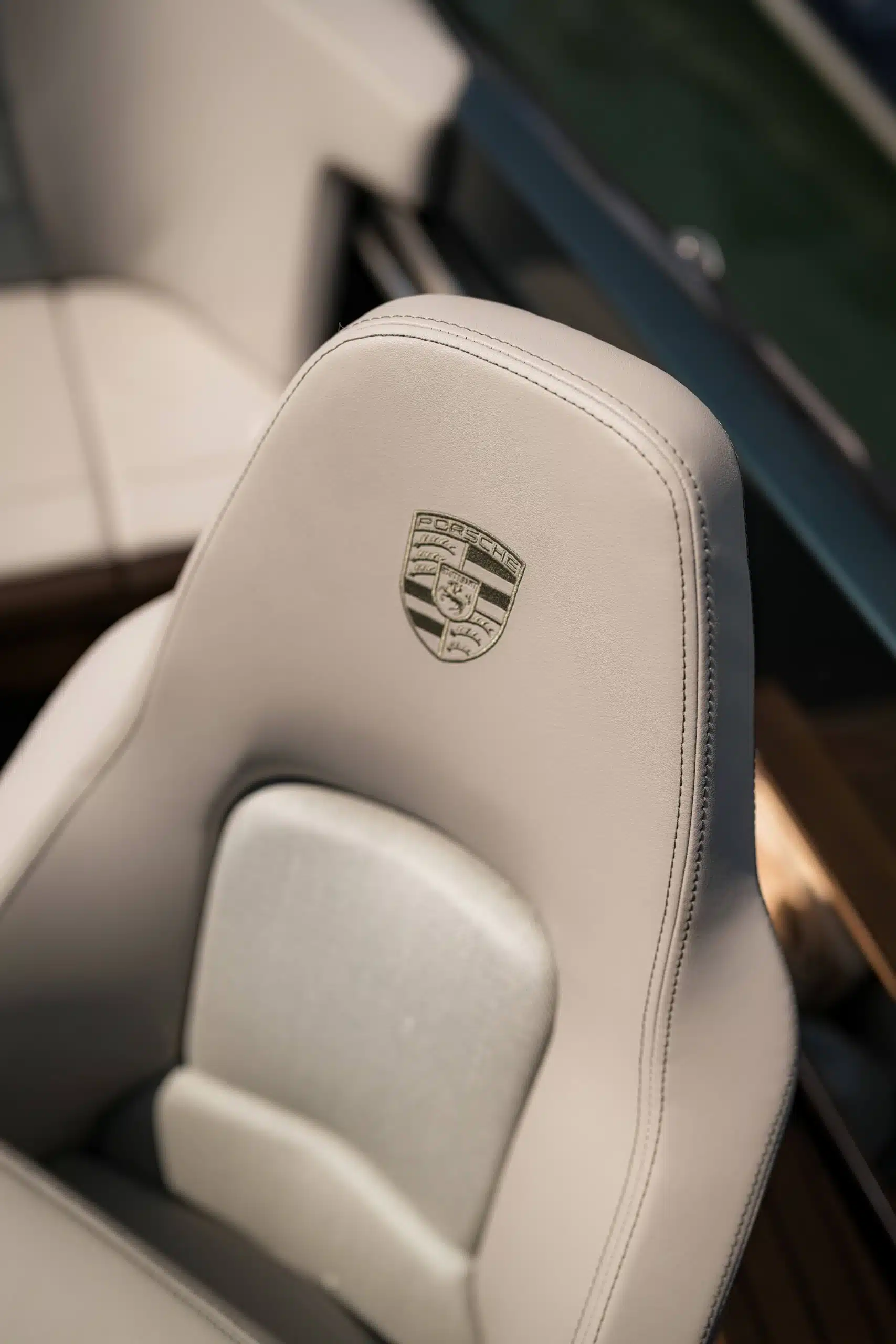
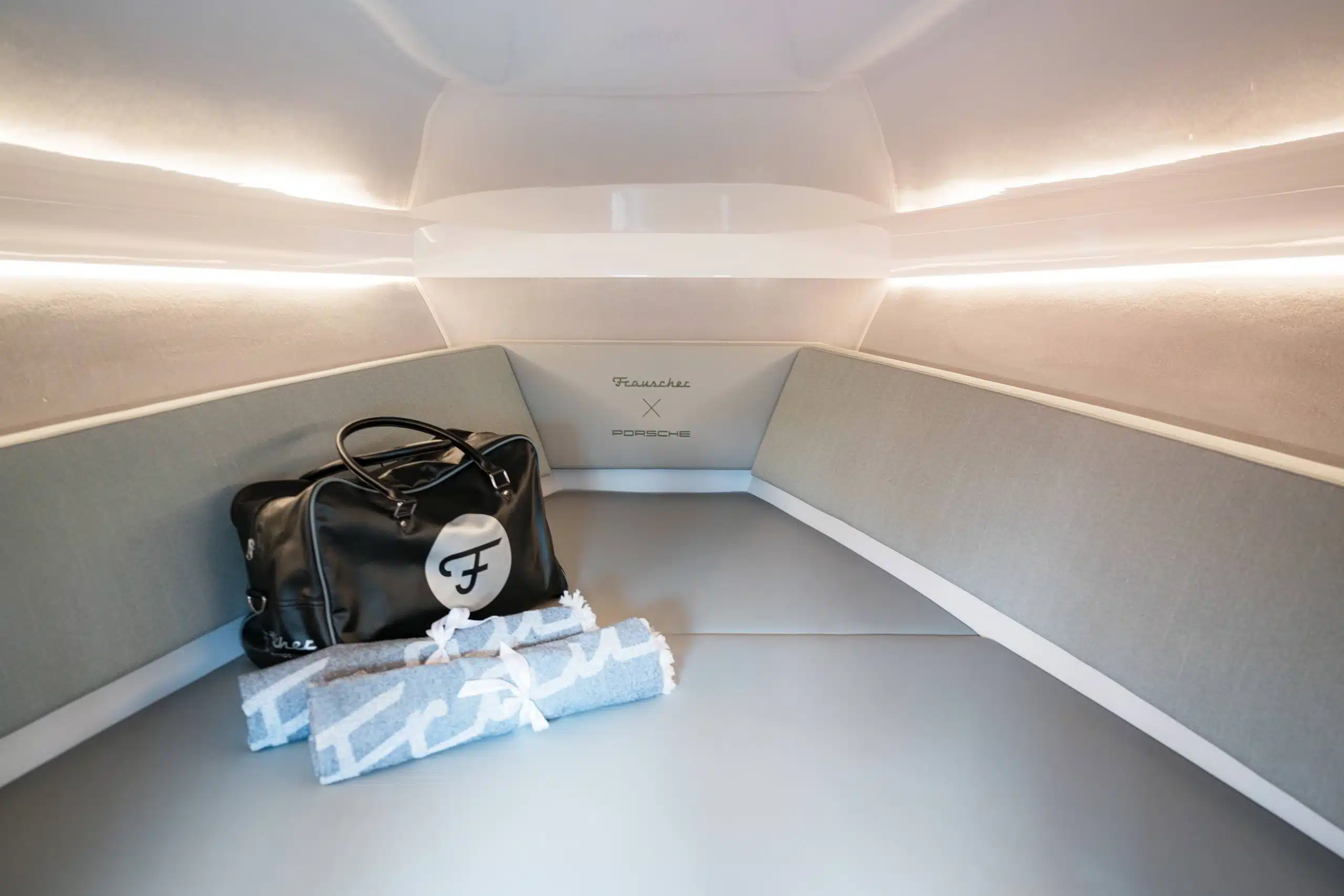
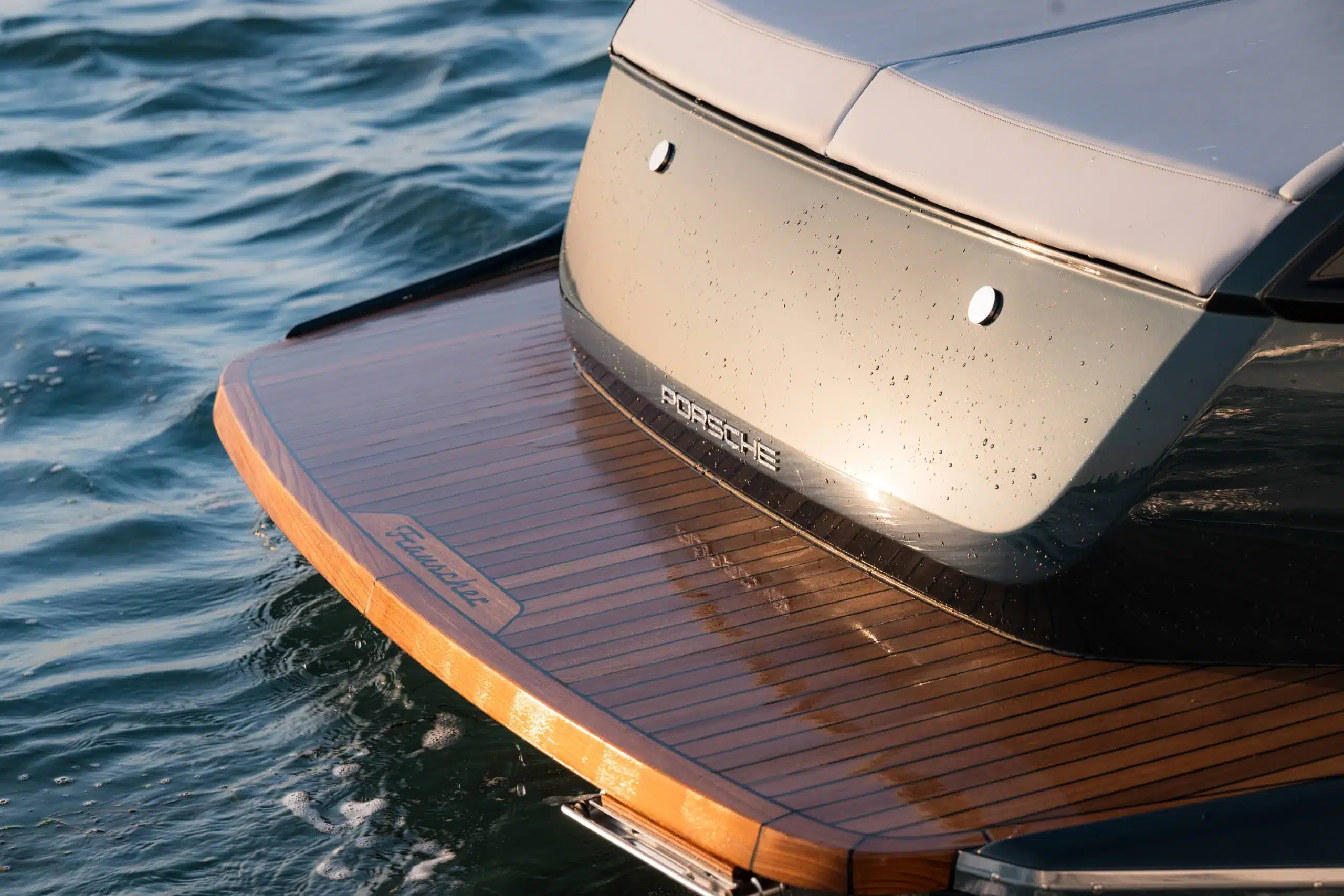
The Spectre has a completely newly developed, optimized hull
The hull was completely redeveloped, designed to be more compact, narrower and lighter. Battery, motor and power electronics were not components to be integrated after the fact, but the starting point of the design.
The result can be felt immediately. The 400 kW (544 hp) electric motor accelerates the Spectre with a ferocity that surprises even experienced powerboat drivers. No shifting up, no waiting for revs: throttle forward – and the boat surges ahead.
Just how capable the concept is was recently proven by Frauscher at the Monaco Energy Boat Challenge. In July 2026, the 790 Spectre averaged 51.05 knots (94.5 km/h), setting a new YCM Speed Record.
You are currently viewing a placeholder content from YouTube. To access the actual content, click the button below. Please note that doing so will share data with third-party providers.
The greatest advantage of an electric boat becomes apparent in everyday operation
For recreational skippers, however, top speed is not the decisive factor. The greatest advantage of an electric boat becomes apparent in everyday operation: the drive runs almost silently, vibrations are reduced, and slow maneuvering produces neither exhaust fumes nor the typical smell of a petrol or diesel engine.
This is particularly relevant on inland waters. On numerous European lakes, combustion engines are already banned or heavily restricted. Austria has had such restrictions on sensitive waters for decades; in Germany, too, there are lakes on which private combustion engines are not permitted or only permitted to a limited extent. It is therefore by no means unlikely that further sensitive areas will restrict the operation of conventional combustion engines in the future.
You are currently viewing a placeholder content from YouTube. To access the actual content, click the button below. Please note that doing so will share data with third-party providers.
Still problematic at present: the charging infrastructure
The biggest problem, however, remains the charging infrastructure. While almost every larger marina offers fuel within easy reach, powerful fast chargers for electric boats are still rare. The Spectre can charge at a suitable DC station at up to 270 kW; charging from ten to 80 percent is said to take around 30 minutes. Frauscher’s Italian representative already operates a fast-charging station on Lake Garda. At the Salone Nautico Venezia, too, the Spectre was charged with a mobile fast-charging station right at the jetty.
Where such infrastructure is lacking, charging has to be slower – often overnight. For a dayboat that sets off in the morning and is back at its own berth in the evening, this is usually not a problem. On longer passages with changing ports, however, it can become a decisive disadvantage. When it comes to range, too, the combustion engine retains the edge.
Those who regularly cover long coastal legs are currently usually better served with petrol or diesel. For day trips on lakes or in manageable coastal areas, the equation looks different. Anyone who can charge at their own berth should at least seriously consider an electric drive when buying a new boat.
With an entry-level price of more than half a million euros, the Frauscher x Porsche 790 Spectre is certainly not an electric boat for everyone. It is a technological pioneer. But that is precisely where its significance lies: the Spectre shows that an electric boat today can be more than just quiet and clean. It can also be an uncompromising sports boat.