








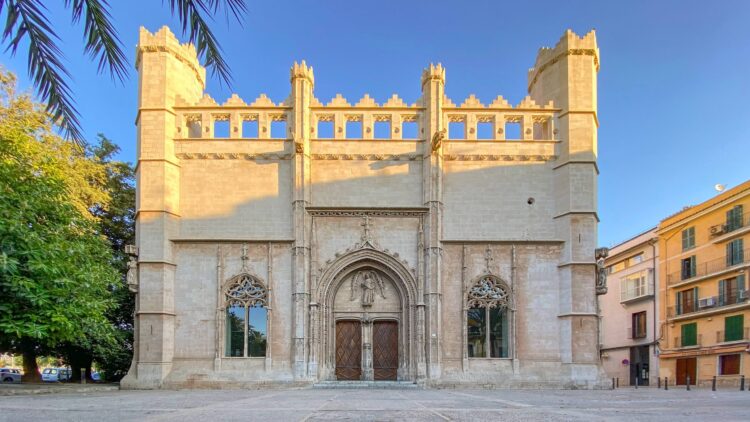
The old maritime exchange of Palma, “La Lonja” or “Sa Llotja” in Catalan, was built in the 15th century as a trading centre for Mallorca’s merchants and is still considered one of the most important examples of civil Gothic architecture in Spain. Skippers ashore can visit the building, designed by the Mallorcan architect Guillem Sagrera and constructed between 1426 and 1447 – free of charge.
“La Lonja” (roughly meaning “trading exchange” or “auction hall” in German; Catalan: “Sa Llotja”) is almost 580 years old – yet it still shines in fresh, original splendour. Back then, all kinds of trade deals were concluded in the old maritime exchange, the port was administered, and maritime trade was organised from here.
Today the building is open to the public and is used for changing art exhibitions and cultural events. Admission is generally free; visits are currently possible Friday to Sunday and Tuesday to Thursday, from 10:30 am to 1:30 pm and 5:30 pm to 9:00 pm.
The great hall is supported by six stone palm trunks
Why the building is worth including on a quick trip through Palma: what makes the Lonja special is above all its interior. Instead of many small rooms, there is a single great hall, supported by six spiral columns. These columns look like stone palm trunks branching upward into the vaulted ceiling.
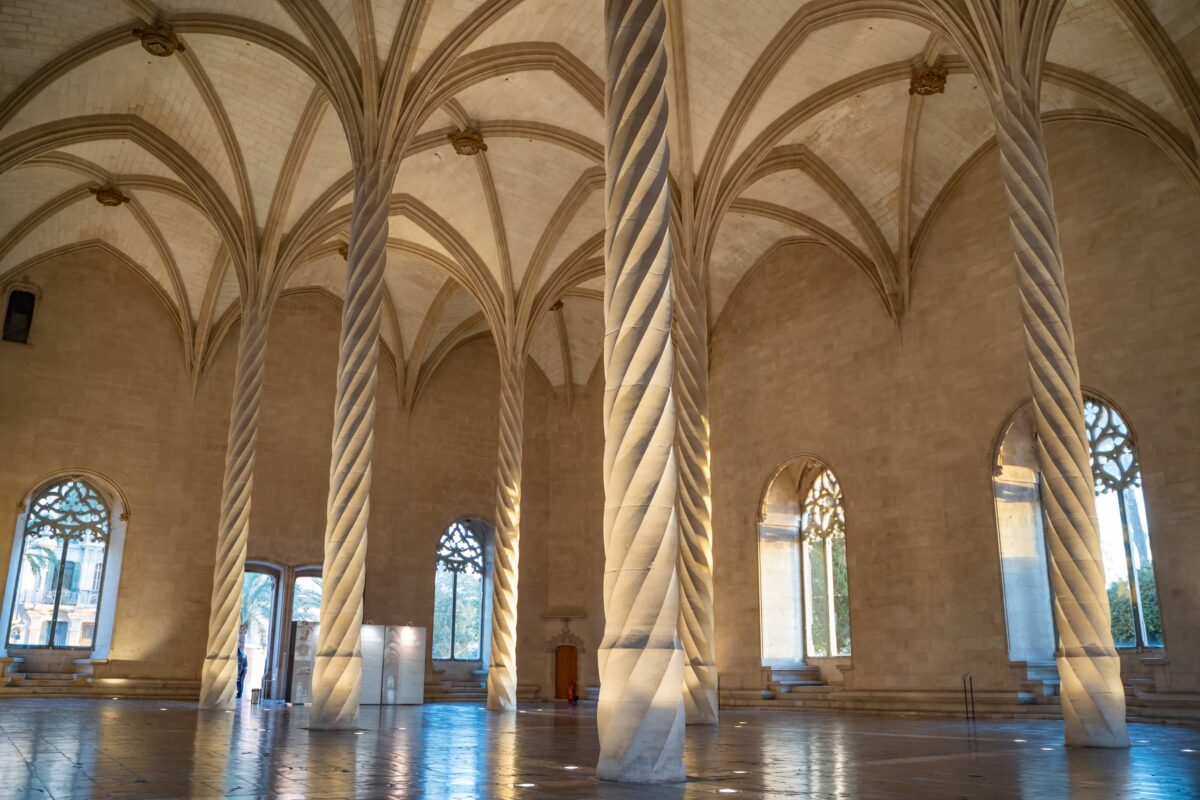
Many visitors describe the space as a “palm grove made of stone.” It is precisely this unusual sense of space that makes the building so impressive and different from many other Gothic structures.
The exterior of the Lonja is also worth seeing: four large octagonal corner towers, smaller turrets, a richly decorated portal, and Gothic windows give the building the appearance of a mixture between a church and a fortress. Above the entrance stands a stone angel, regarded as the guardian angel of the merchants.
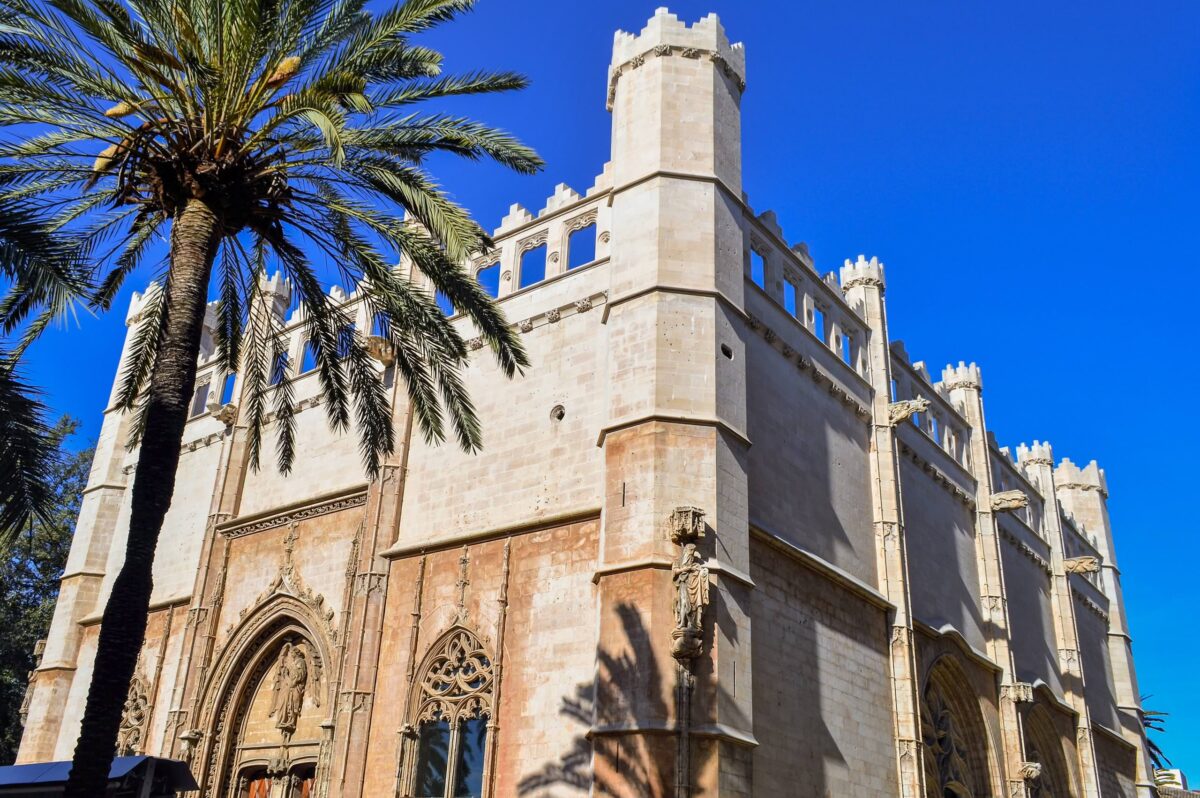
The Lonja shows how rich and important Palma was as a trading city in the Middle Ages
However, the building is not just beautiful to look at – it also tells a great deal about Palma’s past. The Lonja shows how rich and important Palma was as a trading city in the Middle Ages. It is also perfectly located right in the old town, just a few minutes from the cathedral and the harbour. Even a brief visit reveals one of the most impressive interiors in Palma – and afterwards you can stroll through the La Lonja quarter with its narrow lanes, bars, and restaurants.
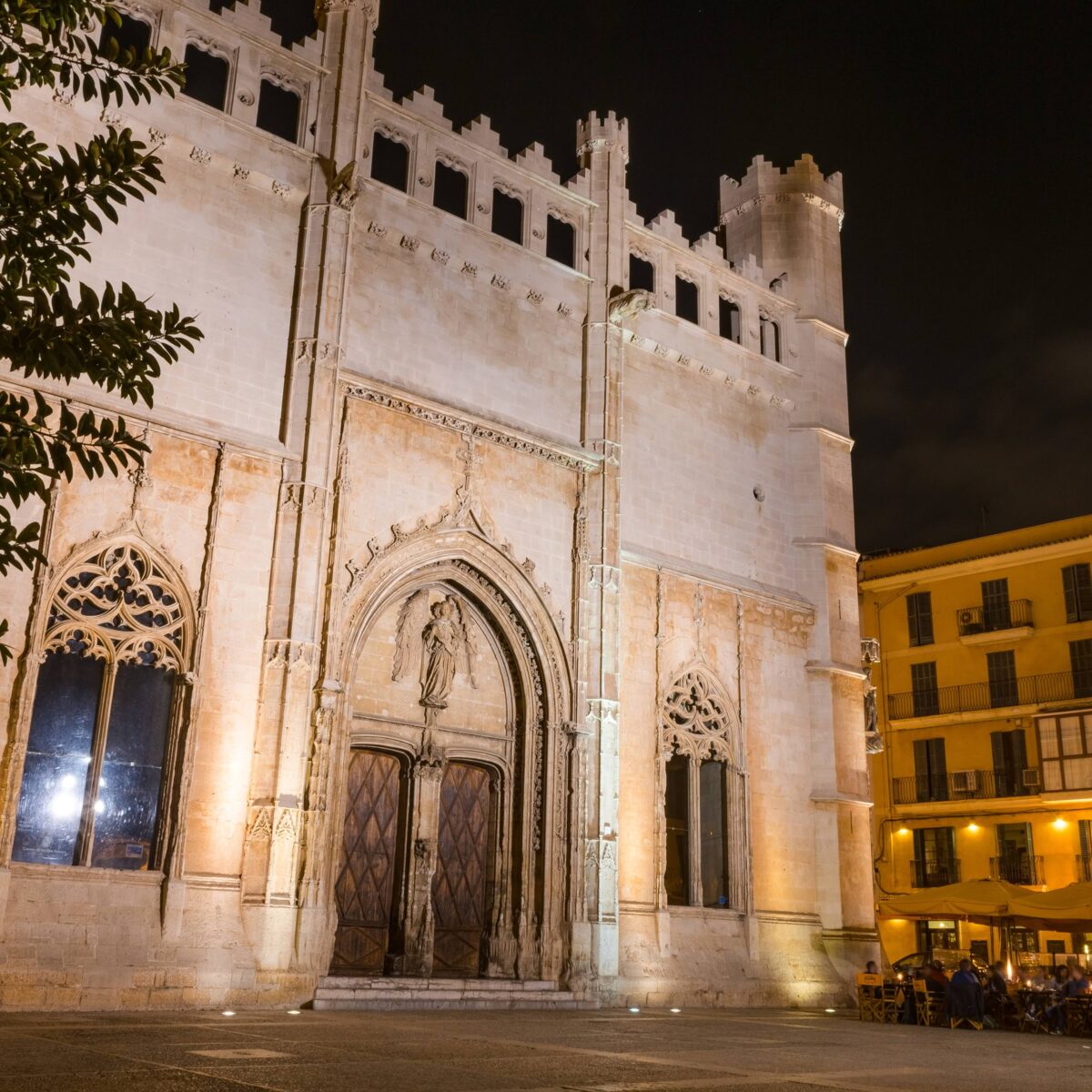
Boat crews can reach La Lonja very easily; nearby, for instance, is Marina Moll Vell – right at the old harbour below the cathedral, just a few minutes’ walk from La Lonja. Yachts and superyachts often moor here, and it is also where Palma’s major boat show takes place.
The traditional Real Club Nàutic de Palma yacht club is not far away either; other nearby harbours and marinas include La Lonja Marina Charter, practically right next to the building, Marina Port De Mallorca further west along the waterfront promenade, and Puerto Palma in the western part of the city centre with numerous berths and charter companies.