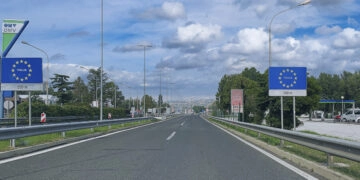
Free entry Slovenia with Coronavirus vaccination or PCR / antigen rapid test without quarantine possible.

Just in time for the start of the Easter vacations, the countries bordering the Adriatic Sea, currently Slovenia, seem to be relaxing their entry requirements due to Corona. One may assume that other countries, especially Croatia, will follow this example shortly. Worth mentioning against the background: from now on Slovenia allows free entry for vaccinated persons. Slovenia: With Corona rapid...

Read more

SeaHelp Livestream: Lecture on the subject of diesel spraying

About so important topics like fuels or diesel plague one speaks actually on the fairs, but the classical boat fairs as for example the boot Duesseldorf or the Austrian Boat Show Boot Tulln were cancelled Corona-conditioned, the personal exchange of the skippers among themselves and/or with the service providers from the boat industry can take place probably only if they...

Read more
Entry Italy from Austria and Germany: registration, special regulation, PCR test, antigen test

The entry for Germans and Austrians to Italy, especially to the regions of the northern Adriatic little affected by the coronavirus, is quite different. While Austrians are subject to much stricter measures due to a special regulation according to the decree of February 13, valid until 5. March are subject to much stricter measures, for German citizens the presentation of...

Read more
\r\n
Actual 7-day incidence (orange line) and 14-day incidence (blue line) for the Croatian county of Istria. Based on the interactive diagram, one can see impressively the development of coronavirus infection in Istria.\r\nData analysis: Sea-Help Ltd<\/a> | Data source: koronavirus.hr<\/a><\/em><\/small><\/div>\r\n

Damocles sword: quarantine when returning home after Easter vacation Croatia<\/h2>\r\nTo summarize: According to common sense or common sense, there is actually nothing against a trip to Croatia at Easter, if not the quarantine threat currently still hovers like a sword of Damocles over the holidaymakers. However, those who put up with the quarantine will have a pleasant time in Croatia, as the majority of tourists are most likely still waiting.\r\n

Entry Croatia: Will boat owners again be among the first tourists?<\/h2>\r\nAnd the entry to Croatia? From Easter there should already have come movement into the currently still strict entry regulations. As a reminder: In 2020, boat owners were again the first to be allowed to enter without restrictions...","post_title":"Easter vacation in Croatia 2021: <\/span><\/span>Can you travel to Croatia again this year for Easter?","post_excerpt":"","post_status":"publish","comment_status":"open","ping_status":"closed","post_password":"","post_name":"easter-holiday-croatia-coronavirus","to_ping":"","pinged":"","post_modified":"2021-02-24 10:24:10","post_modified_gmt":"2021-02-24 09:24:10","post_content_filtered":"","post_parent":0,"guid":"https:\/\/www.sea-help.eu\/news-general\/easter-holiday-croatia-coronavirus\/","menu_order":0,"post_type":"post","post_mime_type":"","comment_count":"0","filter":"raw"},{"ID":26426,"post_author":"4","post_date":"2021-02-16 01:31:31","post_date_gmt":"2021-02-16 00:31:31","post_content":"Since the development of new corona infections in the respective travel areas will be a special priority for vacation planning in Croatia in 2021, SeaHelp has already prepared the 7-day incidence for Croatia and the 14-day incidence for Croatia in tables and diagrams on a daily basis and published them on the homepage<\/a>. The values come from the figures of the Croatian Ministry of Health and are updated daily between 10:00 h and 14:00 h.\r\n\r\n \r\n\r\n\"Coronavirus<\/a>\r\n\r\n \r\n

To allow Austrians and Germans to compare incidence<\/h2>\r\nIn the past, especially for vacationers from the countries of Germany, Austria and Switzerland, the figures from Croatia did not always immediately provide the values with which potential Croatia vacationers are familiar in their home countries. In Germany, for example, the reference value is the 7-day incidence, as the total number of new infections with the coronavirus within seven days per 100,000 inhabitants. Austria tends to use the 14-day incidence.\r\n

Vacationers can self-assess coronavirus risk in Croatia<\/h2>\r\nThe ultimate aim of the values is to provide interested vacationers with robust comparisons that enable them to assess the risk of coronavirus infection for themselves. There, as communicated by many Croatian sources, the exclusive number of new infections with the coronavirus is not sufficient, this number can only be meaningful if it is put in relation to the number of inhabitants of the respective area.\r\n

Incidence values in Croatia by county\/district<\/h2>\r\nIn Croatia, areas are divided into individual counties, roughly comparable to governmental districts in other countries. If the official Croatian figures differ slightly from our own calculations, it is because the last census in Croatia was conducted in 2011. In 2018, only an estimate of the population in the respective counties was made. When sifting through the numerical material, it was noticeable: Croatia chose the higher value from the census and the estimate for the calculation of the incidence figures in each case. These calculations nevertheless refer to the officially communicated incidence figures.\r\n

Detecting trends in 7-day incidence and 14-day incidence<\/h2>\r\nThe trends in 14-day incidence in Croatia compared with 7-day incidence are particularly interesting to observe: they clearly indicate a trend, and it is currently downward in almost all counties.\r\n

7-day incidence Istria: 13.9 (as of Feb. 15, 2021)<\/h2>\r\nBut another trend is also holding up permanently: the coastal regions from Istria to Dubrovnik, i.e., the preferred vacation destinations of Croatian holidaymakers, have been bravely resisting coronavirus infection in recent months, especially the northernmost tip of Istria. Here, the 7-day incidence is currently 13.9 (as of Feb. 15, 2021). Values from which many other European regions are still far away.\r\n\r\n
\r\n
Up-to-date 7-day incidence (orange line) and 14-day incidence (blue line) for the Croatian County of Istria. Based on the interactive diagram, one can see impressively the development of coronavirus infection in Istria.\r\nData analysis: Sea-Help Ltd<\/a> | Data source: koronavirus.hr<\/a><\/em><\/small><\/div>\r\n

Distinguishing major cities from coastal regions is important<\/h2>\r\nHowever, to correctly interpret the incidence values from Croatia published daily now<\/a>, one thing should be taken into account: In densely populated coastal regions such as Rijeka, Sibenik, Zadar, or Split, the values must inevitably be higher, as in almost every other major city in Europe, than in more sparsely populated areas of Croatia that are particularly characterized by tourism. This means, for example: High incidence figures in Primorje-Gorski Kotar County originate in most cases in Rijeka, while on the island of Krk, for example, the incidence of infection with coronavirus is at quite a low level.\r\n

Partial travel warnings for Croatia long overdue<\/h2>\r\nIn general, however, these data, which refer to the counties, should also help to increase public pressure on those responsible in the respective governments and ultimately lead to not lumping an entire country together, but to differentiate regionally and to issue travel warnings only partially, as in the summer of 2020. Then Croatia's coastal regions would already be a travel destination again.","post_title":"Daily update broken down by region, county: <\/span><\/span>7-day incidence and 14-day incidence coronavirus Croatia.","post_excerpt":"","post_status":"publish","comment_status":"open","ping_status":"closed","post_password":"","post_name":"new-incidence-coronavirus-croatia","to_ping":"","pinged":"","post_modified":"2021-02-16 01:53:16","post_modified_gmt":"2021-02-16 00:53:16","post_content_filtered":"","post_parent":0,"guid":"https:\/\/www.sea-help.eu\/news-general\/new-incidence-coronavirus-croatia\/","menu_order":0,"post_type":"post","post_mime_type":"","comment_count":"0","filter":"raw"},{"ID":26313,"post_author":"4","post_date":"2021-02-10 15:10:35","post_date_gmt":"2021-02-10 14:10:35","post_content":"In Croatia, as the Croatian Ministry of Health announced at a press conference, the first three cases of the British coronavirus mutation D.1.1.7 were discovered in samples that were examined at the Clinic for Infectious Diseases Dr. Fran Mihaljevic. In order to properly evaluate this news, which of course once again causes a stir in the media and can also be used depending on political interests, the SeaHelp editorial team once tried to properly classify this news.\r\n

Viruses know no borders<\/h2>\r\nWhoever thinks that in a closely meshed networked Europe viruses can be stopped at borders, is well and truly on the wrong track. Countless workers who pursue their jobs abroad commute daily across countless borders throughout Europe. Without care workers from abroad, the health care system would collapse. Business trips, even limited ones, are necessary because not everything can be conclusively clarified in the virtual meeting room. Exactly these economic requirements, which also account for part of the prosperity, are of course a gateway for the various coronavirus mutations.\r\n

Virus mutations controllable<\/h2>\r\nWhat we know so far? That viruses mutate should be common knowledge. The new mutation forms are considered highly contagious, but scientists believe they are quite manageable. Vaccines also work against the mutations, the German home page of the Ministry of Health<\/a> (last question!) states:\r\n\r\nCases of the mutated Corona variant, which was first detected in the United Kingdom and South Africa, have also occurred in Germany. Do the vaccines also protect against this mutant pathogen?<\/strong><\/em>.\r\n
Yes. Investigations into this could quickly give the all-clear: The vaccines also work against the mutated pathogens. Because the vaccines are based on mRNA technology, manufacturers can also quickly adapt them to mutations. Within six weeks, the vaccine can be replaced and modified. Thus, changes in the pathogen do not lead to a loss of efficacy.<\/blockquote>\r\n

Corona rules observe<\/h2>\r\nIn addition, of course, the basic rules still apply in Corona times: Keep your distance, follow hygiene rules and wear a mask, as well as strictly monitored quarantine for infected persons. This is the only way to contain the uncontrolled spread of mutant coronavirus D.1.1.7.\r\n

Vaccination Advantages: Denmark, Sweden, Poland, Romania, Greece, Estonia.<\/h2>\r\nIn the longer term, according to the neutral assessment of the editorial team (even if it may not please some vaccination opponents), unrestricted travel will probably only be possible for vaccinated persons. Soberly considered, the indications for it increase: Denmark is planning a digital ID card on a smartphone that could open borders, and Sweden wants to have the digital infrastructure for a vaccination passport in place by June that would allow the same. In Poland and Romania, vaccinated people are already exempt from the 10-day quarantine requirement because of the coronavirus. Greece agreed with Israel a kind of travel freedom for verifiably vaccinated persons, Estonia also creates relief - other countries will probably follow the example soon.\r\n

Vacation 2021 not in danger<\/h2>\r\nCroatia, as one of the countries where tourism has a significant impact on the state budget, will also not be able to ignore this fact in the longer term. In an overall package consisting of freedom of travel for vaccinated persons and persons recovered from the coronavirus, inexpensive antigen tests at the vacation destination and significantly eased entry regulations, the SeaHelp editorial team currently sees no danger for a stay in Croatia in 2021.\r\n

Croatia: Low incidence figures<\/h2>\r\nUntil that happens, however, patience remains the virtue of the hour. Entry restrictions in Austria and Germany are more of a temporary nature and due to the current development. One thing is certain, however: the situation in Croatia, due to the drastic entry restrictions as well as the measures in the country itself, is much better than in most parts of Germany and Austria, especially if one considers the incidence values of the coastal regions.\r\n

Uncomprehension for Austrian entry regulation<\/h2>\r\nHowever, the fact that, according to the Austrian entry regulation as amended on Feb. 10, 2021<\/a>, Greece is listed in Annex A. The following applies to the country according to \u00a7 4, para. 1, item1:\r\n
From EU\/EEA states as well as from Switzerland, Andorra, Monaco, San Marino and the Vatican, persons may enter without restriction if they enter from a state or territory listed in Annex A<\/strong> and, upon entry, credibly demonstrate that they have stayed exclusively in Austria or in a state or territory listed in Annex A<\/strong> within the past ten days.<\/blockquote>\r\n

Equal treatment Greece\/Croatia?<\/h2>\r\nWhat is not taken into account: The populous Athens metropolitan area is going into lockdown again this week because the number of new coronavirus infections is skyrocketing. Where is the equal treatment with Croatia, a country where the infection incidence is much lower? This question should be explained to the numerous Austrians, regardless of whether they own boats or real estate in Croatia, when ten days of quarantine are threatening after the necessary care of their property in other European countries at home in Austria.","post_title":"Coronavirus Croatia: <\/span><\/span>British coronavirus mutation D.1.1.7 detected in three samples.","post_excerpt":"","post_status":"publish","comment_status":"open","ping_status":"closed","post_password":"","post_name":"coronavirus-mutation-d-1-1-7","to_ping":"","pinged":"","post_modified":"2021-02-11 15:30:39","post_modified_gmt":"2021-02-11 14:30:39","post_content_filtered":"","post_parent":0,"guid":"https:\/\/www.sea-help.eu\/news-general\/coronavirus-mutation-d-1-1-7\/","menu_order":0,"post_type":"post","post_mime_type":"","comment_count":"0","filter":"raw"}],"next":false,"prev":true,"total_page":25},"paged":1,"column_class":"jeg_col_2o3","class":"epic_block_25"};

SeaHelp Service

Push Service & Newsletter

SeaHelp News

Search

Where are you looking for?
SeaHelp

Breaking News

SeaHelp News

SeaHelp Subscribe to Newsletter

24h EMERGENCY CALL EUROPE
Alternative: 00385 919 112 112

SeaHelp - your breakdown service at sea.
100% emergency aid
© 2005 – 2026 Sea-Help GmbH | All Rights Reserved | Made by TM-8 Mediendesign