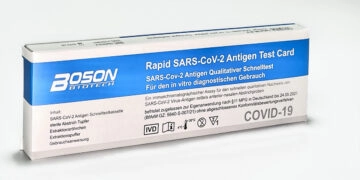
Entry Croatia easier through PCR test from 01 April 2021

Good news for all those who plan to travel to Croatia over Easter: Croatian Interior Minister and Chief of the National Staff, Davor Božinović, announced in the Croatian media that there will be significant facilitations in entering Croatia on April 1 (Maundy Thursday) with the official start of the Easter travel season. Most important factor: Instead of the costly PCR...

Read more

Germany: Obligatory testing for air travel at Easter, return travel by car from vacation in Istria / Croatia without obligatory testing.Germany: Obligatory testing for air travel at Easter, return travel by car from vacation in Istria / Croatia without obligatory testing.

Attention: No Corona testing obligation when entering Germany by car from non-risk areas such as Istria (as of 26.03. 2021) - as reported in numerous media outlets, German vacationers returning home by plane from foreign countries, such as Croatia, after an Easter vacation are required to get tested at their vacation destination before returning because of the Corona pandemic, even...

Read more
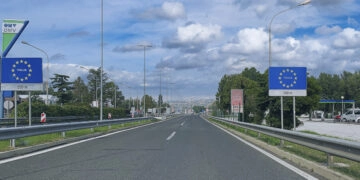
Entry regulation Austria: Entry regulations for entry to Austria extended until 21.05.2021

Due to the Corona pandemic, the Republic of Austria has consolidated the applicable entry regulations, which were originally scheduled to end March 31, until May 31. This means that Whitsun on May 23 would also be affected by the current rules. However, for Austrian citizens, especially boat and real estate owners with Croatia as a travel destination, the adopted measures...

Read more

Entry requirements: Italy, Slovenia, Croatia. Vacation in times of Corona.

Croatia's measures regarding the regulation of entry due to the Corona pandemic, issued on January 15, 2021, have been extended until shortly before Easter, i.e. March 31 (Wednesday). How the situation will continue from Maundy Thursday and during the Easter holidays will probably depend primarily on the development of incidence figures, particularly in the Croatian coastal regions. Despite rising incidences...

Read more
\r\n\r\n \r\n

Istria travel continues to be problem-free<\/h2>\r\nIstria, the only county in Croatia with its own coastline for which there is currently no travel warning from a German perspective, continues to hold up very well, with a 7-day incidence of 51 and a 14-day incidence of 81. The low incidence figures for Istria are also clearly reflected in the number of positive Corona tests: while in Primorje Gorski Kotar 40% of those tested were positive, in Istria it was only 5% of test candidates who had to go into quarantine with a positive result.\r\n

Croatia tightens corona measures regionally<\/h2>\r\nSpecific measures apply to individual regions. For example, in Dalmatia (Split-Dalmatia and Sibenik-Knin), the sale of alcohol is prohibited between 20.00 h and 6 h, and in the capital Zagreb there is to be a general mask requirement.\r\n

Tighter controls and traffic jams expected in Easter travel<\/h2>\r\nAlthough the press conference did not expect a larger volume of tourists over the Easter holidays, vacationers entering Croatia should be prepared for longer waiting times at the borders, as tighter controls are expected from Maundy Thursday. Already, Croatia travelers are reporting up to 2 hours of waiting time at the Slovenian-Croatian border when entering Croatia, and that's with normal traffic.\r\n

Discipline required when entering Croatia<\/h2>\r\nTherefore, at this point again the urgent request to have all the necessary papers at hand when crossing the border into Croatia. In addition, it is essential to register beforehand at EnterCroatia<\/a> to register.\r\n\r\n \r\n
Status: 31 March 2021 2:30 pm\r\nDue to the topicality of the message, the page of the Croatian Ministry of Interior has not yet been changed. Here<\/a> you will find the text of the new regulation in the future.<\/span><\/span><\/div>","post_title":"New measures at the border with Croatia: <\/span><\/span>Entry to Croatia only with antigen test from 1 April decided.","post_excerpt":"","post_status":"publish","comment_status":"open","ping_status":"closed","post_password":"","post_name":"entry-croatia-with-antigen-test","to_ping":"","pinged":"","post_modified":"2021-04-01 18:24:23","post_modified_gmt":"2021-04-01 16:24:23","post_content_filtered":"","post_parent":0,"guid":"https:\/\/www.sea-help.eu\/news-general\/entry-croatia-with-antigen-test\/","menu_order":0,"post_type":"post","post_mime_type":"","comment_count":"0","filter":"raw"},{"ID":27149,"post_author":"4","post_date":"2021-03-28 18:05:05","post_date_gmt":"2021-03-28 16:05:05","post_content":"SeaHelp Livestream on the SeaHelp-Channel at YouTube<\/a>: Who is authorized to steer a yacht or a boat in the Croatian coastal waters with which boat license and which additional authorizations are required? Questions that are asked not only by the countless charter guests who travel to Croatia year after year to take the unique island world of the Kornati under the keel for a week or more.\r\n\r\nBut even skippers who are experienced in Croatia are not always quite saddle-fast legally, as SeaHelp had to experience: The question of whether the skipper, who is in possession of the necessary authorization certificates, may also leave the helm to another crew member who does not have these authorizations, has already caused many a heated discussion in the cafes and restaurants of the marinas.\r\n

On 31 March 2021 at 19.00 h<\/h2>\r\nAnd because then also an almost already \"Babylonian regulation jumble\" arises, if one considers flag law and additionally still the nationality of the owner with, has SeaHelp to the next Livestream on Wednesday, 31 March at 19.00 o'clock someone invited, who must know it: Michael Alexander Grandits, head of MAG Maritime School<\/a>.\r\n

Boating license Croatia<\/h2>\r\nThe experienced skipper is considered even in professional circles as the walking encyclopedia of nautical regulations, which he also knows how to apply across disciplines. For SeaHelp he has taken a little time in the home office in Bad Mittendorf and explains in the livestream what Austrians and Germans must pay attention to regarding the driving of a yacht, no matter under which flag, when they are on the Adriatic in Croatia.\r\n

Questions will be answered in the chat<\/h2>\r\nBut more importantly, during the livestream and also afterwards there is the possibility to ask questions directly via the chat function, which will be answered during the broadcast if possible. If not all questions are answered directly due to time constraints, there is, as always, also the possibility to receive an answer by mail at fragseahelp@sea-help.eu<\/a>.\r\n

Interesting detail<\/h2>\r\nOne thing is for sure: probably no one else like Michael Alexander Grandits can more concisely present such a \"dry\" topic as the authorization of driving boats and yachts, carried out by people of different nationalities and with special regard to the flag law in Croatia. Therefore, we may already promise them that here probably everyone can still \"take something\" to survive the next control on board his ship without harm.\r\n

SeaHelp livestream on Wednesday, 31.3.2021 from 19.00 h on YouTube<\/h2>\r\n\r\n\r\n
Update 22.04.2022:
\r\nCroatia plans to make rented boats up to 6.8 hp license-free.
Read more here...<\/a><\/span><\/span><\/div>","post_title":"SeaHelp livestream on boating license law in Croatia: <\/span><\/span>Wednesday, 31.3.2021 from 19.00 h on YouTube.","post_excerpt":"","post_status":"publish","comment_status":"open","ping_status":"closed","post_password":"","post_name":"boat-driving-license-law-croatia","to_ping":"","pinged":"","post_modified":"2022-04-22 08:10:24","post_modified_gmt":"2022-04-22 06:10:24","post_content_filtered":"","post_parent":0,"guid":"https:\/\/www.sea-help.eu\/news-general\/boat-driving-license-law-croatia\/","menu_order":0,"post_type":"post","post_mime_type":"","comment_count":"0","filter":"raw"},{"ID":27127,"post_author":"4","post_date":"2021-03-27 19:27:42","post_date_gmt":"2021-03-27 18:27:42","post_content":"Good news for all those who plan to travel to Croatia over Easter: Croatian Interior Minister and Chief of the National Staff, Davor Bo\u017einovi\u0107<\/a>, announced in the Croatian media that there will be significant facilitations in entering Croatia on April 1 (Maundy Thursday) with the official start of the Easter travel season.\r\n\r\nMost important factor:<\/strong> Instead of the costly PCR test, Croatia also wants to accept antigen rapid tests at entry from next Thursday, as he further announced. However, we expressly point out at this point: This is an announcement from the Croatian Ministry of the Interior, the corresponding Croatian entry regulation has not yet been revised or amended. If a binding confirmation of the new relaxed regulations for entry to Croatia is available, we will report here immediately and refer to appropriate regulations.\r\n

Immunized persons without testing<\/h2>\r\nAmong the other measures, those who have already survived a COVID-19 disease can also count on facilitated entry conditions to Croatia, as well as people who have already been vaccinated against the coronavirus. Children under the age of seven will then also be exempt from compulsory testing. By Monday or Tuesday at the latest, the new measures are expected to be implemented and officially announced.\r\n

EU created basis for planned decision<\/h2>\r\nEarlier, the 27 EU countries agreed in the Health Security Committee on a common list of COVID-19 antigen rapid tests, mutual recognition of rapid test results, and a common standardized data set for test results. EU Health Commissioner Stella Kyriakides welcomed the decision, saying \"Rapid antigen tests are critical to slowing the spread of COVID-19 and are part of our response to the pandemic. If negative tests are mandated or recommended, it is important that they be mutually recognized.\"<\/em> This is especially essential in the context of travel, she said: \"Our citizens need clarity and predictability.\"<\/em>\r\n

Preliminary stage to the \"green passport\"<\/h2>\r\nIn addition, in the future, according to the will of the EU also immunization against the coronavirus by vaccination or survived COVID-19 infection should be taken into account. The solution, which Croatia is aiming for before Easter, can almost be called the precursor to the \"Green Passport<\/a>\", which should make future travel in the EU safer despite the Corona pandemic.\r\n

Incidence levels rise in Croatia<\/h2>\r\nOne downer remains, however:<\/strong> incidence levels are also rising in Croatia<\/a>, with the country showing a 7-day incidence of more than 222 new coronavirus infections per 100,000 inhabitants. If this trend continues over a longer period of time, there is a possibility that Germany will also change its assessment and classify Croatia as a high-incidence area.\r\n

The criteria of the Robert Koch Institute:<\/h2>\r\n\"High-incidence areas are risk areas with particularly high numbers of cases. As with risk areas, classification as a high-incidence area is based on a two-step assessment. First, it is determined which states\/regions had more than 200 new infections per 100,000 population in the previous seven days. Based on other qualitative and quantitative criteria, the second step can determine whether a particularly increased or not particularly increased risk of infection is justified despite an under- or over-incidence.\"<\/em>\r\n

Will Croatia become a high-incidence area?<\/h2>\r\nWhether then Istria will also lose its classification as a non-risk area and you classify the whole of Croatia as a high-incidence area, is currently not yet foreseeable. At the very least, however, the possibility exists. That would mean that when returning also from Istria quarantine in Germany and of course PCR test threatens again.\r\n

Don't miss SeaHelp news<\/h2>\r\nSeaHelp will inform as before promptly about further developments. If you don't want to miss any news, download the SeaHelp app on your smartphone<\/a>, subscribe to the newsletter or our push notifications or our Facebook page to stay up to date. This can also be useful when staying in Croatia, because things often change faster than you personally would like.","post_title":"From 1 April (Maundy Thursday) facilitation of entry Croatia: <\/span><\/span>Antigen rapid test instead of PCR test.","post_excerpt":"","post_status":"publish","comment_status":"open","ping_status":"closed","post_password":"","post_name":"facilitation-entry-croatia","to_ping":"","pinged":"","post_modified":"2021-03-27 19:27:42","post_modified_gmt":"2021-03-27 18:27:42","post_content_filtered":"","post_parent":0,"guid":"https:\/\/www.sea-help.eu\/news-general\/facilitation-entry-croatia\/","menu_order":0,"post_type":"post","post_mime_type":"","comment_count":"0","filter":"raw"},{"ID":27102,"post_author":"4","post_date":"2021-03-26 15:40:34","post_date_gmt":"2021-03-26 14:40:34","post_content":"Attention: No Corona testing obligation when entering Germany by car from non-risk areas<\/a> such as Istria (as of 26.03. 2021) - as reported in numerous media outlets, German vacationers returning home by plane from foreign countries, such as Croatia, after an Easter vacation are required to get tested at their vacation destination before returning because of the Corona pandemic, even if it is not a coronavirus risk area<\/a>. So that there are no misunderstandings: This regulation only applies to air travelers and is only monitored at airports, not for vacationers who are starting or have started their vacation trip in their own vehicle.\r\n

No testing requirement for self travel Istria with passenger car<\/h2>\r\nThis concerns just before Easter numerous Istria vacationers. Because of the low incidence figures in Istria, the northern part of Croatia was removed from the list of RKI risk areas. It means for German vacationers who want to enjoy Easter in Istria the first warm sun rays of the year: On their return to Germany, both quarantine and digital entry registration are waived, provided they choose their own car and not the plane as a means of transport.\r\n

Federal Ministry of Health: only applies to air travel<\/h2>\r\nBecause the Federal Ministry of Health, which is responsible for the regulation, will not issue the new regulation<\/a> until Friday, 26. 3.2021 against 16.00 h published, has the SeaHelp editorship already once in advance the confirmation of the press office of the Federal Ministry of Health caught up, from which it results that the regulation refers exclusively to air travel, not however to self journey with passenger car.\r\n

Here already once the most important questions and answers, which the Ministry of Health transmitted:<\/h2>\r\nFor whom does the new testing obligation apply? Does the new testing requirement only apply to returnees from Mallorca?<\/strong>\r\n\r\nAll entrants who wish to enter the Federal Republic of Germany by air from March 30, 0 o'clock, must undergo mandatory testing before departure. Crews are not affected by this obligation.<\/em>\r\n\r\nWhere and by whom are the tests performed? What do I do if I can not get a test abroad?<\/strong>\r\n\r\nThe testing is carried out at the approved bodies abroad. If it is not possible for the persons to be transported to obtain proof of testing, carriers may carry out or arrange for testing in accordance with the requirements before departure and, in the event of a negative test, provide transportation.<\/em>\r\n\r\nWhen exactly do you have to be tested?<\/strong>\r\n\r\nThe test result must be available before departure in order to present it to the carrier. In principle, the smear test on which the test is based must have been taken no more than 48 hours before entry<\/em>.\r\n\r\nWho pays for the tests?<\/strong>\r\n\r\nThe air travelers bear the cost of the tests themselves in principle.<\/em>\r\n\r\nCan I be forced to get tested?<\/strong>\r\n\r\nNo, but carriage by air carriers is permitted only upon presentation of a negative test result.<\/em>\r\n\r\nWhat if the test is positive? Can I then not back to Germany?<\/strong>\r\n\r\nA transport by the carriers is only allowed with negative test evidence. Isolation according to local regulations is to be carried out at your own responsibility.<\/em>\r\n\r\nWho pays for quarantine in the vacation country?<\/strong>\r\n\r\nThe infection protection regulations are based on the legislation of the state in which the person is abroad. As a rule, the traveler bears the costs incurred for this himself.<\/em>\r\n\r\nDoes the testing requirement apply only to air travelers or also for travel by car?<\/strong>\r\n\r\nOnly for air travelers. For travelers from risk areas are also affected entries with other modes of transport.<\/em>\r\n\r\nHow will the testing requirement be controlled?<\/strong>\r\n\r\nAlso with the new general test obligation in air travel, the carriers control the presence of a test proof. In addition, the competent authority under the Infection Protection Act (usually: Health Department) and the authority entrusted with the border police task performance (usually: Federal Police) may also request the presentation of a test proof.<\/em>\r\n\r\nHow is the test requirement enforced?<\/strong>\r\n\r\nCarriage to the Federal Republic of Germany is to be omitted if the persons to be transported have not presented proof of testing during the inspection; this also applies if the data provided is obviously incorrect. A violation of these obligations is subject to a fine for the carriers.<\/em>\r\n\r\nWho registers the test results?<\/strong>\r\n\r\nThe reporting obligation of the Infection Protection Act for test results applies to the persons and bodies named in \u00a7 8 IfSG in Germany.<\/em>\r\n\r\nIs the new regulation time-limited?<\/strong>\r\n\r\nThe new testing requirement applies for the time being up to and including May 12, 2021<\/em>.\r\n

Enter Croatia: Only with PCR test and EnterCroatia<\/h2>\r\nSo that there are no misunderstandings: This regulation applies to the return journey, not to the way to Istria\/Croatia. Here, a negative PCR test and registration at EnterCroatia<\/a> is still required.","post_title":"Easter vacation in Istria (Croatia) not affected by Corona test obligation: <\/span><\/span>Test obligation from non-risk areas only when flying to Germany.","post_excerpt":"","post_status":"publish","comment_status":"open","ping_status":"closed","post_password":"","post_name":"test-duty-flight-travel-germany","to_ping":"","pinged":"","post_modified":"2021-03-26 15:40:34","post_modified_gmt":"2021-03-26 14:40:34","post_content_filtered":"","post_parent":0,"guid":"https:\/\/www.sea-help.eu\/news-general\/test-duty-flight-travel-germany\/","menu_order":0,"post_type":"post","post_mime_type":"","comment_count":"0","filter":"raw"},{"ID":27055,"post_author":"4","post_date":"2021-03-23 14:51:32","post_date_gmt":"2021-03-23 13:51:32","post_content":"Croatia Holidaymakers from Germany who have planned a trip to Istria\/Croatia over Easter and for the period after Easter can breathe a sigh of relief: as part of the Video Conference<\/a> of the German Chancellor with the Heads of Government of the L\u00e4nder on 22. March 2021 because of the containment of the coronavirus, everything remained the same for them. That is, Istria<\/a> is not currently (as of March 23, 2021) considered a Corona risk area, so both quarantine and digital travel notification continue to be waived when returning to Germany.\r\n

Germany: Mallorca tourism causes concern<\/h2>\r\nThe reason for the discussions about possible restrictions on entry was the focus on Mallorca. Because of low incidence figures (about 21 new infections per 100,000 inhabitants per week), airlines had resumed flights to Mallorca, and within a very short time more than 8,000 vacationers, mainly from Germany, were already setting out to visit the Balearic island. Here one fears now a spreading of the Coronavirus infection and demands consistent tests of the air passengers with the return journey to Germany. Not quite wrongly, because on Mallorca the incidence figures are rising again and the indoor gastronomy has already been closed again by the authorities.\r\n

Car journey to Istria without problems<\/h2>\r\nSince it was in the decision, however, primarily about air travel, especially to Mallorca, holidaymakers with destination Istria currently have little to fear, because they travel mainly overland with their own cars. It is not yet clear whether the issue of \"car travel\" will also be taken into account in the planned amendment to the German Infection Protection Act.\r\n\r\nThere is a persistent rumor in the tourism industry that rapid tests for entry into Germany could become standard in just a few days. Not only are they significantly cheaper and easier to handle, but as the name suggests, they also provide fairly reliable results quickly, so this solution will bring a little more normality to travel.\r\n

Wording of the decision by the heads of the countries<\/h2>\r\nHere is the passage of the resolution from the conference of German heads of state governments relevant for tourists traveling to Croatia:\r\n\r\nParagraph 9:<\/strong> The Federal Government and the L\u00e4nder continue to appeal urgently to all citizens to refrain from nonessential travel within Germany and also abroad - also with regard to the upcoming Easter holidays. They emphatically point out that when entering the country from foreign risk areas, it is mandatory to register in the digital entry notification and that quarantine is compulsory for a period of 10 days after return.\r\n\r\nEarly termination of quarantine is possible only by a negative test taken no earlier than the 5th day after entry. Due to the longer duration of infection by virus variants, which has now been described in many cases, this expressly does not apply to return journeys from virus variant areas since 8 March. Here, a quarantine of 14 days must be strictly observed. In addition, limited transport possibilities are to be expected when returning from virus variant areas.\r\n\r\nThe emergence of various Covid 19 variants and their worldwide spread have shown that cross-border travel must continue to be limited to the absolute minimum necessary. As vacationers from numerous countries can be expected to converge, especially at popular vacation destinations, and Covid-19 variants can spread easily, the federal and state governments expect all airlines to conduct consistent testing of crews and passengers prior to return flights and not to further expand flights during the Easter vacations. The German government will present an amendment to the Infection Protection Act, according to which, in view of the global pandemic, general testing prior to departure will become a prerequisite for entry on flights to Germany.","post_title":"Corona decisions Germany from 22 March 2021: <\/span><\/span>Vacation in Istria\/Croatia further without quarantine on return.","post_excerpt":"","post_status":"publish","comment_status":"open","ping_status":"closed","post_password":"","post_name":"decision-germany-easter-2021","to_ping":"","pinged":"","post_modified":"2021-03-23 14:51:32","post_modified_gmt":"2021-03-23 13:51:32","post_content_filtered":"","post_parent":0,"guid":"https:\/\/www.sea-help.eu\/news-general\/decision-germany-easter-2021\/","menu_order":0,"post_type":"post","post_mime_type":"","comment_count":"0","filter":"raw"},{"ID":27019,"post_author":"4","post_date":"2021-03-21 15:29:39","post_date_gmt":"2021-03-21 14:29:39","post_content":"Due to the Corona pandemic, the Republic of Austria has consolidated the applicable entry regulations<\/a>, which were originally scheduled to end March 31, until May 31. This means that Whitsun on May 23 would also be affected by the current rules. However, for Austrian citizens, especially boat and real estate owners with Croatia as a travel destination, the adopted measures should be put into the appropriate context to get an overview of the situation for themselves.\r\n\r\nThe starting point for this assessment is provided by the COVID-19 Information Portal of the EU<\/a>. Based on current figures<\/a>, as of March 19, 2021, Austria has a 14-day incidence of 388 new coronavirus infections per 100. 000 inhabitants, Italy 499, Slovenia 489, Germany 154 and Croatia 199. The logical conclusion from these figures is obvious: an Austrian traveling to Croatia, a country with significantly fewer new infections, would actually be doing the Republic of Austria a favor, namely alleviating the infection pressure in their own country. This is especially true for Croatia's northern region of Istria, which has had extremely low levels of new infections for quite some time. If the Istria region were an independent EU country, it should have long since been removed from the list of EU risk areas.\r\n

Entry regulations with entry requirements Austria applies worldwide, not just to Croatia<\/h2>\r\nDespite all controversial discussions, however, one thing must not be forgotten:<\/strong> The Austrian COVID-19 entry regulation is not a \"Lex Croatia\", but regulates entry from all countries worldwide. The nations listed in Annex A (Australia, Iceland, New Zealand, Norway, Singapore, South Korea, Vatican), from which entry without subsequent quarantine is possible, are not necessarily among the target markets of the Austrian tourism industry, so that although not in the entry regulation itself, but probably in the Annex A changes may soon be expected, because after Easter at the latest, the pressure of the tourism industry on the political actors should continue to rise.\r\n\r\nAnd it is precisely at this point that travel to Croatia should possibly also be possible under far less stringent regulations. The change would then not require amending the entry regulation, but only Annex A, a much smaller administrative intervention that could also be completed ahead of time, by agreement.\r\n

The \"Digital Green Certificate\" should facilitate travel within the EU<\/h2>\r\nSuch bilateral agreements outside the global entry regulation Austria would be favored by the EU, whose bodies are now striving to restore a certain degree of freedom to travel in Europe. As already leaked from EU circles, there should be first exceptions based on national regulations well before June 1, 2021. By this date at the latest, the \"Digital Green Certificate\" is to be introduced to enable travel within the EU once again.\r\n\r\n \r\n
"); jQuery.each(this.attributes, function () { if (this.name == 'data-iframe' || this.name == 'data-') return; iframe.attr(this.name.replace(/^data-/, ''), this.value); }); jQuery(iframe).insertAfter(jQuery(this)); jQuery(this).remove(); }); AI_responsive_widget(); }, 50); }); jQuery(window).resize(function () { AI_responsive_widget(); }); }